Polar/Arctic · Fortified Structure
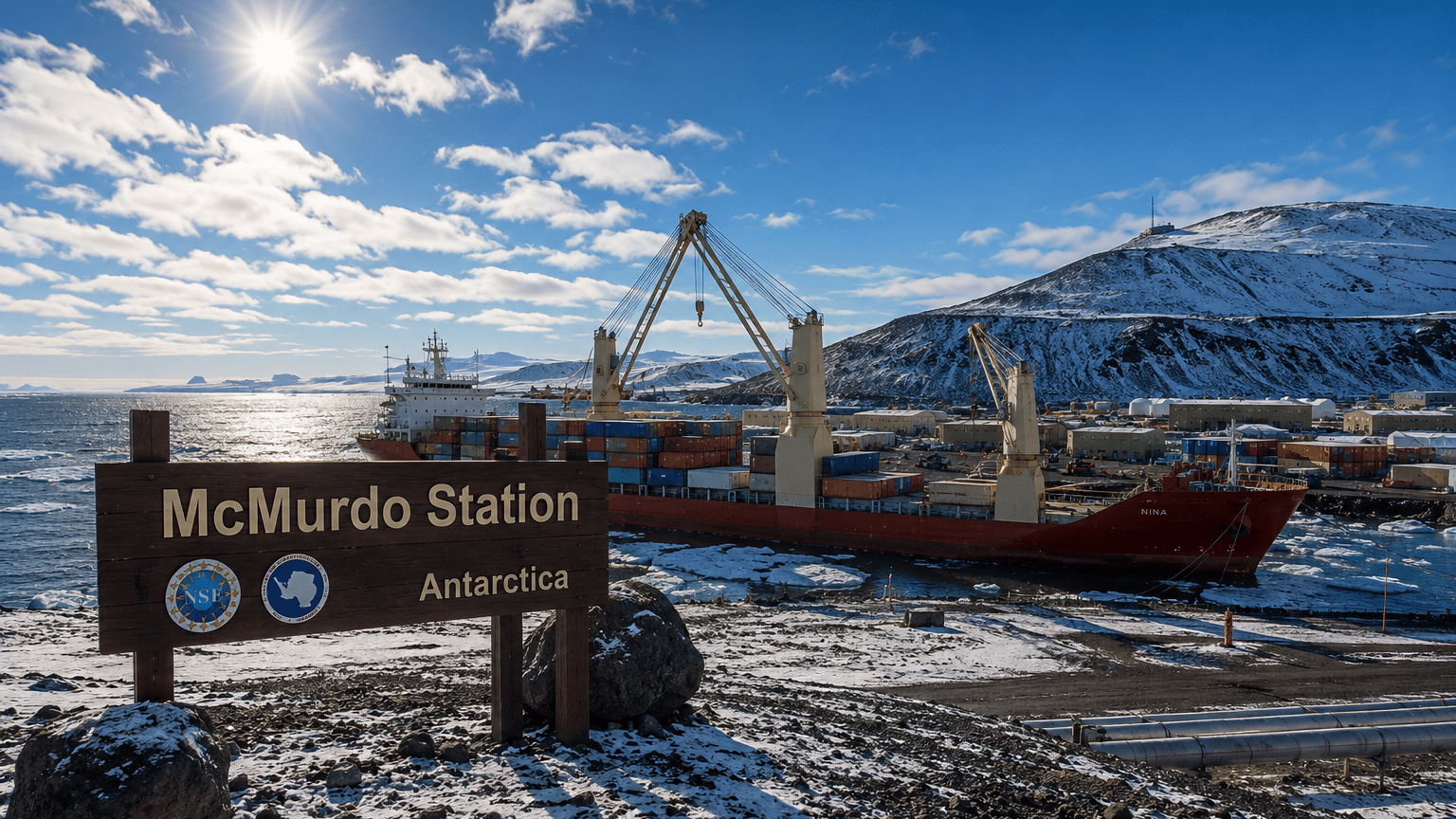
McMurdo Station
Antarctica
McMurdo Station puts Antarctic distance between survivors and major population centres, with dormitories, workshops and water production already in place. The challenge is keeping that refuge running when the supply ships stop.
Overall
6.7 out of 10Defensibility
3 out of 10Isolation
9 out of 10Sustainability
8 out of 10Ranking context
How this base ranks
Global
#4 of 88 · Top 5%
Region · Polar/Arctic
#2 of 3 · Top 67%
Base Type · Fortified Structure
#3 of 18 · Top 17%
Field assessment
At a glance
Bottom Line
A strong place to shelter from the wider outbreak, but lasting security depends on keeping essential utilities running with a much smaller workforce.
Biggest Trade-off
The distance that limits incoming threats also puts replacement fuel, parts and outside help far beyond easy reach.
Most Likely Failure
A fuel shortage or a power fault the group cannot repair interrupts water production, turning a sheltered station into a struggle for basic supplies.
Score rationale
Why it scores this way
Defensibility · 3/10
McMurdo is a dispersed working campus rather than a continuous fortified enclosure. Individual buildings offer positions a small group can secure, but holding the entire station would spread defenders thin.
Advantages
- Substantial buildings give the group a choice of occupied positions and spaces to separate people if an internal threat develops.
Limitations
- Routes between buildings remain part of the defensive problem; a secured doorway does not protect the next trip to a separate store or utility plant.
Isolation · 9/10
Continental-scale separation and difficult air and sea access sharply limit pressure from distant population centres. McMurdo still has its own seasonal population and transport connections.
Advantages
- There is no ordinary road journey from a major population centre to this Antarctic station.
Limitations
- Remoteness does not grant a clean start: an outbreak within the station must be contained locally, and cold cannot be assumed to remove the threat.
Sustainability · 8/10
Year-round accommodation, communal facilities, repair space and potable-water production make McMurdo a capable Antarctic habitat. Keeping that habitat usable depends on operating its utilities, not simply occupying its rooms.
Advantages
- A station normally supporting hundreds has ample space to separate sleeping, storage and work for a small community.
Limitations
- Diesel generation and seawater treatment require continuing fuel, maintenance and competent operation; spare beds do not solve those dependencies.
Survival horizons
How survival changes over time
Secure a workable foothold
First 7 Days
The first task is to choose a manageable occupied area, confirm that water and power work, and inventory accessible stores. Trying to take over every building would waste the station's early shelter advantage.
Positive factors
- Dormitories and service buildings provide an established starting point for shelter, storage and basic organisation.
Risks
- The scattered layout creates exposed journeys and competing watch duties before the group has a dependable daily routine.
Make the reserves last
First 100 Days
Attention shifts from taking shelter to controlling consumption and keeping essential plant serviceable. Track food and fuel use, share routine operating knowledge, and judge the remaining margin from actual stocks rather than the station's size.
Positive factors
- Workshops and storage give the group room to organise supplies and tackle ordinary repairs before small faults accumulate.
Risks
- A lower headcount reduces personal consumption but does not remove the demands of power generation, water treatment and distributed utilities.
Renewal becomes decisive
Long Term
Once normal supply cycles fail, the decisive question is how to replace food, fuel and worn parts. Careful operation can stretch what remains, but the documented station does not establish an independent replacement for its external logistics.
Positive factors
- Geographic separation still limits outside pressure, leaving useful breathing room for maintaining the occupied refuge.
Risks
- Deferred repairs and shrinking reserves can converge: losing a critical utility makes remaining stores harder to turn into continued habitation.
Visual survey
Gallery
Location context
The Lay of the Land
Tactical assessment
Practical Reality
Best Use
Concentrate living space and watches around a manageable group of buildings with verified working utilities. Protect access to water, stores and repair facilities before trying to control the whole campus.
Strengths
- Existing dormitories and communal facilities let the group establish indoor routines without first building a polar shelter.
- Repair facilities and storage space support organised maintenance and careful use of the equipment already on site.
- Open ground around the peninsula offers useful sightlines for watching local approaches.
Key Risk
A small group inherits systems built for a much larger operation. Spreading people across the station leaves fewer hands for maintenance, supply checks and essential repairs.
Weaknesses
- Buildings, roads and utility links are spread across the campus; protecting one occupied block does not secure every essential service.
- Fresh-water production requires powered treatment, so seawater beside the station is not a ready drinking-water reserve.
- Food, fuel and replacement material normally arrive from outside Antarctica; stored supplies cannot renew themselves.
Reality Check & Constraints
McMurdo is an operating research station sustained by outside logistics. Its buildings and storage capacity do not establish how much usable food or fuel the group finds, or how long equipment will run without specialist support.
Assumptions / constraints
- The small survivor group can organise watches and perform ordinary maintenance; it is not assumed to include a full station crew or specialist utility engineers.
- The station and its directly integrated operating areas are the Base. Remote field camps, the wider Antarctic landscape and guaranteed future flights or sealift are excluded.
- Planned construction is not treated as usable infrastructure. Actual stock levels and equipment condition must be checked; these horizons are not guaranteed survival durations.
Decision context
Rivals / Alternatives
Similar rival
Amundsen-Scott South Pole Station
Antarctica · Institutional Compound
Amundsen-Scott South Pole Station keeps the same Polar/Arctic risk context, with only 1.0 points between the overall scores and closely matched defensibility pressure.
Overall 7.7/10
Strongest alternative
Suomenlinna Fortress
Finland · Fortified Structure
Suomenlinna Fortress is the strongest relevant peer available at 6.3 overall versus 6.7, with a clearer edge in defensibility.
Overall 6.3/10
Wildcard rival
Great Mosque of Djenné
Mali · Landmark Structure
Great Mosque of Djenné changes the strategy: it is built around the landmark structure strategy without a headline-pillar edge over McMurdo Station, while McMurdo Station holds more of the isolation advantage.
Overall 1.3/10