Western Europe · Fortified Structure
Mont Saint-Michel
France
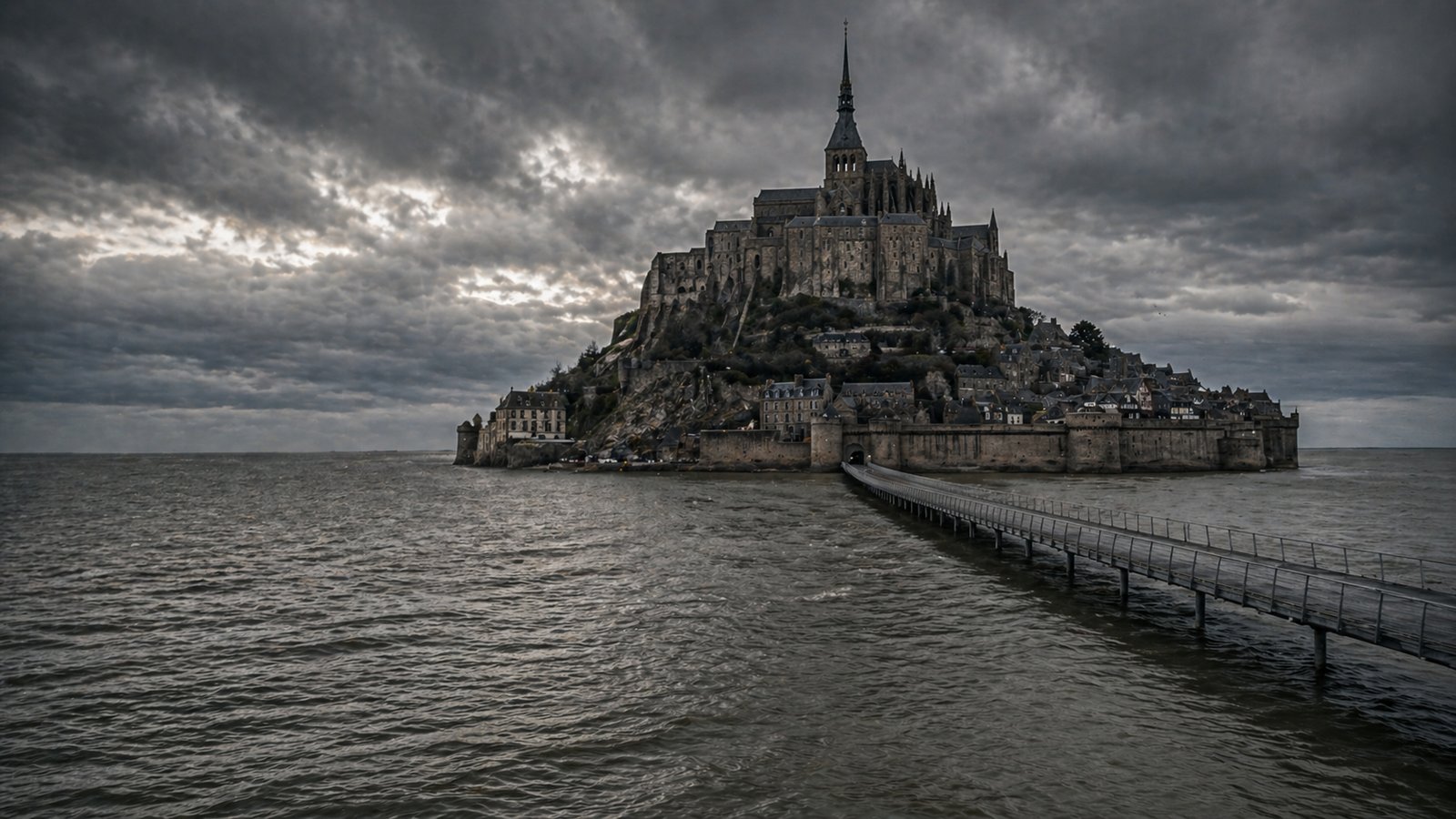
Mont Saint-Michel combines walls, steep streets and a functioning village above tidal flats. Accommodation and services make it a credible place to live, but the bridge usually remains open. Its water and food dependencies are less visible than its defences, and more decisive for a lasting refuge.
Overall
6.3 out of 10Defensibility
8 out of 10Isolation
5 out of 10Sustainability
6 out of 10Ranking context
How this base ranks
Global
#8 of 88 · Top 9%
Region · Western Europe
#2 of 9 · Top 22%
Base Type · Fortified Structure
#4 of 18 · Top 22%
Field assessment
At a glance
Bottom Line
A strong enclosed refuge with real domestic infrastructure, provided the group can keep essential services usable. The bay helps reveal approaches; it does not remove mainland access or replace mainland supplies.
Biggest Trade-off
The connection that supports everyday village life also gives pressure a route to the gates. Tidal separation is intermittent, so protection must work when the crossing is available.
Most Likely Failure
Loss of water or sanitation makes the occupied village increasingly unhealthy and forces mainland supply journeys, while the walls and abbey still appear reassuringly secure.
Score rationale
Why it scores this way
Defensibility · 8/10
Walls, height and constrained principal entry give substantial passive protection. Low-tide ground and the wider rock edge still need observation; the entire tidal perimeter is not a verified engineered enclosure.
Advantages
- The steep occupied fabric gives depth beyond the first entrance.
Limitations
- Watching the bridge alone leaves changing approaches across exposed flats unaddressed.
Isolation · 5/10
The bay separates the village from mainland settlement, but the footbridge normally carries access across it. Exceptional tides interrupt connection briefly rather than making this a remote, permanently water-separated island.
Advantages
- The long crossing gives incoming ground movement a visible approach.
Limitations
- At low tide, exposed ground broadens possible pedestrian access around the rock.
Sustainability · 6/10
An inhabited village with lodging, food-preparation spaces, toilets and supplied water provides credible daily living arrangements. Domestic quality depends on the continued use of networked services, not simply the number of beds.
Advantages
- Existing rooms and sanitation let a small community separate household functions from watches.
Limitations
- Water and wastewater failures cannot be solved by retreating farther up the rock.
Survival horizons
How survival changes over time
Establish village routines
First 7 Days
Inspect accommodation, toilets, water availability and accessible food. Set entry and internal isolation routines, then observe how the tide changes the routes requiring attention.
Positive factors
- Existing domestic infrastructure offers a workable starting point without new construction.
Risks
- Treating a high-tide interruption as permanent protection leaves later access underestimated.
Watch the service dependencies
First 100 Days
As provisions diminish, track water reliability, waste handling and the upkeep of occupied rooms. Plan any mainland journeys around verified conditions, without making the exposed crossing part of routine secure territory.
Positive factors
- Durable stone and established rooms retain shelter value as visitor services contract.
Risks
- A service interruption can force the group outside before defensive fabric fails.
A village still needs renewal
Long Term
Long residence requires repeatable safe water, food replacement and manageable sanitation beyond dwindling stores. The documented village provides facilities, but no internal renewable food pathway or independent water-production system.
Positive factors
- Walls and bay visibility continue to help a maintained occupation resist local pressure.
Risks
- External utility dependence and continuing rock or structural upkeep can narrow the habitable margin together.
Visual survey
Gallery
Location context
The Lay of the Land
Tactical assessment
Practical Reality
Best Use
Organise living around intra-muros accommodation and sanitation, with watches covering the principal entrance and changing tidal approaches. Keep mainland errands separate from movements considered protected inside the village.
Strengths
- Substantial walls and steep built fabric concentrate the principal entry problem.
- Existing intra-muros accommodation offers sleeping space beyond the small resident household scale.
- Exposed bridge and bay approaches give useful warning of incoming movement.
Key Risk
Networked drinking water and wastewater service support current occupation, but their production and treatment extend beyond the rock. Outage continuity and protected reserves remain unverified.
Weaknesses
- The bridge ordinarily connects the Mont to the mainland throughout the year.
- Potable-water and wastewater services rely on systems outside the core.
- The compact vertical village constrains carrying, circulation and separation of daily tasks.
Reality Check & Constraints
The inhabited village and hospitality spaces provide a stronger domestic starting point than an empty monument. Restaurants supply preparation space, not renewable food, and exceptional tides do not create permanent island isolation.
Assumptions / constraints
- The rocky Mont and integrated village are included; mainland hotels, farmland and utility production are excluded.
- No measured food reserve, autonomous water source or permanent tidal cutoff is assumed.
- Twenty capable adults must organise services and watches without inheriting hospitality or utility crews.
Decision context
Rivals / Alternatives
Similar rival
Carcassonne
France · Fortified Structure
Carcassonne keeps the same fortified structure strategy, with only 0.7 points between the overall scores and closely matched sustainability pressure.
Overall 5.7/10
Strongest alternative
Fort George
United Kingdom · Fortified Structure
Fort George scores 6.7 overall versus 6.3, adding a stronger sustainability profile while staying relevant as another fortified structure.
Overall 6.7/10
Wildcard rival
Great Mosque of Djenné
Mali · Landmark Structure
Great Mosque of Djenné changes the strategy: it is built around the landmark structure strategy without a headline-pillar edge over Mont Saint-Michel, while Mont Saint-Michel holds more of the defensibility advantage.
Overall 1.3/10