Eastern Europe · Fortified Structure
Suomenlinna Fortress
Finland
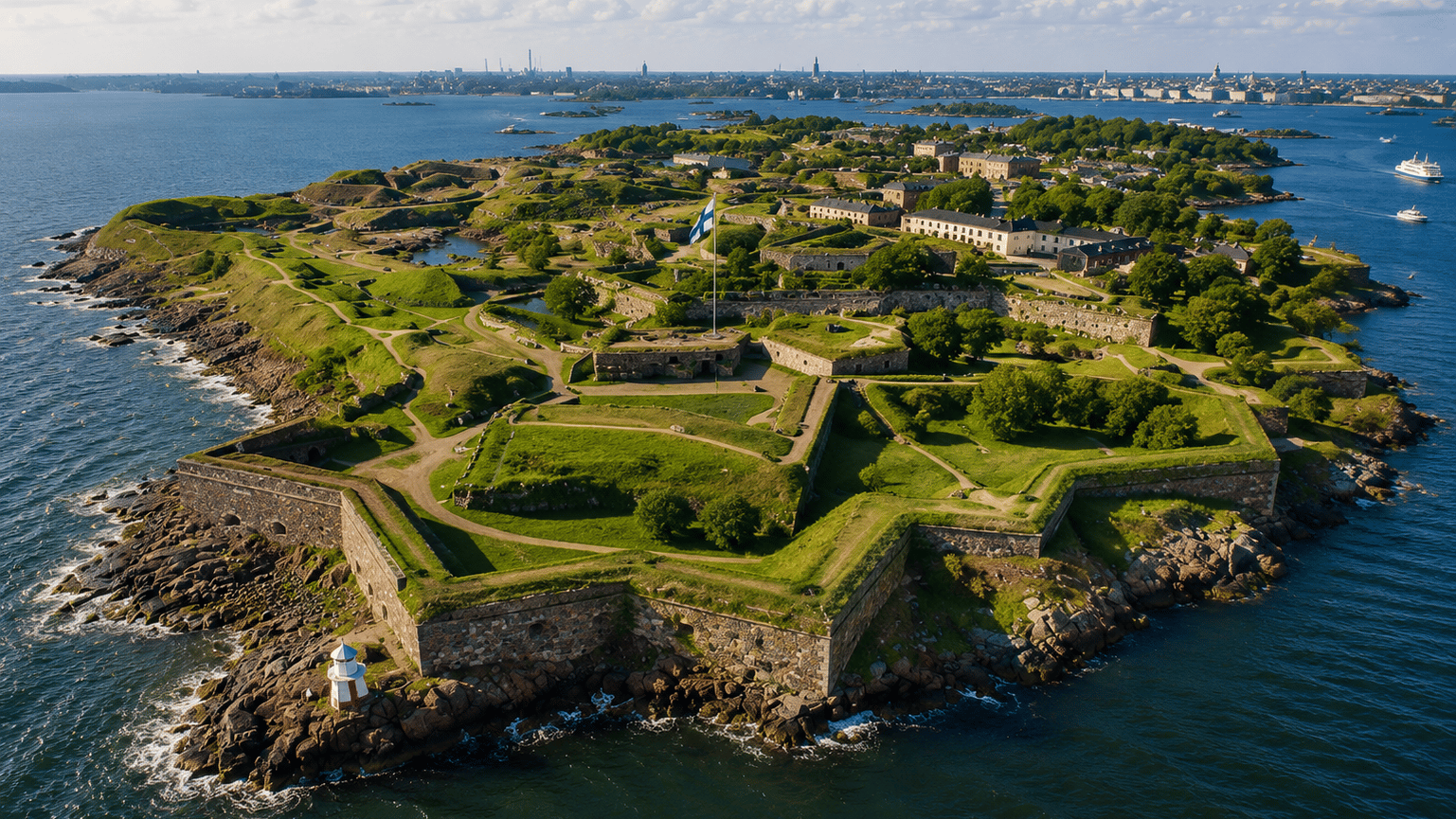
Suomenlinna offers real homes behind a sea crossing, with stone defences and working spaces already in place. Its weakness is continuity: comfortable island living still depends on mainland services and replenishment.
Overall
6.3 out of 10Defensibility
6 out of 10Isolation
5 out of 10Sustainability
8 out of 10Ranking context
How this base ranks
Global
#10 of 88 · Top 11%
Region · Eastern Europe
#1 of 10 · Top 10%
Base Type · Fortified Structure
#5 of 18 · Top 28%
Field assessment
At a glance
Bottom Line
A convincing place to live, but a difficult whole district to hold. Concentrate occupation around usable housing and judge endurance by essential services, not empty floor space.
Biggest Trade-off
The crossing interrupts ordinary ground access while also separating the group from the supplies and technical support that keep island homes comfortable.
Most Likely Failure
Heating or water continuity breaks down as remaining supplies shrink, forcing the group to divide effort between essential repairs and an overstretched shoreline watch.
Score rationale
Why it scores this way
Defensibility · 6/10
Bastions and walls offer substantial passive protection, but they belong to a broad civilian district. The practical defensive choice is which linked living and watch positions the group can maintain together.
Advantages
- Fortified positions give shelter and fallback without requiring a new enclosing wall.
Limitations
- Defending selected buildings leaves other landing places and shoreline sectors outside continuous control.
Isolation · 5/10
A water crossing removes ordinary street access from Helsinki. The short distance to the city still matters: island separation reduces one route of pressure without making the district remote.
Advantages
- Arrivals normally concentrate around known transport and landing infrastructure.
Limitations
- Ferry traffic is not the only conceivable approach; the whole shoreline cannot be treated as a single checkpoint.
Sustainability · 8/10
These islands already support domestic life, so shelter is more than theoretical capacity. Keeping a smaller occupied core liveable still depends on heat, sanitation and supplies continuing beyond the initial move indoors.
Advantages
- Existing kitchens and bathrooms let the group begin with domestic infrastructure rather than bare fortress rooms.
Limitations
- District heating and electricity are ongoing services; having a connection does not confer the ability to maintain its wider system.
Survival horizons
How survival changes over time
Choose homes and arrivals together
First 7 Days
Select a compact residential core and check heat, drinking water and sanitation. Establish how arrivals will be observed before treating the main ferry pier as the only place needing attention.
Positive factors
- Existing domestic accommodation reduces the initial work of making shelter liveable.
Risks
- Spreading into attractive spare buildings lengthens watch and service routes immediately.
Reduce the service burden
First 100 Days
Match occupied rooms to the heat and water actually available. Inspect any stove before relying on it, account for usable supplies, and limit workshop tasks to repairs the group has the tools and competence to perform.
Positive factors
- Documented stoves in some homes offer a fallback worth investigating rather than assuming.
Risks
- A workshop cannot replace district-heating expertise or replenish groceries merely because the building remains accessible.
Housing outlasts replenishment
Long Term
Durable buildings can remain when ordinary supply routes fail. Continued residence needs a proven way to renew food, drinking water and essential energy; the documented island facilities do not establish that independence.
Positive factors
- A smaller group can concentrate upkeep on selected homes while retaining stone shelter elsewhere.
Risks
- Shrinking reserves and failing services can force journeys beyond the watched core, increasing the burden on those left behind.
Visual survey
Gallery
Location context
The Lay of the Land
Tactical assessment
Practical Reality
Best Use
Keep homes, stores and watched access points close together. Use the wider fortress selectively rather than distributing the group across its islands and shorelines.
Strengths
- Domestic rooms, kitchens and bathrooms reduce the conversion work needed to establish daily life.
- Stone bastions provide protected positions that remain useful when powered services stop.
- Existing boatyard and workshop spaces offer somewhere to organise suitable repairs if tools and skills are available.
Key Risk
Assuming apartments remain habitable because they are built for year-round use. District heating and everyday supply arrangements require support beyond the occupied rooms.
Weaknesses
- Numerous shoreline sectors make a uniform watch unrealistic for a small group.
- Mainland-linked services and replenishment can fail without damaging the homes themselves.
- Proximity to Helsinki leaves short water approaches despite the absence of an ordinary road approach.
Reality Check & Constraints
A grocery, dry dock and workshops are documented facilities, not verified stocks, available vessels or an inherited skilled workforce. Some homes have stoves; suitable fuel and safe operation still need checking.
Assumptions / constraints
- The group gains no military crew, guaranteed ferry, seaworthy vessel or specialist tradespeople.
- The recorded six-island district is retained; Helsinki and the surrounding sea are not controlled resources.
- Usable grocery stocks, local potable-water independence and stove fuel have not been inventoried.
Decision context
Rivals / Alternatives
Similar rival
Fort George
United Kingdom · Fortified Structure
Fort George keeps the same fortified structure strategy, with only 0.3 points between the overall scores and closely matched defensibility pressure.
Overall 6.7/10
Strongest alternative
McMurdo Station
Antarctica · Fortified Structure
McMurdo Station scores 6.7 overall versus 6.3, adding a stronger isolation profile while staying relevant as another fortified structure.
Overall 6.7/10
Wildcard rival
Great Mosque of Djenné
Mali · Landmark Structure
Great Mosque of Djenné changes the strategy: it is built around the landmark structure strategy without a headline-pillar edge over Suomenlinna Fortress, while Suomenlinna Fortress holds more of the sustainability advantage.
Overall 1.3/10