Africa · Landmark Structure
Great Mosque of Djenné
Mali
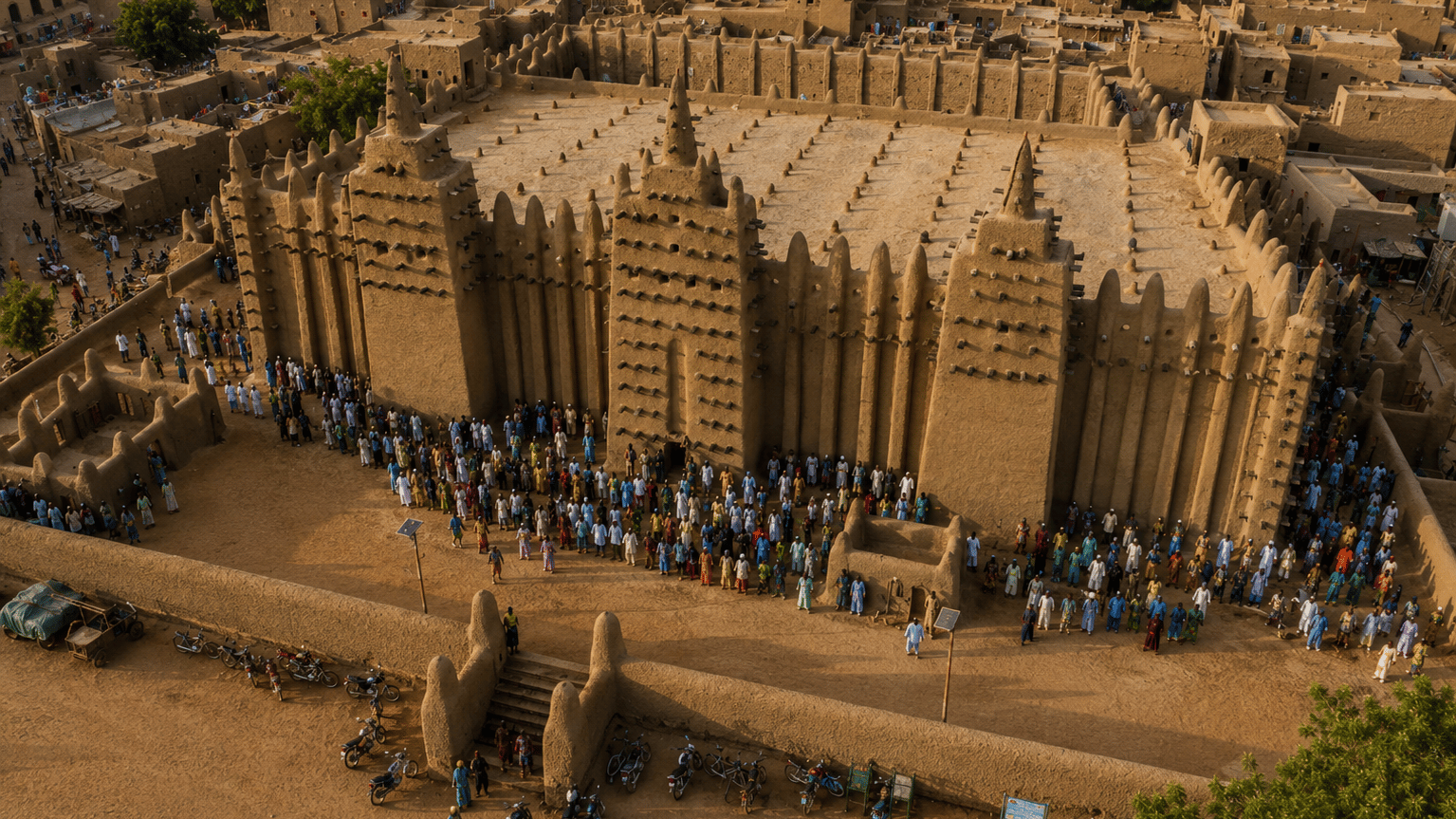
Djenné’s Great Mosque offers substantial earthen shelter beside a busy market square. Its walls enclose space for a group, but the surrounding streets bring pressure close and the building lacks a confirmed independent water supply.
Overall
1.3 out of 10Defensibility
2 out of 10Isolation
0 out of 10Sustainability
2 out of 10Ranking context
How this base ranks
Global
#87 of 88 · Top 99%
Region · Africa
#11 of 11 · Top 100%
Base Type · Landmark Structure
#3 of 3 · Top 100%
Field assessment
At a glance
Bottom Line
Useful as an emergency gathering place, the mosque needs a credible water and sanitation arrangement before shelter can become sustained occupation.
Biggest Trade-off
Communal space gives people room to organise; keeping them supplied requires movement beyond a building embedded in the town.
Most Likely Failure
Without a protected water pathway, daily supply trips become unsafe or unreliable and force departure before the shelter itself is lost.
Score rationale
Why it scores this way
Defensibility · 2/10
Thick earthen walls offer enclosure, but this is a communal religious building within dense streets. Its occupied edge would still need close attention wherever people enter or supplies arrive.
Advantages
- The substantial building provides a more defined shelter boundary than an open market space.
Limitations
- Multiple nearby approaches give little room to absorb pressure before it reaches the mosque.
Isolation · 0/10
The market square and inhabited old town put potential pressure immediately around the building. Seasonal water around Djenné does not separate the mosque from people already inside the town.
Advantages
- No meaningful geographic buffer is established between the mosque and the surrounding inhabited streets.
Limitations
- Neither the mosque’s prominence nor the town’s seasonal setting provides local geographic separation.
Sustainability · 2/10
A large prayer space can accommodate people gathering, yet prolonged living also needs drinking water, cooking, waste handling and rest. Those residential arrangements are not established within this boundary.
Advantages
- Enclosed communal space and documented building-system improvements provide a useful starting shelter.
Limitations
- Food and potable-water renewal remain unproven; room to shelter does not resolve daily household needs.
Survival horizons
How survival changes over time
Shelter before settlement
First 7 Days
Establish a manageable occupied area, assess the entrances and confirm a drinking-water route before treating the mosque as a refuge. Nearby market activity demonstrates access and movement, not supplies reserved for this group.
Positive factors
- The enclosed prayer building gives the group somewhere to assemble and organise basic routines.
Risks
- Going outside for essentials can create immediate contact with the surrounding streets.
Daily needs compete with upkeep
First 100 Days
Attention shifts to repeated water collection, food use, sleeping arrangements and waste. These routines must fit alongside inspection of the earthen fabric; the presence of installed electrical systems does not remove either workload.
Positive factors
- Traditional maintenance methods provide a known approach to caring for the building.
Risks
- Replastering normally draws on communal labour and knowledge that a small group cannot assume it inherits.
A shelter needs a supply system
Long Term
Continued occupation depends on dependable water and food renewal beyond the documented mosque facilities, while recurring fabric care continues. Unless those needs can be met safely, remaining inside becomes progressively harder to justify.
Positive factors
- The building can retain shelter value if its weather-sensitive fabric receives appropriate care.
Risks
- Documented solar installation cannot replace drinking water, food or the labour required to maintain the mosque.
Visual survey
Gallery
Location context
The Lay of the Land
Tactical assessment
Practical Reality
Best Use
A temporary assembly and shelter point while the group assesses whether essential daily needs can be met.
Strengths
- The prayer building provides substantial enclosed communal space.
- Its thick earthen fabric offers passive enclosure without depending on powered barriers.
- Lighting and ventilation replacement are documented completed works, rather than proposed future upgrades.
Key Risk
Recurring trips for drinking water expose the group to the same close urban approaches the mosque cannot keep at a distance.
Weaknesses
- The adjacent market and dense streets bring potential pressure directly to the building.
- No protected independent potable-water pathway is established inside the mosque.
- Weather-sensitive earthen construction needs recurring care as well as day-to-day habitation work.
Reality Check & Constraints
Completed lighting, ventilation and solar projects are documented improvements. They do not establish working systems today, stored drinking water or residential sanitation.
Assumptions / constraints
- The evaluated refuge is the mosque and its immediately controlled envelope; surrounding homes, market goods and the wider delta are external.
- Ordinary organisation and basic maintenance are plausible; the group does not inherit the town’s masons, maintenance workforce or guaranteed assistance.
- Installed systems must be checked before use. No operating solar capacity, battery reserve, food stock or guaranteed supply duration is assumed.
Decision context
Rivals / Alternatives
Similar rival
Kimberley Big Hole & Mining Complex
South Africa · Industrial Site
Kimberley Big Hole & Mining Complex keeps the same Africa risk context, with only 1.3 points between the overall scores and closely matched sustainability pressure.
Overall 2.7/10
Strongest alternative
Fastnet Lighthouse
Ireland · Landmark Structure
Fastnet Lighthouse scores 6.3 overall versus 1.3, adding a stronger isolation profile while staying relevant as another landmark structure.
Overall 6.3/10
Wildcard rival
Amundsen-Scott South Pole Station
Antarctica · Institutional Compound
Amundsen-Scott South Pole Station changes the strategy: it is built around the institutional compound strategy with a isolation edge, while Great Mosque of Djenné has no headline-pillar edge in return.
Overall 7.7/10