UK & Ireland · Remote Settlement
Isle of Eigg Village
United Kingdom
Eigg combines inhabited crofts, local drinking-water sources and a stand-alone renewable microgrid with genuine sea separation. But its open settlement still needs protection, and twenty survivors cannot assume they inherit the residents’ farming knowledge or utility maintenance skills.
Overall
6.3 out of 10Defensibility
4 out of 10Isolation
8 out of 10Sustainability
7 out of 10Ranking context
How this base ranks
Global
#7 of 88 · Top 8%
Region · UK & Ireland
#3 of 11 · Top 27%
Base Type · Remote Settlement
#1 of 16 · Top 6%
Field assessment
At a glance
Bottom Line
A credible place to sustain a modest community if it can maintain existing island routines; the strength lies in working local systems rather than spare rooms alone.
Biggest Trade-off
Sea access limits outside pressure but also makes specialist repairs, replacement parts and imported essentials difficult to replace locally.
Most Likely Failure
Maintenance and food work outstrip available skills or labour, allowing utility faults and falling production to reinforce dependence on interrupted mainland supplies.
Score rationale
Why it scores this way
Defensibility · 4/10
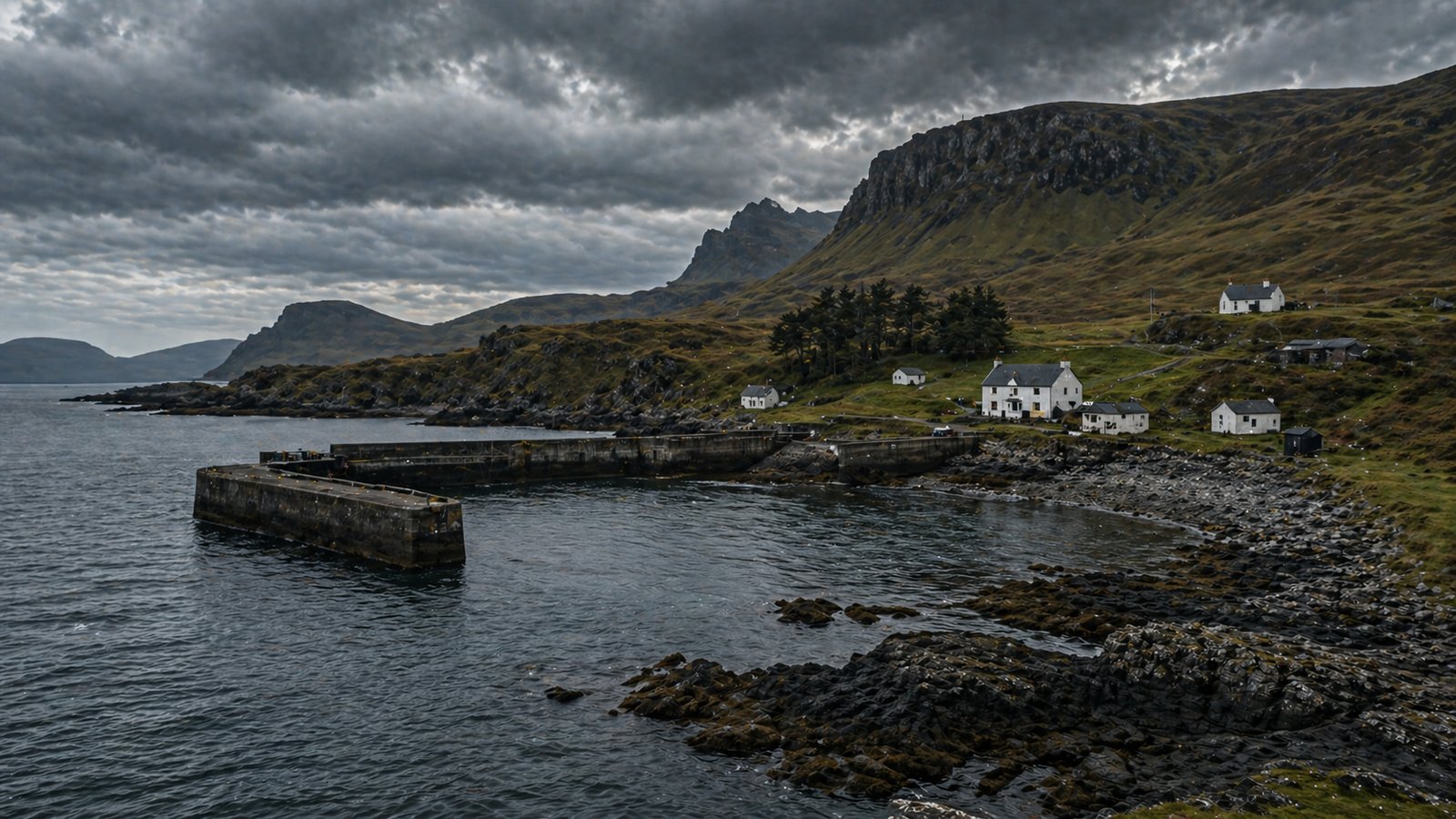
Piers help focus observation, but homes and crofts remain an open settlement. After contact, building security and safe journeys between essential sites matter more than the surrounding water.
Advantages
- Permanent buildings allow separation of sleeping, work and storage within occupied positions.
Limitations
- An observed main pier does not rule out other landings or threats already among the homes.
Isolation · 8/10
The crossing from Scotland’s mainland removes ordinary road approaches and gives substantial separation. Marine access and Eigg’s own community still require assessment rather than an assumption of an untouched island.
Advantages
- Mainland walkers cannot simply follow a connecting road into the settlement.
Limitations
- Transport loss also interrupts specialist help and goods the community normally imports.
Sustainability · 7/10
Domestic services, local power and active crofting make Eigg an existing habitat. Sustaining it requires operating water and energy systems while keeping enough labour available for food work.
Advantages
- Renewable generation and cultivated land offer ongoing inputs beyond initial consumable stores.
Limitations
- Established services need skills and upkeep; their existence does not make them transferable without interruption.
Survival horizons
How survival changes over time
Trace the essential connections
First 7 Days
Check water serving the occupied homes, inspect accessible food and establish which electrical functions are usable. Keep movement between crofts, homes and piers manageable while assessing local conditions.
Positive factors
- Shared washing, sanitation and accommodation facilities reduce the need to create domestic space.
Risks
- Early dispersal can leave essential journeys unwatched and an unfamiliar utility fault unnoticed.
Align production and upkeep
First 100 Days
Compare consumption with actual croft output and water availability. Share routine operating knowledge and prioritise essential electrical loads, keeping food work and watches staffed as faults or shortages appear.
Positive factors
- Diverse generation reduces reliance on any single renewable source.
Risks
- Backup generation cannot be assumed available after its unmeasured fuel supply or serviceable parts run short.
Carry systems through renewal
Long Term
Endurance rests on successive food cycles, dependable water and repairable energy services. Local pathways are valuable, but replacement electronics, medicines and imported food remain gaps to assess rather than guaranteed island products.
Positive factors
- Resident-maintained infrastructure demonstrates community operation rather than reliance on a remote grid alone.
Risks
- Technical faults or a poor crop cycle can narrow the margin without changing Eigg’s geographic isolation.
Visual survey
Gallery
Location context
The Lay of the Land
Tactical assessment
Practical Reality
Best Use
Connect a compact occupied area to checked water and usable croft land. Coordinate pier observation with food work and essential upkeep instead of trying to patrol the full shoreline.
Strengths
- Hydro, wind and solar diversify the existing electricity supply without a mainland grid connection.
- Operating crofts and documented well or spring supplies offer concrete starting points for food and drinking water.
- Homes, shared facilities and piers support an established pattern of year-round island life.
Key Risk
Diversified power still needs competent care. Losing technical knowledge or a critical spare can reduce useful electricity even while renewable energy remains available.
Weaknesses
- Homes, crofts and roads do not form a continuous barrier around daily living and working areas.
- Microgrid electronics, replacement parts and diesel backup retain supply and maintenance dependencies.
- Planning evidence records limited water capacity, so living space cannot be equated with unlimited resource headroom.
Reality Check & Constraints
Eigg demonstrates functioning community resilience, not a self-running installation. Documented water sources and croft output are specific assets; neither proves unlimited water or a complete diet at every occupied property.
Assumptions / constraints
- Twenty capable adults remain the whole group. Resident engineers, crofters, clinicians and vessel crews are not assumed to join them.
- The community settlement system remains the Base; mainland Mallaig and visiting ferries are not owned resources.
- Water yield and safety, crop stage, food stocks, backup fuel and equipment condition require checking. No harvest or future delivery is guaranteed.
Decision context
Rivals / Alternatives
Similar rival
Longyearbyen
Norway · Remote Settlement
Longyearbyen keeps the same remote settlement strategy, with only 0.7 points between the overall scores and closely matched sustainability pressure.
Overall 5.7/10
Strongest alternative
Amundsen-Scott South Pole Station
Antarctica · Institutional Compound
Amundsen-Scott South Pole Station scores 7.7 overall versus 6.3, adding a stronger sustainability profile while staying relevant as a comparable survival plan.
Overall 7.7/10
Wildcard rival
Great Mosque of Djenné
Mali · Landmark Structure
Great Mosque of Djenné changes the strategy: it is built around the landmark structure strategy without a headline-pillar edge over Isle of Eigg Village, while Isle of Eigg Village holds more of the isolation advantage.
Overall 1.3/10