Eastern Europe · Remote Settlement
Longyearbyen
Norway
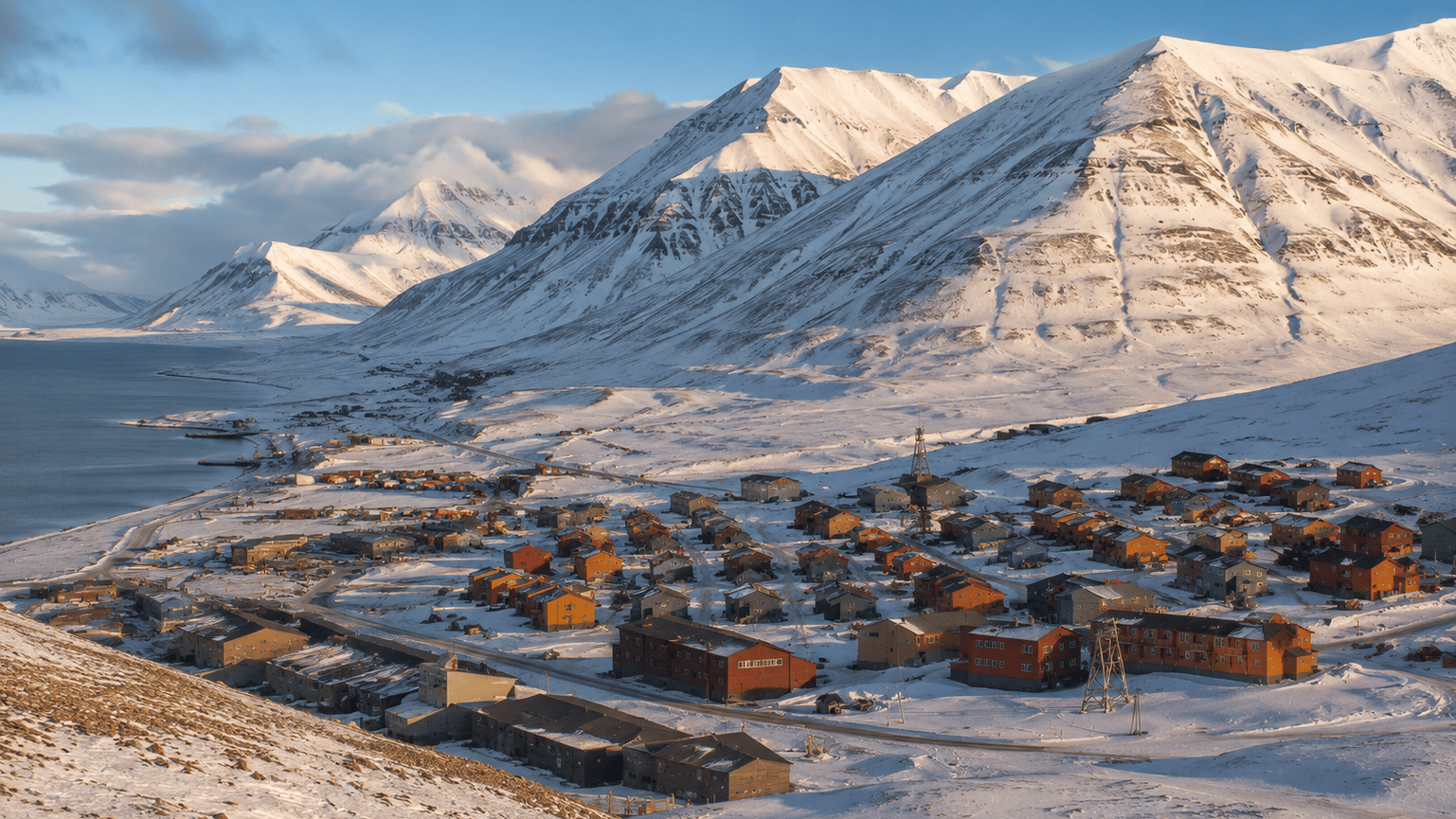
Longyearbyen offers Arctic separation, established housing and substantial town services. Keeping a small refuge habitable is the hard part: heat and safe drinking water depend on maintained systems, while food, fuel and parts arrive from outside.
Overall
5.7 out of 10Defensibility
2 out of 10Isolation
8 out of 10Sustainability
7 out of 10Ranking context
How this base ranks
Global
#23 of 88 · Top 26%
Region · Eastern Europe
#3 of 10 · Top 30%
Base Type · Remote Settlement
#3 of 16 · Top 19%
Field assessment
At a glance
Bottom Line
A well-equipped starting habitat with little tolerance for unmanaged utility decline. The group needs a credible operating plan for essential heat and water before counting the town’s spare capacity as security.
Biggest Trade-off
Distance limits incoming mainland pressure and makes replacement fuel, equipment and specialist help difficult to obtain when local systems fail.
Most Likely Failure
A fuel shortage or unrepairable utility fault interrupts heat or potable-water production, making occupied buildings difficult to sustain in the Arctic climate.
Score rationale
Why it scores this way
Defensibility · 2/10
Ordinary homes and public buildings offer positions a small group can secure locally. The dispersed town and surrounding travel terrain leave no reliable defended perimeter; remoteness does not strengthen individual barriers.
Advantages
- Separate buildings provide choices for concentrating occupation and managing an internal threat.
Limitations
- Journeys to stores and utility sites remain exposed tasks even after residential doors are secured.
Isolation · 8/10
Arctic sea separation and the absence of inter-settlement roads strongly limit incoming ground pressure. Existing residents and air connections still prevent an assumption of a clean or inaccessible refuge.
Advantages
- A distant mainland outbreak cannot reach town by an ordinary road journey.
Limitations
- Geographic separation provides no guarantee that illness or infection is absent within the settlement.
Sustainability · 7/10
Year-round housing, sanitation and public facilities demonstrate genuine Arctic habitation capacity. Their value depends on keeping a usable service network functioning, especially district heat and a verified potable-water pathway.
Advantages
- Existing living and communal space avoids the need to create an Arctic shelter from scratch.
Limitations
- Spare buildings do not supply the operating labour or replacement inputs required by critical utilities.
Survival horizons
How survival changes over time
Confirm heat and drinking water
First 7 Days
Choose inspected living space, verify heat and safe drinking water, and inventory accessible provisions. Establish the actual service dependencies before committing people to a dispersed occupation.
Positive factors
- A functioning town offers ready-made accommodation, utility connections and storage space to assess.
Risks
- Tap-water availability is not proof of potability; documented quality problems require a verified alternative.
Keep essential plant serviceable
First 100 Days
Measure food and fuel use while maintaining the utilities serving occupied space. Share routine knowledge where realistic, and identify which faults or parts the group cannot handle without specialist support.
Positive factors
- A small population can concentrate personal demand in less of the available housing.
Risks
- Reduced household consumption does not remove the fixed burden of heat production, water treatment and distribution.
External inputs remain decisive
Long Term
Continued habitation needs replacement food, fuel and worn parts as well as working heat and water. The documented town does not establish an independent substitute for its mainland supply and technical support.
Positive factors
- Strong separation continues to limit outside pressure while the occupied refuge remains serviceable.
Risks
- Accumulating plant faults can erase useful habitat faster than the group can replace its essential inputs. No reliable survival duration follows from the town’s size.
Visual survey
Gallery
Location context
The Lay of the Land
Tactical assessment
Practical Reality
Best Use
Concentrate occupation around inspected housing and verified essential services. Minimise unnecessary travel between buildings while retaining the full serviced settlement as the evaluated Base.
Strengths
- Established homes and community buildings offer substantial space for a small organised group.
- Existing water, sewage, heating and emergency-service infrastructure provides a developed starting habitat.
- No mainland road connection limits ordinary regional ground movement into the settlement.
Key Risk
District heating and drinking-water treatment are operating dependencies, not passive building features. Their continuity requires fuel, parts and competence beyond simply finding an empty house.
Weaknesses
- The road-and-building network has no continuous fortified boundary for twenty people to hold.
- Loss of district heat can degrade the usefulness of housing even when its walls remain sound.
- Food, fuel and manufactured replacements depend heavily on difficult external logistics.
Reality Check & Constraints
The council documents alternative treated drinking water alongside tap-water quality problems. Available shops and household stores help initially, but their contents and the group’s ability to keep treatment running are unverified.
Assumptions / constraints
- The Base remains the continuously serviced town; the airport, outlying installations and other Svalbard settlements are not guaranteed assets.
- Preparedness advice establishes a recommended practice, not proof that every household holds the stated reserves.
- Twenty capable adults do not automatically include the specialists normally responsible for the town’s utilities.
Decision context
Rivals / Alternatives
Similar rival
Kibber Village
India · Remote Settlement
Kibber Village keeps the same remote settlement strategy, with only 0.3 points between the overall scores and closely matched defensibility pressure.
Overall 5.3/10
Strongest alternative
Amundsen-Scott South Pole Station
Antarctica · Institutional Compound
Amundsen-Scott South Pole Station scores 7.7 overall versus 5.7, adding a stronger defensibility profile while staying relevant as a comparable survival plan.
Overall 7.7/10
Wildcard rival
San Felipe Fortress
Colombia · Fortified Structure
San Felipe Fortress changes the strategy: it is built around the fortified structure strategy with a defensibility edge, while Longyearbyen holds more of the isolation advantage.
Overall 3.7/10