UK & Ireland · Subterranean
Burlington Bunker
United Kingdom
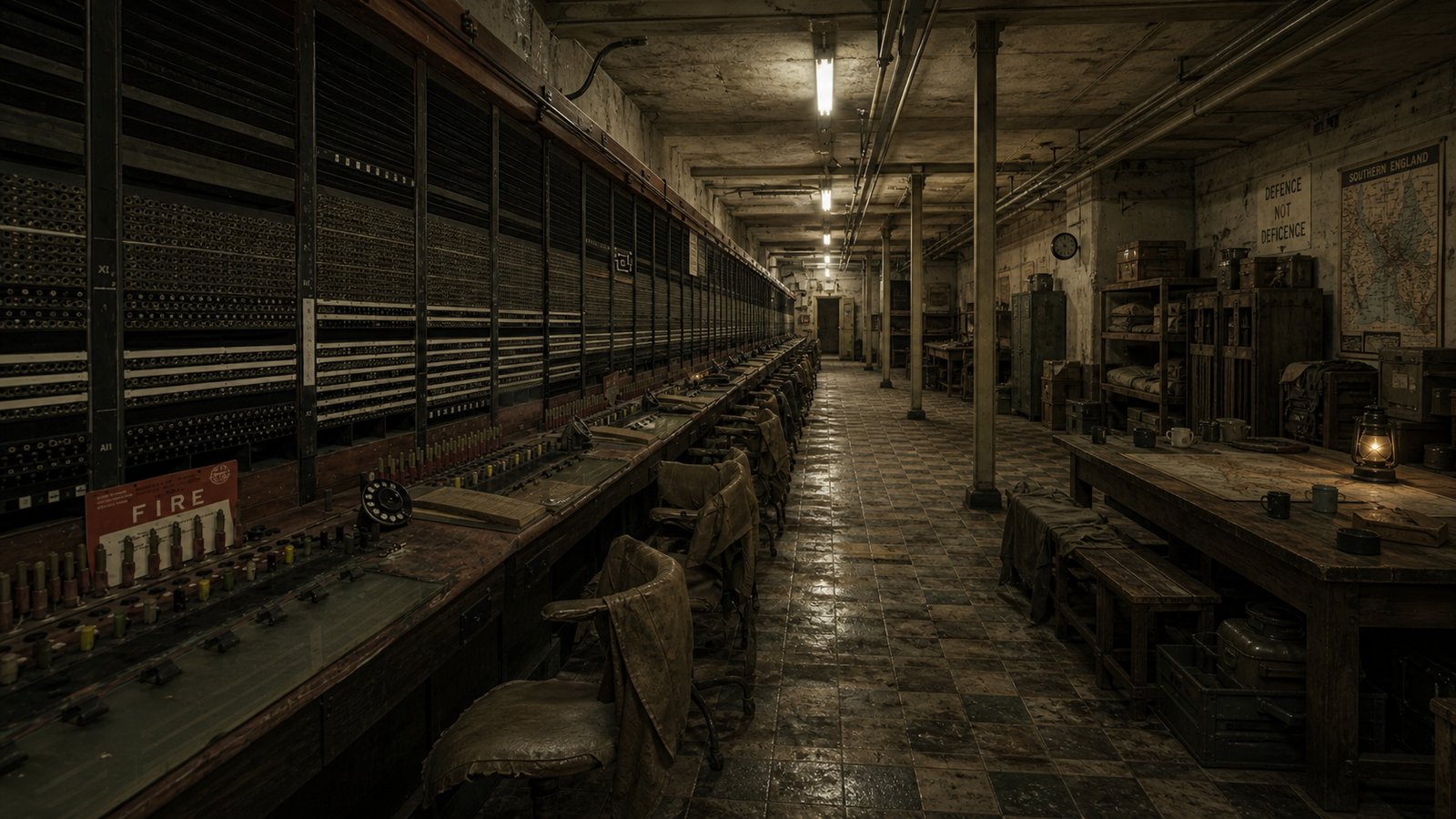
Burlington offers deep quarry chambers and surviving blast protection beneath Corsham. Its Cold War stores were removed and reservoir drained, making safe water and usable life-support systems more urgent than finding room to shelter.
Overall
4.7 out of 10Defensibility
8 out of 10Isolation
3 out of 10Sustainability
3 out of 10Ranking context
How this base ranks
Global
#46 of 88 · Top 52%
Region · UK & Ireland
#8 of 11 · Top 73%
Base Type · Subterranean
#6 of 10 · Top 60%
Field assessment
At a glance
Bottom Line
A formidable refuge shell whose occupation depends on proving basic services first. Hardened access cannot make the decommissioned bunker a stocked, functioning habitat.
Biggest Trade-off
Moving underground puts heavy structure between the group and direct pressure, while making daily life depend on air, lighting and water arrangements that ordinary rooms do not provide by themselves.
Most Likely Failure
The group commits to shelter below ground, then cannot maintain safe water and sanitation as carried supplies dwindle. Leaving to obtain essentials exposes people despite the surviving blast protection.
Score rationale
Why it scores this way
Defensibility · 8/10
Deep quarry cover, blast-protected access fabric and extensive internal rooms offer substantial resistance and fallback. The defensive benefit depends on the actual condition of barriers and on keeping occupation within the documented historic complex.
Advantages
- Surviving steel blast doors and thick shaft structures provide physical obstacles that require no new perimeter to be built.
Limitations
- Multiple historic exits complicate control; public heritage records do not establish a single secure entrance or the current condition of every barrier.
Isolation · 3/10
Burlington is hidden below ground, but sits within the connected Corsham area. Concealment reduces its surface presence; it does not put a remote landscape between the bunker and surrounding population pressure.
Advantages
- Underground chambers separate everyday activity from the surface rather than placing living space beside an open public street.
Limitations
- Trips beyond the historic access structures enter the surrounding road-connected area; underground depth provides no geographic buffer for those journeys.
Sustainability · 3/10
Former catering, washing and accommodation spaces give the group a substantial physical framework. Decommissioning separates that framework from a dependable habitat: water, sanitation and safe underground operation still need verifying.
Advantages
- Existing rooms allow living, storage and work to be separated without excavating a new shelter.
Limitations
- The drained reservoir and removed stores leave essential consumption unsupported; retained fittings do not restore a water supply or working services.
Survival horizons
How survival changes over time
Prove the shelter is usable
First 7 Days
Check egress, barriers and a small occupied area before spreading through the chambers. Establish safe air, light, drinking water and waste arrangements immediately; the declassified bunker cannot be treated as a sealed refuge ready to switch on.
Positive factors
- The surviving internal rooms offer choices for a compact foothold once their safety is established.
Risks
- Historic emergency planning gives no assurance that ventilation, pumps or washrooms are ready for use today.
Count consumption and service demands
First 100 Days
If occupation remains viable, measure actual water and food use alongside the labour needed to keep essential services working. Expanding into more chambers adds inspection and operating demands without replenishing the missing reserves.
Positive factors
- Concentrating use in existing rooms can keep storage and daily work organised within a limited occupied area.
Risks
- A service fault can force departure before the structure becomes indefensible; spare chambers do not substitute for consumables or repair knowledge.
The shell cannot renew supplies
Long Term
Endurance requires a dependable way to replenish water, food and essential operating inputs. None is established inside the declassified boundary. Preserving the passive shell may remain worthwhile, but continued residence cannot rest on hypothetical recommissioning or outside support.
Positive factors
- The quarry chambers and hardened structures retain protective value even when historic equipment is unavailable.
Risks
- The evidence provides no independent renewal system to replace depleted supplies; active MoD facilities and wider quarry assets cannot fill that gap by assumption.
Visual survey
Gallery
Location context
The Lay of the Land
Tactical assessment
Practical Reality
Best Use
Assess a manageable set of historic chambers and its egress before committing the group. Use the protected interior only where safe air, water and sanitation can be demonstrated; do not plan around reviving the whole installation.
Strengths
- Heavy underground fabric protects occupied rooms from direct surface pressure.
- Historic rooms give space to separate people, stores and work within the refuge.
- Blast-protected shaft structures provide existing obstacles at documented access points.
Key Risk
Heritage fabric can look like an operating facility: a fitted kitchen, washroom or fan room does not establish that its utilities work or that the group can repair them.
Weaknesses
- Food and fuel were removed during decommissioning; historic stocks cannot be counted as supplies awaiting collection.
- The former reservoir was drained, leaving no verified protected potable reserve inside the Base.
- Safe underground habitation relies on services whose present operating condition and repair requirements remain unproven.
Reality Check & Constraints
The government record describes removed food and fuel and a drained reservoir. Surviving rooms and equipment are evidence of a former refuge, not proof of present reserves, serviceability or a ready technical crew.
Assumptions / constraints
- The assessed Base is the declassified CGWHQ chambers and their historic operating access and egress. Active MoD Corsham and unrelated quarry tunnels are excluded.
- The survivor group has ordinary practical skills, not a bunker operations crew. Surviving equipment must be inspected; specialist recommissioning is not assumed.
- No replenished stores, restored reservoir or guaranteed supply journey is credited. The horizons describe priorities if occupation is viable, not promised durations.
Decision context
Rivals / Alternatives
Similar rival
Cu Chi Tunnels
Vietnam · Subterranean
Cu Chi Tunnels keeps the same subterranean strategy, with only 0.0 points between the overall scores and closely matched sustainability pressure.
Overall 4.7/10
Strongest alternative
Fort George
United Kingdom · Fortified Structure
Fort George scores 6.7 overall versus 4.7, adding a stronger sustainability profile while staying relevant as a UK & Ireland option.
Overall 6.7/10
Wildcard rival
Amundsen-Scott South Pole Station
Antarctica · Institutional Compound
Amundsen-Scott South Pole Station changes the strategy: it is built around the institutional compound strategy with a isolation edge, while Burlington Bunker holds more of the defensibility advantage.
Overall 7.7/10