UK & Ireland · Fortified Structure
Fort George
United Kingdom
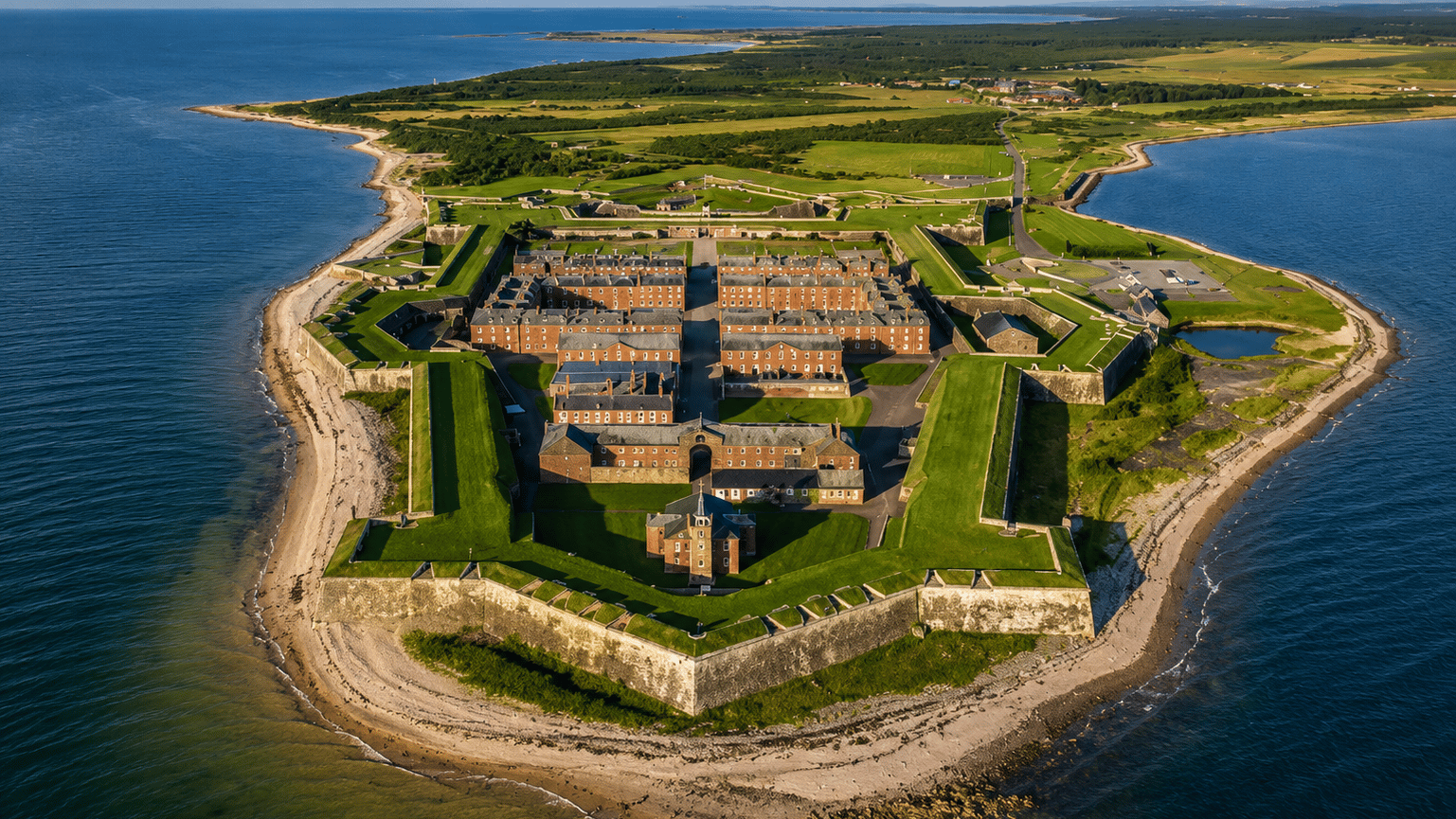
Fort George combines layered defences on a Moray Firth promontory with barracks, stores and workshops. A small community gains protected living space, but must watch an extensive perimeter and verify drinking water independently of the fort’s normal supply network.
Overall
6.7 out of 10Defensibility
8 out of 10Isolation
5 out of 10Sustainability
7 out of 10Ranking context
How this base ranks
Global
#2 of 88 · Top 2%
Region · UK & Ireland
#1 of 11 · Top 9%
Base Type · Fortified Structure
#1 of 18 · Top 6%
Field assessment
At a glance
Bottom Line
A strong defensive home with room to organise daily life, whose endurance depends on essentials the walls cannot provide.
Biggest Trade-off
The large enclosure offers space for shelter, work and fallback, while spreading watches and upkeep across far more fortress than a small group can continuously staff.
Most Likely Failure
Water or food provision becomes unreliable, forcing increasingly frequent journeys beyond the defences and drawing people away from watches and maintenance.
Score rationale
Why it scores this way
Defensibility · 8/10
Ditches, bastions, controlled gates and casemates give the group layers of resistance and places to fall back. These are genuine local defences, although their extensive footprint demands choices about where people live and stand watch.
Advantages
- The landward approach passes through outworks before reaching the main enclosure.
Limitations
- Strong barriers still need observed entrances and sound closures; twenty people cannot occupy every position at once.
Isolation · 5/10
Water around the promontory limits continuous land approach, but Fort George remains connected to the Ardersier area by road. Its separation helps concentrate contact without placing the community far from regional disruption.
Advantages
- The firth removes ordinary overland approach from much of the immediate setting.
Limitations
- The surviving land connection can carry pressure from outside the fort as well as useful access.
Sustainability · 7/10
Barracks, sheltered chambers and support buildings provide a substantial existing household layout. There is room for twenty people to organise clean living and useful work, subject to checking services rather than relying on historic garrison capacity.
Advantages
- Separate buildings offer practical headroom to keep sleeping, hygiene and stores from competing for one room.
Limitations
- Accommodation does not establish continuing safe water, edible stocks or food production inside the boundary.
Survival horizons
How survival changes over time
Make the fortress manageable
First 7 Days
Inspect access points and select usable rooms near essential services. Verify drinking water and inventory actual provisions while allocating watches; the first task is a workable household behind the defences, not occupation of every building.
Positive factors
- Existing shelter and internal circulation let the group organise protected daily routines from the outset.
Risks
- Dispersing people too widely can leave entrances unwatched while basic water and sanitation checks remain unfinished.
Balance watches with daily provision
First 100 Days
Track consumption and service reliability alongside cleaning and repairs. Review every necessary outside journey against its staffing cost, preserving time for rest and watches as normal deliveries and utilities become less dependable.
Positive factors
- Passive ramparts and masonry retain defensive value without a powered security system.
Risks
- Shelter can remain usable while declining water or food access makes the group increasingly dependent on leaving it.
Resolve the supply beyond the walls
Long Term
Continued habitation needs repeatable safe-water and food provision within the group’s means. Neither historic support buildings nor current military use establishes that renewal; retaining the fortress is worthwhile only while essential daily needs can also be met.
Positive factors
- A durable enclosure and workspace remain assets if reliable provision is secured.
Risks
- The community may have to reduce occupation or leave an intact fortress if essentials cannot be renewed safely.
Visual survey
Gallery
Location context
The Lay of the Land
Tactical assessment
Practical Reality
Best Use
Concentrate sleeping, stores and routine work in a manageable occupied area. Check the bridge, gates and sallyports together, then establish which water and sanitation services remain usable before expanding occupation.
Strengths
- Landward outworks place successive obstacles between the approach and occupied buildings.
- Elevated bastions and channelled entry routes help a watch identify incoming pressure.
- Barracks and service buildings allow rest, storage and ordinary work to be separated.
Key Risk
A refill point proves a present service, not protected reserves or an independent supply. The historic internal wells were brackish; they cannot be treated as ready drinking water.
Weaknesses
- The kilometre-scale rampart creates competing watch duties for a small community.
- Road access keeps nearby population pressure relevant despite the waterside setting.
- Maintaining visitor and residential services requires more than preserving masonry.
Reality Check & Constraints
Fort George remains a working military base, but the survivor group does not inherit soldiers, weapons or a functioning logistics service. Historic provision stores and hospital buildings establish useful space, not stocked food or medical care.
Assumptions / constraints
- The fortress and its immediate outworks and approaches remain the boundary; nearby settlements and external military supply are not controlled resources.
- Twenty capable adults provide ordinary watches, first aid and upkeep, without assumed military or water-treatment specialists.
- Actual provisions, water quality and reserves, closures and utility condition require inspection; the horizons promise no survival duration.
Decision context
Rivals / Alternatives
Similar rival
Caerphilly Castle
United Kingdom · Fortified Structure
Caerphilly Castle keeps the same fortified structure strategy, with only 1.3 points between the overall scores and closely matched defensibility pressure.
Overall 5.3/10
Strongest alternative
Amundsen-Scott South Pole Station
Antarctica · Institutional Compound
Amundsen-Scott South Pole Station scores 7.7 overall versus 6.7, adding a stronger isolation profile while staying relevant as a comparable survival plan.
Overall 7.7/10
Wildcard rival
Great Mosque of Djenné
Mali · Landmark Structure
Great Mosque of Djenné changes the strategy: it is built around the landmark structure strategy without a headline-pillar edge over Fort George, while Fort George holds more of the defensibility advantage.
Overall 1.3/10