UK & Ireland · Subterranean
Cheddar Gorge Caves
United Kingdom
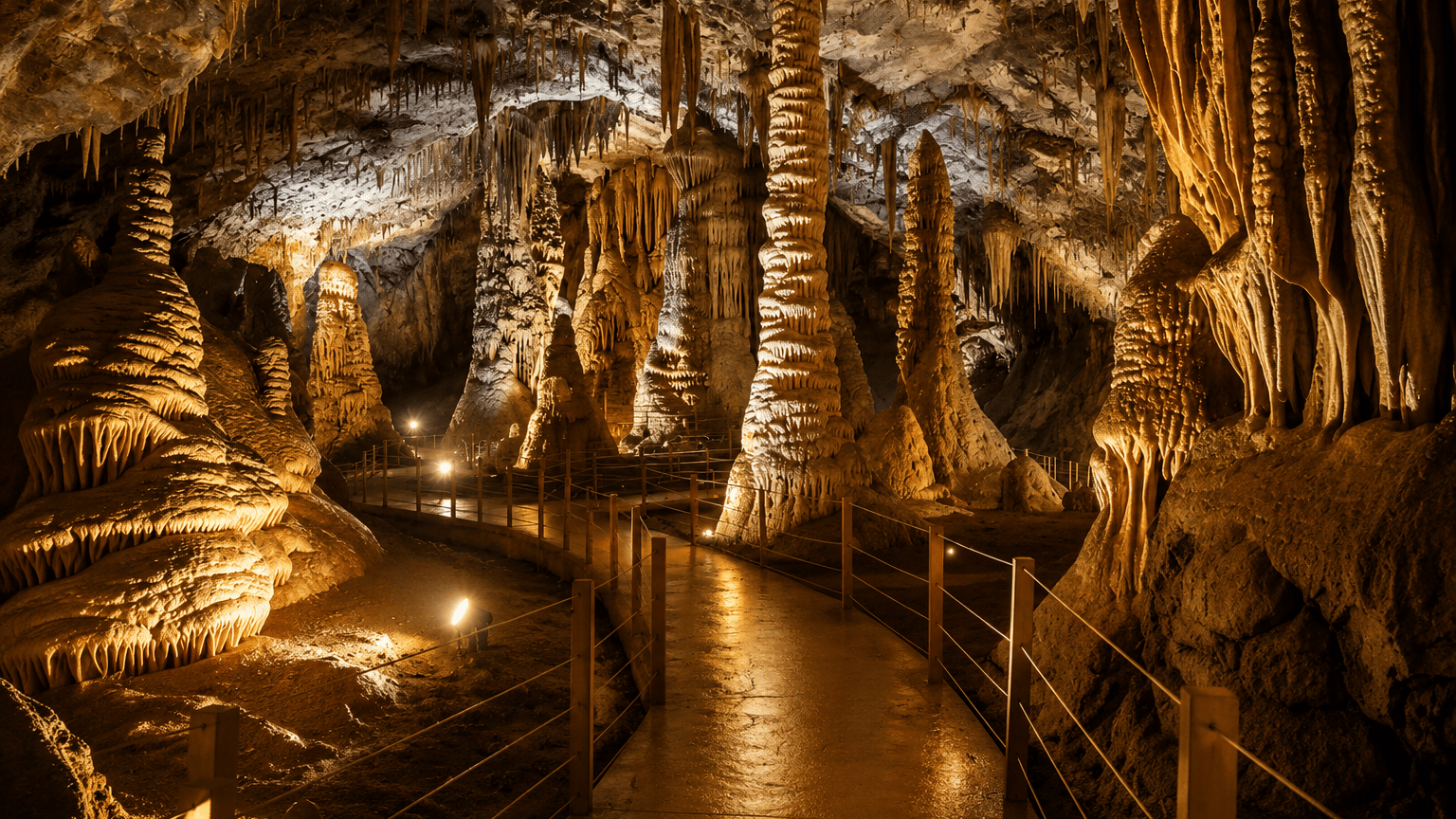
Cheddar's show caves offer rock cover and constrained entrances beside an established café. They provide a refuge shell close to village pressure, but daytime visitor space does not establish a dry, supplied home or an independent drinking-water source.
Overall
3 out of 10Defensibility
5 out of 10Isolation
1 out of 10Sustainability
3 out of 10Ranking context
How this base ranks
Global
#84 of 88 · Top 95%
Region · UK & Ireland
#10 of 11 · Top 91%
Base Type · Subterranean
#10 of 10 · Top 100%
Field assessment
At a glance
Bottom Line
Useful protection for an emergency foothold, with habitation the harder problem. The group must prove water, light and sanitary arrangements before committing to prolonged cave occupation.
Biggest Trade-off
Moving behind rock reduces exposed frontage while putting daily movement through dark, stepped passages. The same constrained routes that help control entry complicate carrying supplies and leaving safely.
Most Likely Failure
Usable drinking water and café supplies dwindle before the cave shell fails. Repeated trips outside to obtain essentials then expose the group to the village-connected approaches.
Score rationale
Why it scores this way
Defensibility · 5/10
Rock chambers and controlled visitor portals constrain contact at the occupied cave. The attraction contains separate public-facing components, so securing one entrance does not secure the whole complex.
Advantages
- Interior passages reduce the frontage the group must face at once.
Limitations
- No continuous fortified enclosure or assured fallback system links every cave and support building.
Isolation · 1/10
The caves sit within Cheddar’s road-accessible visitor area. Going underground changes local protection rather than the distance from surrounding population or the routes bringing people to the attraction.
Advantages
- Rock separates occupied chambers from surface activity, providing local shelter rather than a regional buffer.
Limitations
- Village and coach access remain close to the portals; the group must plan for nearby pressure from the outset.
Sustainability · 3/10
Stable cave temperature and integrated café space provide shelter and some practical support. Continuous residence still needs sleeping, drinking water and sanitation arrangements that daytime visitor operation does not establish.
Advantages
- The natural shell retains cover and temperature stability when powered visitor services are unavailable.
Limitations
- Wet surfaces, steps and the absence of a demonstrated residential setup limit how much cave volume becomes useful living space.
Survival horizons
How survival changes over time
Prove an occupied area
First 7 Days
Check entrances, lighting and an exit route, then inspect a limited area for sleeping and daily work. Inventory accessible café provisions and establish safe drinking water and waste handling before relying on the caves overnight.
Positive factors
- Existing visitor routes and support space offer a starting layout without excavating a new shelter.
Risks
- Wet steps and gradients make unfamiliar journeys hazardous, particularly if normal lighting fails.
Measure the cost of staying
First 100 Days
If occupation is viable, track actual food, water and lighting supplies alongside the work of keeping living areas usable. Repeated supply journeys can consume the watch capacity saved by the narrow cave approaches.
Positive factors
- Passive rock shelter does not need a generator simply to remain standing and temperate.
Risks
- Visitor throughput gives no measure of residential endurance; stores and sanitary capacity must be judged from what actually works.
Shelter outlasts replenishment
Long Term
Continued residence requires repeatable potable-water and food provision. Neither is established within this attraction boundary. The caves may retain refuge value while prolonged habitation becomes untenable; surrounding village resources cannot be annexed into the plan.
Positive factors
- The natural chambers keep their protective form even after visitor equipment becomes unusable.
Risks
- A lasting shell cannot replace consumed supplies, and no verified independent renewal system closes that gap.
Visual survey
Gallery
Location context
The Lay of the Land
Tactical assessment
Practical Reality
Best Use
Use inspected cave space and directly integrated support rooms as a limited refuge. Keep egress and the route to essential supplies manageable; establish where people can sleep and handle waste before occupying more chambers.
Strengths
- Rock chambers provide passive cover without constructing a new enclosure.
- Portal and passage geometry channels movement at the cave rather than exposing an open building frontage.
- The integrated café supplies indoor service space alongside the cave attraction.
Key Risk
The attraction can receive a large group without being equipped to house one continuously. Lighting loss and unsuitable sleeping or waste arrangements can make accessible chambers impractical despite their physical protection.
Weaknesses
- Normal village and coach access brings regional movement close to the cave entrances.
- No protected independent potable-water pathway or durable food production is established inside the complex.
- Space for visiting groups does not establish beds, dry sleeping arrangements or long-duration sanitation.
Reality Check & Constraints
The café is a real food-service starting point, but its menu gives no usable inventory or duration. Cave water, historic occupation and visible visitor capacity establish neither potable supply nor a modern residential system.
Assumptions / constraints
- The Base comprises Gough’s and Cox’s caves and directly integrated attraction support, including Gough’s Café. Village accommodation, restaurants and wider gorge or clifftop territory remain outside it.
- Twenty capable adults can organise watches and ordinary maintenance. They do not inherit attraction staff, specialist cave support or guaranteed functioning lighting and services.
- Accessible supplies and equipment condition require inspection. No stock quantity, safe untreated cave water or guaranteed survival duration is assumed.
Decision context
Rivals / Alternatives
Similar rival
Burlington Bunker
United Kingdom · Subterranean
Burlington Bunker keeps the same subterranean strategy, with only 1.7 points between the overall scores and closely matched defensibility pressure.
Overall 4.7/10
Strongest alternative
Olavsvern Naval Base
Norway · Subterranean
Olavsvern Naval Base scores 6.3 overall versus 3.0, adding a stronger sustainability profile while staying relevant as another subterranean.
Overall 6.3/10
Wildcard rival
Amundsen-Scott South Pole Station
Antarctica · Institutional Compound
Amundsen-Scott South Pole Station changes the strategy: it is built around the institutional compound strategy with a isolation edge, while Cheddar Gorge Caves holds more of the defensibility advantage.
Overall 7.7/10