North America · Remote Settlement
Telluride
United States
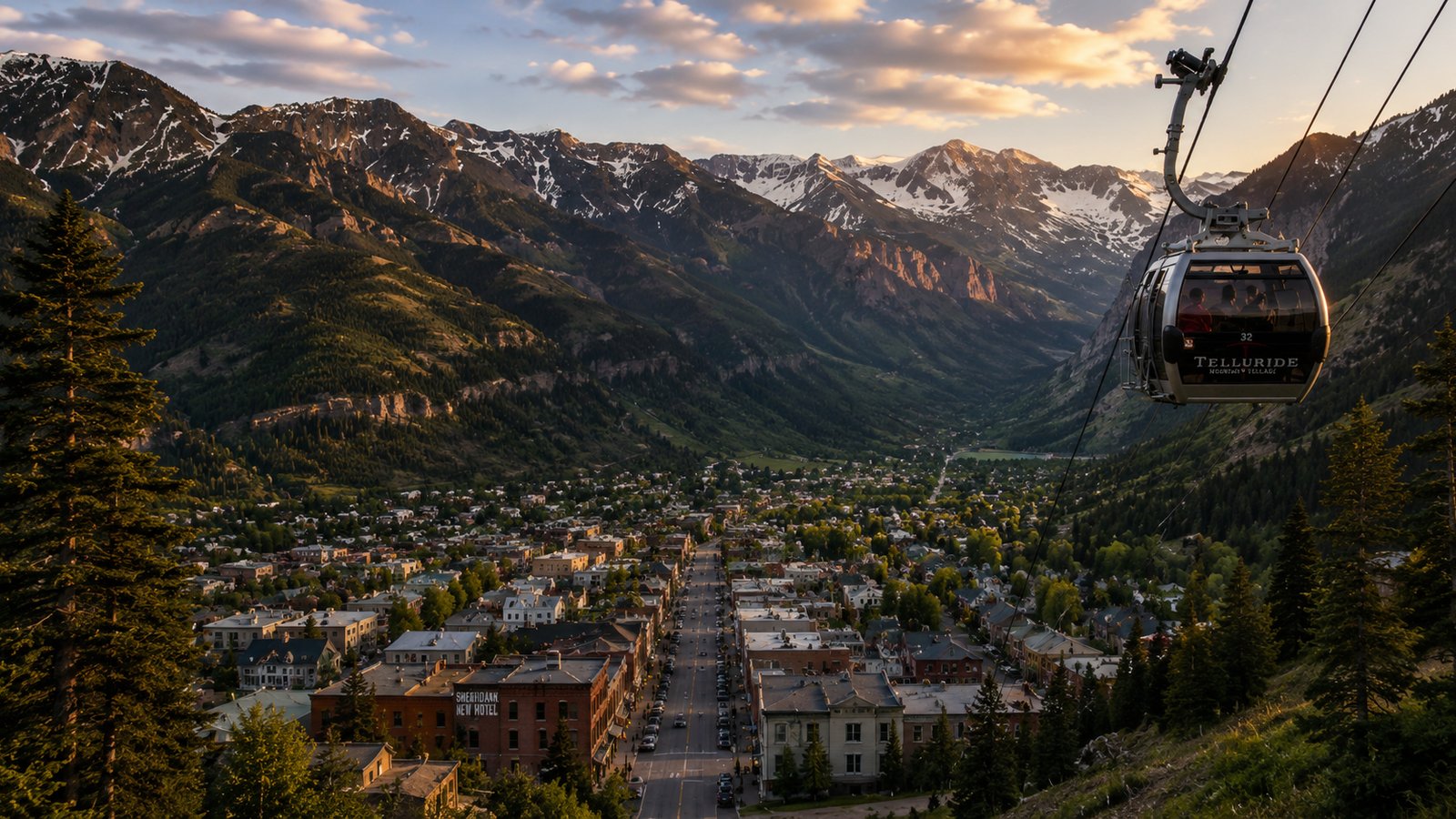
Telluride’s box canyon channels arrivals, while an established mountain town supplies housing and several water pathways. The hard problem is keeping a small occupied area habitable as treatment, heating and outside deliveries become unreliable; the canyon does not make the town a fortress.
Overall
5 out of 10Defensibility
2 out of 10Isolation
5 out of 10Sustainability
8 out of 10Ranking context
How this base ranks
Global
#43 of 88 · Top 49%
Region · North America
#7 of 9 · Top 78%
Base Type · Remote Settlement
#7 of 16 · Top 44%
Field assessment
At a glance
Bottom Line
Residential capacity is generous, but continued habitation rests on utilities and supplies that normally serve a much larger community. Twenty people need a manageable operating footprint before they need more rooms.
Biggest Trade-off
Concentrated valley access helps observation and also concentrates dependence on the routes bringing food, fuel and replacement parts. Separation buys warning while making a failed supply connection harder to replace.
Most Likely Failure
A treatment, power or heating fault turns ample housing into a shrinking habitable area, while interrupted deliveries make ordinary repair and food replacement harder.
Score rationale
Why it scores this way
Defensibility · 2/10
Steep surroundings constrain movement at valley scale, but the town is distributed and unwalled. Securing selected doors is a local task; holding the full settlement would exceed twenty people’s watch capacity.
Advantages
- Substantial existing buildings allow occupation to be concentrated behind ordinary building barriers.
Limitations
- An observed valley approach is not a sealed boundary; routes through and around town still need attention.
Isolation · 5/10
The mountain setting separates Telluride from larger population centres, yet it remains a destination with workers, visitors and normal transport links. A quiet resident count does not capture everyone potentially present.
Advantages
- The box-canyon location limits casual through movement compared with a settlement on a major through route.
Limitations
- Seasonal visitor and worker presence can raise local pressure well beyond the permanent population.
Sustainability · 8/10
Year-round housing and municipal water and wastewater services provide strong initial habitat. Their continued value depends on treatment, heat and maintenance; spare residential capacity does not renew food or keep those systems operating.
Advantages
- Source diversity and existing storage give water supply alternatives within the documented town system.
Limitations
- Pandora’s hydro output is sold to the cooperative; no independent town-wide power mode is established.
Survival horizons
How survival changes over time
Confirm the habitable area
First 7 Days
Inspect accessible housing, safe water and heating before treating the whole town as occupied. Observe valley access while checking streets and trails near the living area.
Positive factors
- Established residential infrastructure reduces the immediate need to improvise shelter.
Risks
- A box-canyon watch can create false confidence if nearby approaches or internal threats are ignored.
Manage consumption and service loss
First 100 Days
Measure food and heating demand, check treatment consumables and identify routine maintenance the group can actually perform. Reduce reliance on services whose operation cannot be sustained.
Positive factors
- Multiple documented water pathways provide options to assess if one source or plant becomes unusable.
Risks
- Consumables and repairs compete with everyday survival work as deliveries and technical assistance decline.
Prove renewal beyond spare rooms
Long Term
A continuing settlement needs repeatable food, safe water, heat and waste handling. The evidence establishes a serviced town, not an independent post-grid economy; renewability must be demonstrated rather than inferred from vacant capacity.
Positive factors
- Ordinary housing retains shelter value even when more complex municipal capabilities deteriorate.
Risks
- Without a durable food and energy pathway, retreat into fewer buildings manages consumption but does not solve renewal.
Visual survey
Gallery
Location context
The Lay of the Land
Tactical assessment
Practical Reality
Best Use
A settlement refuge for a group that can verify usable housing, water treatment and heat within the town’s existing service network.
Strengths
- Existing homes and public buildings offer residential and working space without constructing a new camp.
- Two main year-round water sources plus a backup reduce dependence on one intake, provided treatment remains usable.
- The terminal valley concentrates ordinary road arrivals enough to make observation more practical than at an open crossroads.
Key Risk
Mistaking several water sources and local hydro generation for a water-and-power system that can operate independently after the regional grid fails.
Weaknesses
- Local streets and trails leave approaches beyond any single road watch or secured building.
- Food and fuel renewal inside town is not established, despite substantial normal municipal provision.
- Wastewater service is regionally integrated, adding an operating dependency beyond the occupied homes.
Reality Check & Constraints
The Base remains Telluride town and its explicitly integrated services. Mountain Village, the airport and ski facilities are excluded; no available stores, working generators, utility specialists or guaranteed winter access are assumed.
Assumptions / constraints
- The reference group is twenty generalists, not the town’s normal public-works team. Access, treatment consumables, safe heat and usable food stocks require verification.
Decision context
Rivals / Alternatives
Similar rival
Utqiagvik
United States · Remote Settlement
Utqiagvik keeps the same remote settlement strategy, with only 0.3 points between the overall scores and closely matched isolation pressure.
Overall 5.3/10
Strongest alternative
Isle of Eigg Village
United Kingdom · Remote Settlement
Isle of Eigg Village scores 6.3 overall versus 5.0, adding a stronger isolation profile while staying relevant as another remote settlement.
Overall 6.3/10
Wildcard rival
San Felipe Fortress
Colombia · Fortified Structure
San Felipe Fortress changes the strategy: it is built around the fortified structure strategy with a defensibility edge, while Telluride holds more of the sustainability advantage.
Overall 3.7/10