North America · Remote Settlement
Utqiagvik
United States
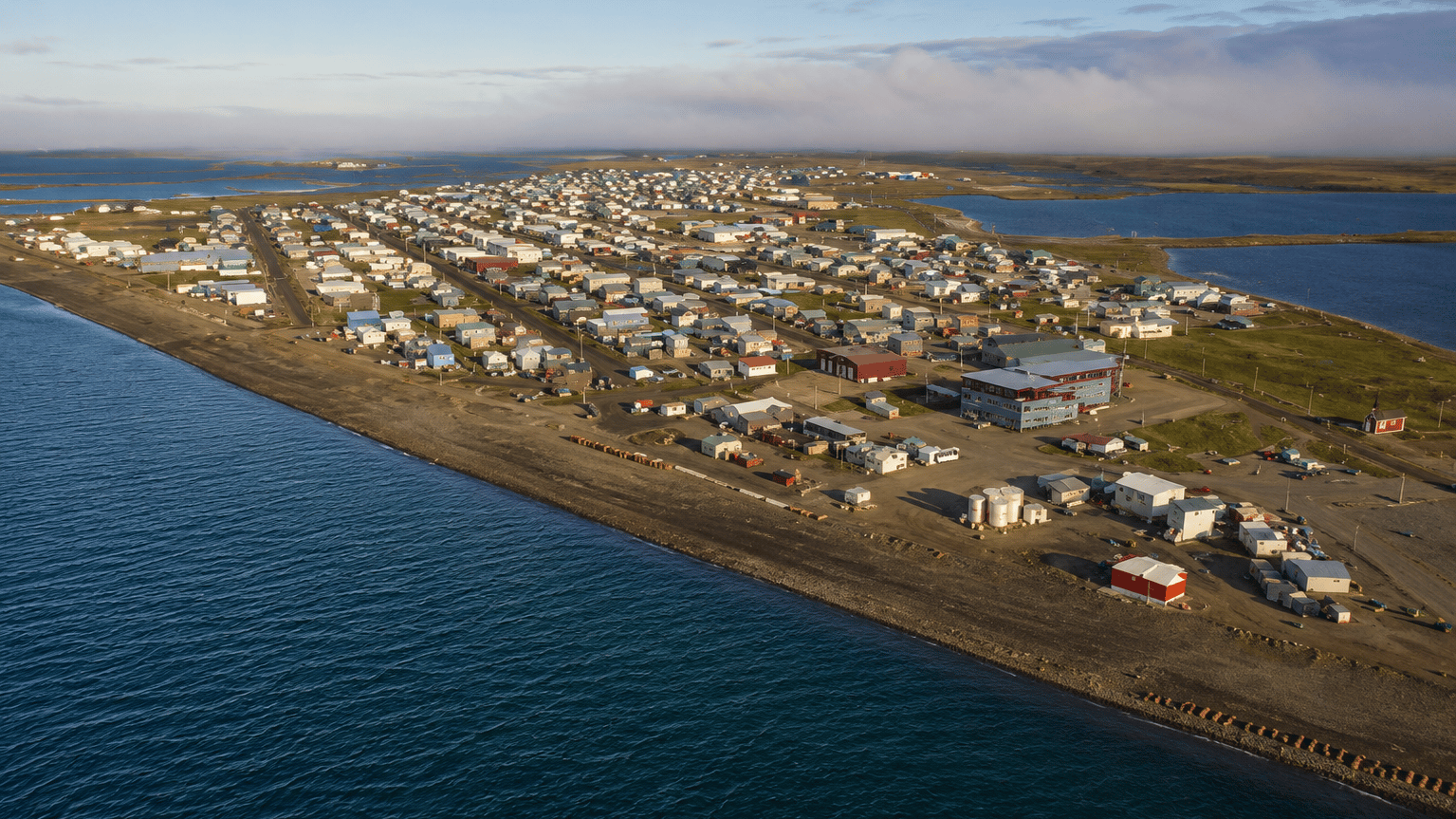
Utqiagvik’s lack of a road connection limits outside access, but its open streets offer little local containment. Existing homes and local food traditions help only while the group can sustain heat, water and practical skills.
Overall
5.3 out of 10Defensibility
2 out of 10Isolation
8 out of 10Sustainability
6 out of 10Ranking context
How this base ranks
Global
#30 of 88 · Top 34%
Region · North America
#5 of 9 · Top 56%
Base Type · Remote Settlement
#6 of 16 · Top 38%
Field assessment
At a glance
Bottom Line
A remote community with a narrow operating margin: choose a manageable refuge within the town and establish which essential services the group can realistically keep using.
Biggest Trade-off
The same transport difficulty that reduces incoming pressure makes replacement parts and outside technical help harder to obtain. Nearby gas is an advantage only while its delivery system works.
Most Likely Failure
A heat or power fault outstrips available repair skills; cold living space then makes water handling, sanitation and routine work harder, accelerating abandonment of otherwise usable housing.
Score rationale
Why it scores this way
Defensibility · 2/10
The town offers buildings to occupy, not a continuous barrier to hold. Select a small connected refuge and protect its entrances; remoteness does not make the remaining streets controlled territory.
Advantages
- Existing homes provide enclosed positions from which to organise a reduced occupied area.
Limitations
- Moving between scattered buildings exposes people on open streets and divides the available watch.
Isolation · 8/10
Without a road link, Utqiagvik is separated from the wider transport network in a way most towns are not. That reduces regional access, but the community itself remains a local source of outbreak pressure.
Advantages
- Normal long-distance access requires air transport rather than a drive along a connected road.
Limitations
- A regional transport centre is inhabited at the outset; distance cannot exclude threats already present.
Sustainability · 6/10
Existing housing and utilities demonstrate that people can live here year-round. The Arctic makes continued heat and water operation central to that habitability, rather than optional comforts supplied by abundant spare rooms.
Advantages
- Resident-serving gas, water, sewer and electricity support a complete domestic routine while available.
Limitations
- A small household may be manageable even when the utility system supporting it exceeds the group’s repair capabilities.
Survival horizons
How survival changes over time
Verify warmth before expanding
First 7 Days
Choose nearby homes with usable heat, drinking water and sanitation, then establish a short watch circuit. Inventory what is actually accessible instead of planning around the town’s normal population capacity.
Positive factors
- Existing domestic infrastructure allows a compact occupied refuge to start with shelter already built.
Risks
- A remote address offers no protection against infection or threats already inside the chosen area.
Keep the essential routine running
First 100 Days
Track consumption and recognise the faults the group can handle before relying on continued utility service. Assess food access against actual equipment, weather and local knowledge rather than treating subsistence as an automatic ration.
Positive factors
- Established hunting and fishing practices identify a food pathway worth assessing with the necessary competence.
Risks
- Specialised repairs can exceed ordinary skills even when nearby gas and water sources remain physically present.
Renew food and preserve systems
Long Term
Local food harvesting and resident-serving energy distinguish Utqiagvik from a refuge dependent entirely on stored imports. Their value over successive seasons still depends on skilled effort, usable equipment and maintenance that outside freight can no longer be assumed to supply.
Positive factors
- The documented community has real replenishment pathways to evaluate, rather than only a larger cache to consume.
Risks
- A lost technical capability may be harder to replace than the resource it unlocks; unused gas or inaccessible food cannot keep a home habitable.
Visual survey
Gallery
Location context
The Lay of the Land
Tactical assessment
Practical Reality
Best Use
Concentrate in a small cluster of usable homes, keeping watch routes and journeys to essential services short rather than attempting to control the whole settlement.
Strengths
- The absence of a road connection removes a continuous overland transport corridor from the wider Alaska network.
- Year-round homes and resident-serving utilities provide a real starting habitat rather than an improvised camp.
- Nearby natural gas and established hunting and fishing offer resource pathways beyond imported household provisions.
Key Risk
Mistaking low demand from a small group for low operating complexity. Heat, power and water still require functioning equipment and knowledge beyond ordinary household upkeep.
Weaknesses
- Open streets and settlement edges provide many approaches once a threat is already nearby.
- Essential warmth depends on maintained systems whose failure carries unusually severe consequences.
- Air and seasonal marine freight are difficult routes for replacing specialised goods after normal logistics fail.
Reality Check & Constraints
Documented Iñupiat subsistence practices demonstrate a real local food pathway, not skills a newcomer automatically possesses. No crew, equipment condition, harvest yield or uninterrupted gas service is guaranteed.
Assumptions / constraints
- The fixed reference group has ordinary capabilities, not an inherited utility crew or expert Arctic harvest team.
- Housing and resident-serving systems remain inside the recorded boundary; aircraft, barges and distant oil-field assets are not guaranteed.
- Current accessible stocks, equipment serviceability and sustainable harvest by this group remain unverified.
Decision context
Rivals / Alternatives
Similar rival
Kibber Village
India · Remote Settlement
Kibber Village keeps the same remote settlement strategy, with only 0.0 points between the overall scores and closely matched defensibility pressure.
Overall 5.3/10
Strongest alternative
Amundsen-Scott South Pole Station
Antarctica · Institutional Compound
Amundsen-Scott South Pole Station scores 7.7 overall versus 5.3, adding a stronger sustainability profile while staying relevant as a comparable survival plan.
Overall 7.7/10
Wildcard rival
San Felipe Fortress
Colombia · Fortified Structure
San Felipe Fortress changes the strategy: it is built around the fortified structure strategy with a defensibility edge, while Utqiagvik holds more of the isolation advantage.
Overall 3.7/10