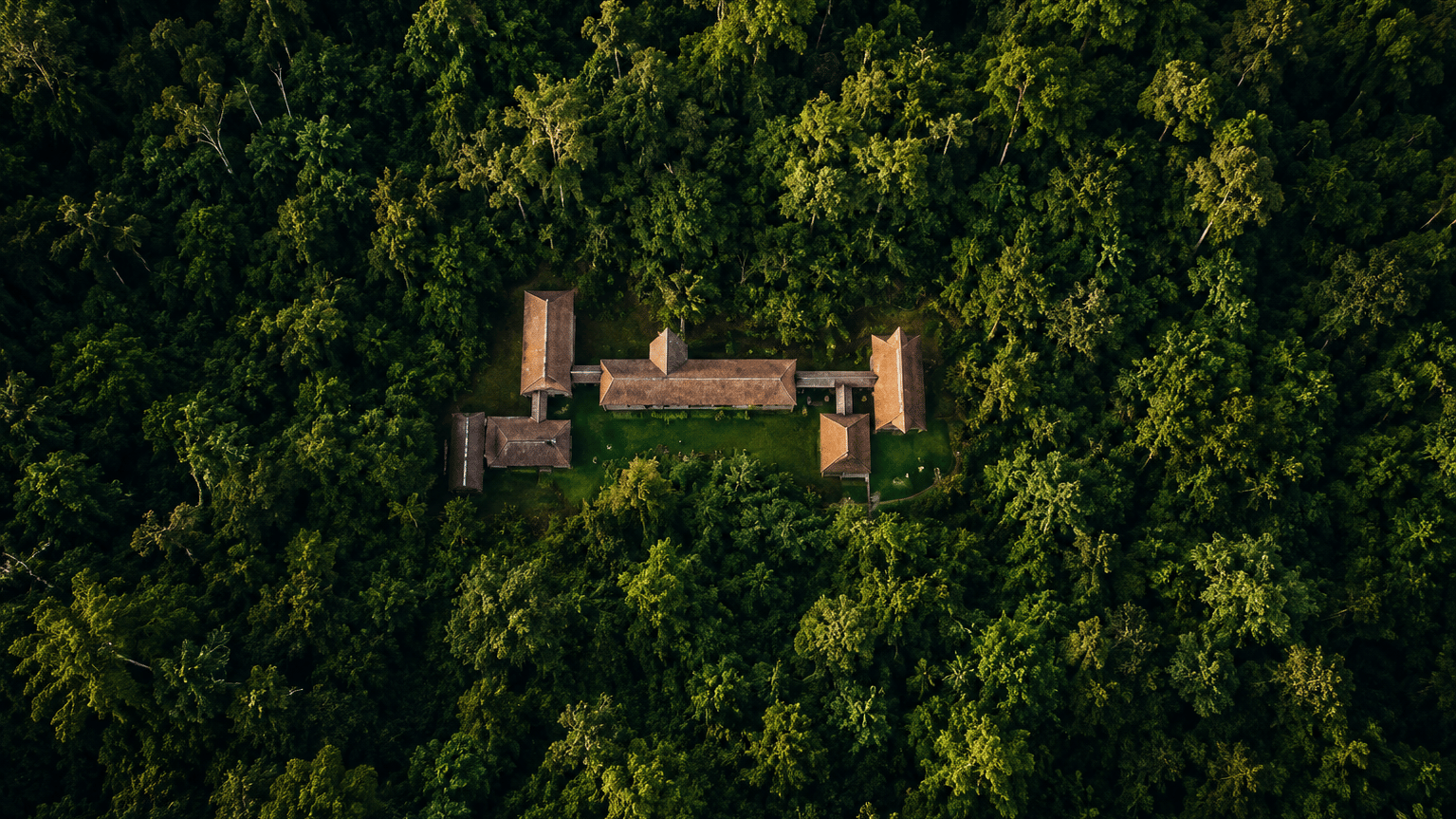
South America · Institutional Compound
Tambopata Research Center
Peru
Tambopata Research Center offers established rooms, bathrooms and treated spring water deep inside the Amazon reserve. Its long river approach provides separation, but the open-air lodge offers little physical protection. Twenty people gain a capable supplied habitat, not the food logistics, technical staff or forest skills that keep it operating.
Overall
5.7 out of 10Defensibility
1 out of 10Isolation
8 out of 10Sustainability
8 out of 10Ranking context
How this base ranks
Global
#25 of 88 · Top 28%
Region · South America
#1 of 7 · Top 14%
Base Type · Institutional Compound
#5 of 6 · Top 83%
Field assessment
At a glance
Bottom Line
A strong domestic starting point if water treatment and essential lodge functions can be maintained. Remote location reduces routine contact while making the replacement of food, fuel and parts much harder.
Biggest Trade-off
The upriver journey helps separate the lodge from settlements, but the same route connects its everyday food and technical needs to external support.
Most Likely Failure
Food or fuel replenishment stops while an essential service needs repair, leaving the group with rooms and equipment but diminishing ability to provide safe water and meals.
Score rationale
Why it scores this way
Defensibility · 1/10
Open-air buildings and rooms facing the forest provide little barrier against close contact. The compound has no evidenced hardened perimeter; remoteness changes the likelihood of arrival rather than its ability to resist someone already there.
Advantages
- Existing internal service spaces offer limited places to organise equipment and local fallback.
Limitations
- The lodge's open-wall design does not provide an enclosed refuge simply because it has guest rooms.
Isolation · 8/10
A long combined road-and-river journey separates the lodge from Puerto Maldonado and normal settlement. Operated transfers still connect it to the outside, and disruption makes evacuation and replacement supplies harder as well as reducing arrivals.
Advantages
- The established river approach gives a clear logistics route to understand and observe.
Limitations
- Dense forest around the compound prevents treating the landing as the only possible local approach.
Sustainability · 8/10
Rooms, bathrooms, dining and common spaces provide an established domestic environment for twenty. Treated spring water is a real advantage, but guest comfort depends on functioning utilities and meal logistics rather than passive room capacity alone.
Advantages
- The operator identifies a local spring-water pathway with ozone purification and drinking-water dispensing.
Limitations
- No durable compound food-production system replaces the externally replenished kitchen supply.
Survival horizons
How survival changes over time
Audit the working lodge
First 7 Days
Inspect drinking-water treatment and dispensing, kitchen stocks, sanitation and available sleeping space. Identify who can operate essential systems and map the landing and short daily routes before relying on the supplied-lodge model.
Positive factors
- The existing room and common-space layout gives twenty people useful separation for sleeping, storage and work.
Risks
- A current service listing does not establish available staff, fuel levels, working equipment or guaranteed communications after ordinary support ends.
Follow the inputs as stores fall
First 100 Days
Track food and fuel use, inspect treatment and refrigeration needs, and assess whether existing maintenance tasks fit actual skills and spares. Keep essential domestic functions distinct from optional guest amenities.
Positive factors
- Simple open-air shelter retains passive usefulness without continuously powering every guest service.
Risks
- Losing food logistics can become decisive before the compound runs out of physical accommodation.
Prove repeatable provisioning
Long Term
Continued occupation needs reliable water treatment and a renewable or repeatable food pathway beyond initial kitchen stocks. Neither access to rainforest nor a research setting demonstrates that the group can safely replace imported provisions.
Positive factors
- A local spring offers a resource pathway to maintain rather than depending solely on transported drinking water.
Risks
- No working boat, unlimited generator fuel, specialist treatment crew or dependable forest harvest is assumed for the twenty-person group.
Visual survey
Gallery
Location context
The Lay of the Land
Tactical assessment
Practical Reality
Best Use
Keep accommodation and essential work within the existing compound, inspect treated-water provision and monitor the landing and immediate approaches. Avoid turning distant forest excursions into the default provisioning plan.
Strengths
- Existing guest rooms and bathrooms provide real domestic infrastructure.
- Treated spring water gives a documented local drinking-water pathway.
- Dining, common and research spaces offer more practical headroom than sleeping capacity alone.
Key Risk
Treatment, refrigeration, power and food replenishment need continuing inputs and competent operation. A well-equipped lodge does not show that twenty adults can maintain its whole service chain.
Weaknesses
- Open construction offers minimal direct protection once pressure reaches the compound.
- Fresh produce, meat, fish and dairy depend on the Puerto Maldonado supply chain.
- Fuel, treatment and refrigeration create maintenance demands that spare rooms cannot solve.
Reality Check & Constraints
The Base is the lodge compound and integrated utilities, not the reserve or river corridor. Current guest services establish facilities; staff availability, usable stocks and survivors' ability to run them remain separate questions.
Assumptions / constraints
- Power continuity is unverified: current operator copy lists common-area electricity 24/7, while the frozen assessment records scheduled provision. Neither establishes autonomous power or authorises a score change.
Decision context
Rivals / Alternatives
Similar rival
Danum Valley Field Centre
Malaysia · Institutional Compound
Danum Valley Field Centre keeps the same institutional compound strategy, with only 0.3 points between the overall scores and closely matched defensibility pressure.
Overall 6/10
Strongest alternative
Amundsen-Scott South Pole Station
Antarctica · Institutional Compound
Amundsen-Scott South Pole Station scores 7.7 overall versus 5.7, adding a stronger defensibility profile while staying relevant as another institutional compound.
Overall 7.7/10
Wildcard rival
San Felipe Fortress
Colombia · Fortified Structure
San Felipe Fortress changes the strategy: it is built around the fortified structure strategy with a defensibility edge, while Tambopata Research Center holds more of the isolation advantage.
Overall 3.7/10