Africa · Isolated Landmass
Seychelles
Seychelles
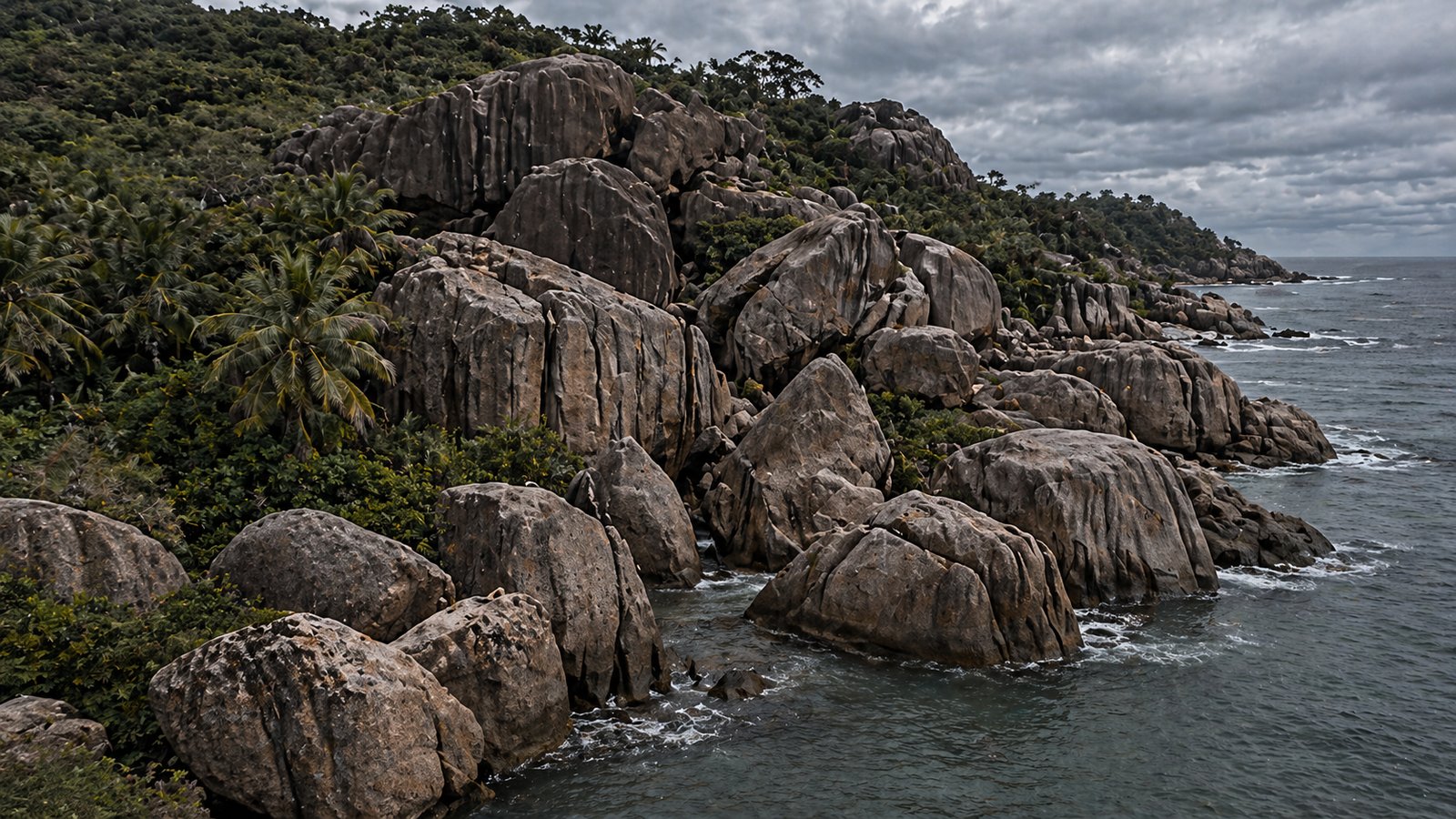
Seychelles offers ocean separation, established settlements, freshwater systems and a major fishing economy. The challenge is scale and dependence: twenty people cannot hold an archipelago, while imported food and fuel underpin much of the comfortable island life visible today.
Overall
4.7 out of 10Defensibility
1 out of 10Isolation
6 out of 10Sustainability
7 out of 10Ranking context
How this base ranks
Global
#54 of 88 · Top 61%
Region · Africa
#2 of 11 · Top 18%
Base Type · Isolated Landmass
#9 of 19 · Top 47%
Field assessment
At a glance
Bottom Line
A capable inhabited archipelago with useful resources, but no automatic route to small-group autonomy. Judge the water, food and transport chain actually accessible from the occupied area.
Biggest Trade-off
Ocean gaps interrupt incoming ground pressure and also separate the people, utility assets and supplies needed to keep a dispersed island society working.
Most Likely Failure
Imported reserves diminish while a power or transport interruption breaks the occupied area's water-and-food routine, forcing journeys the group cannot reliably sustain.
Score rationale
Why it scores this way
Defensibility · 1/10
Many inhabited islands, harbours and coastlines defeat continuous defence by a small community. Local accommodation may be secured, but that does not create control of the archipelago or its transport links.
Advantages
- Water gaps interrupt ordinary ground movement between separate islands.
Limitations
- Twenty people cannot watch landing places and occupied centres across the whole national geography.
Isolation · 6/10
The Indian Ocean separates Seychelles from continental population concentrations. The inhabited islands still contain a substantial resident population, so outside remoteness must not be confused with an outbreak-free starting position.
Advantages
- A distant mainland threat cannot simply walk along a road into the archipelago.
Limitations
- International and inter-island connections coexist with an established population; the main islands are not empty refuges.
Sustainability · 7/10
Housing and extensive public water services provide an established habitat, supported by real fisheries. Endurance depends on keeping useful parts of that habitat functioning as food imports and fuel deliveries become unreliable.
Advantages
- Reservoirs, rivers, boreholes and desalination provide a more varied water system than reliance on seawater treatment alone.
Limitations
- Treatment and pumping still need upkeep, while dry periods increase pressure on supply; a catchment is not a guaranteed safe tap.
Survival horizons
How survival changes over time
Check the local service chain
First 7 Days
Confirm potable-water access, inspect accommodation and inventory reachable provisions. Record which journeys require a vessel or another island before committing people to watching widely separated assets.
Positive factors
- Existing homes and public services offer a domestic starting point rather than an undeveloped camp.
Risks
- Do not count a harbour's boats, a resort's stores or operating utility crews as available without verifying them.
Manage imports running down
First 100 Days
Measure food and fuel use as ordinary deliveries become unreliable. Check the occupied area's pumping, treatment and transport dependencies while testing whether accessible local food can supplement actual reserves.
Positive factors
- Established fisheries offer a real food-production pathway to assess, distinct from imported shop goods.
Risks
- Commercial catch volumes depend on fleets and logistics; they cannot be divided by twenty to calculate the group's food duration.
Match demand to renewal
Long Term
Continued occupation needs repeatable freshwater access, dietary coverage and maintainable transport after external inputs decline. Productive seas and freshwater catchments help, but do not establish that twenty people can operate a national utility and food system.
Positive factors
- Surface-water sources and local fisheries retain value beyond a single shipment of consumables.
Risks
- Dry-season supply pressure and worn pumps can coincide with shrinking fuel reserves; ocean separation then makes replacement harder.
Visual survey
Gallery
Location context
The Lay of the Land
Tactical assessment
Practical Reality
Best Use
Keep daily routines close to verified water access and usable accommodation, then assess reachable local food pathways. Limit dependence on inter-island trips rather than attempting to supervise every harbour and utility site.
Strengths
- The inhabited islands provide ample housing and service capacity relative to a small group.
- Freshwater sources include rivers, boreholes and reservoirs as well as desalination.
- An established fishing economy provides a concrete route for assessing local food access.
Key Risk
Fuel-dependent electricity supports water treatment and pumping as well as transport. Losing an operating link can leave freshwater physically present but difficult to deliver safely.
Weaknesses
- Useful infrastructure is dispersed across islands rather than enclosed within a single controllable compound.
- Electricity remains strongly dependent on fossil fuel, exposing utilities to disrupted imports.
- Substantial food imports and limited agricultural land constrain dietary independence despite abundant marine activity.
Reality Check & Constraints
The evaluated Base is the full Seychelles archipelago, not a conveniently empty island or resort. National infrastructure and fishing throughput do not become twenty survivors' equipment, workforce or food reserve.
Assumptions / constraints
- No selected island replaces the approved boundary. Safe water yield, accessible harvest, stocks, vessels and equipment skills remain unverified; future international deliveries are not guaranteed.
Decision context
Rivals / Alternatives
Similar rival
Île d’Yeu
France · Isolated Landmass
Île d’Yeu keeps the same isolated landmass strategy, with only 0.0 points between the overall scores and closely matched defensibility pressure.
Overall 4.7/10
Strongest alternative
Heligoland
Germany · Isolated Landmass
Heligoland scores 6.3 overall versus 4.7, adding a stronger isolation profile while staying relevant as another isolated landmass.
Overall 6.3/10
Wildcard rival
San Felipe Fortress
Colombia · Fortified Structure
San Felipe Fortress changes the strategy: it is built around the fortified structure strategy with a defensibility edge, while Seychelles holds more of the isolation advantage.
Overall 3.7/10