Oceania · Isolated Landmass
Fiji Islands
Fiji
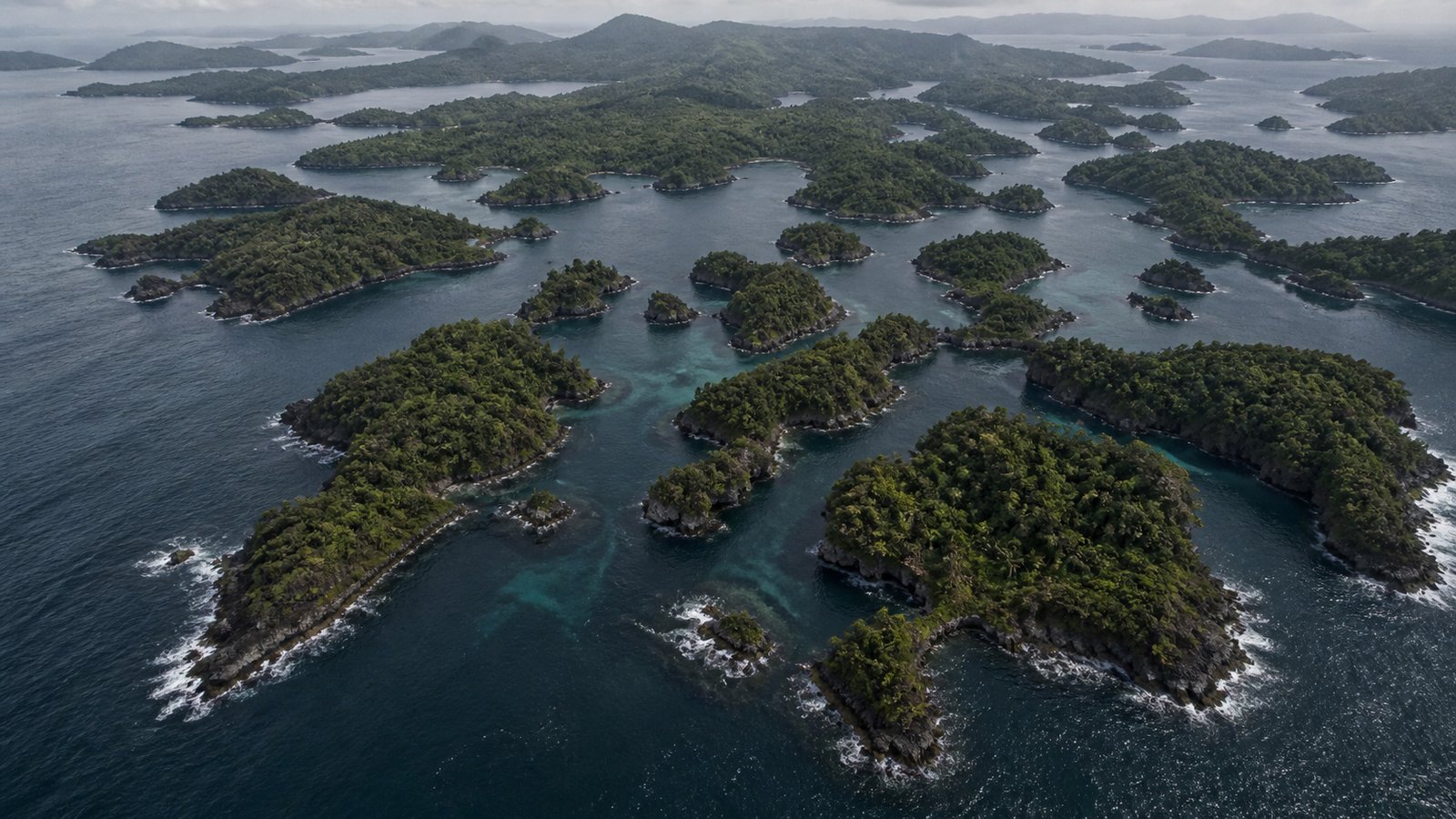
Fiji offers established homes, treated water, farming and fisheries across a populated archipelago. Twenty survivors inherit abundant possibilities alongside an unmanageable defensive boundary, distributed utilities and cyclone exposure; ocean distance does not remove threats already within the islands.
Overall
3.7 out of 10Defensibility
1 out of 10Isolation
2 out of 10Sustainability
8 out of 10Ranking context
How this base ranks
Global
#73 of 88 · Top 83%
Region · Oceania
#3 of 4 · Top 75%
Base Type · Isolated Landmass
#16 of 19 · Top 84%
Field assessment
At a glance
Bottom Line
A capable inhabited region with genuine renewal resources, whose survival value depends on what a small group can safely reach and operate rather than national infrastructure totals.
Biggest Trade-off
The archipelago offers many places and resources to use, but its dispersed settlements, shores and service networks exceed what twenty people can secure or maintain.
Most Likely Failure
Storm damage and declining transport or utilities separate the group from usable water and food, even while substantial resources remain elsewhere in the archipelago.
Score rationale
Why it scores this way
Defensibility · 1/10
Fiji has no single boundary that twenty people can hold. Protecting occupied buildings is a local task; it cannot secure the many inhabited islands, ports and coastlines included in the evaluated Base.
Advantages
- Sea gaps and established port links constrain some movements between islands into observable journeys.
Limitations
- Other landing points and existing settlements remain beyond any one defended position.
Isolation · 2/10
The Pacific separates Fiji from continental populations, but the canonical Base already contains a large population and established transport links. Distance from another country therefore offers limited protection against pressure arising within Fiji.
Advantages
- There is no ordinary overland route from a continental outbreak into the islands.
Limitations
- Local roads, settlements and inter-island connections still permit movement from places where infection is already present.
Sustainability · 8/10
Homes, treated water, sanitation, food production and electricity make Fiji a well-established habitat. Maintaining useful domestic routines for twenty people is more realistic than taking over the distributed systems that normally sustain the nation.
Advantages
- Living and service spaces already support ordinary households, allowing a group to assess existing facilities rather than start with a bare site.
Limitations
- Cyclone exposure and dependence on functioning utilities and imported inputs prevent treating that habitat as automatically durable.
Survival horizons
How survival changes over time
Establish access to daily essentials
First 7 Days
Inspect reachable shelter, check the local water service and identify food that is actually accessible. Keep the initial occupied area compact and assess nearby population pressure before making journeys to distant facilities.
Positive factors
- Established residential and service buildings provide practical choices for organising the first household routines.
Risks
- Selecting a quiet-looking shore does not establish that nearby settlements or the routes supplying it are safe.
Keep provision within operating capacity
First 100 Days
Consumption and maintenance replace simple occupation as the main workload. Track treatment, power and food-handling dependencies, while assessing usable crops and fisheries against the labour and equipment available rather than assuming national output will continue.
Positive factors
- Existing local food production gives the group pathways to assess as stored provisions decline.
Risks
- A utility or transport interruption can disrupt several daily needs at once, even without a breach of the occupied buildings.
Sustain repeatable local renewal
Long Term
Endurance depends on repeatable harvests, safe water and maintainable energy use within the group's reach. Cyclone recovery and replacement materials remain part of that cycle; reducing daily consumption cannot by itself restore damaged networks or replace imports.
Positive factors
- Productive land, fisheries and local water resources offer a stronger renewal foundation than a refuge reliant entirely on deliveries.
Risks
- Successive damage, equipment wear and lost connections can leave useful resources beyond the group's safe working range.
Visual survey
Gallery
Location context
The Lay of the Land
Tactical assessment
Practical Reality
Best Use
Keep daily occupation and essential journeys within a manageable area, checking water, shelter and food access together. This is an operating choice within the whole Fiji Base, not a replacement evaluation of one island or resort.
Strengths
- Existing housing and wastewater services offer a domestic foundation beyond emergency shelter.
- Agriculture and fisheries provide food-renewal opportunities beyond finite imported stores.
- Major hydro generation supplies a genuine local energy resource alongside thermal plant.
Key Risk
National food production and electricity generation can be mistaken for supplies the group controls, overlooking access, equipment, fuel and the people needed to run them.
Weaknesses
- Numerous settlements and coastlines prevent twenty people from holding the national boundary as one position.
- Water treatment, pumps and distribution need continued operation; a network on the map is not a protected supply at the occupied shelter.
- Local production coexists with food imports and fuel-dependent generation rather than replacing those dependencies.
Reality Check & Constraints
Fiji supports a large resident population as well as visitors. Its mature services are real, but neither a clean start nor uninterrupted treatment, shipping and power follows from being surrounded by the Pacific.
Assumptions / constraints
- The whole national archipelago remains the Base; no smaller island, village or resort inherits a separate defensive or isolation assessment.
- Twenty capable adults are not assumed to include utility engineers, a fishing crew or a national transport workforce.
- Usable stocks, equipment, safe local water and accessible routes require verification; future imports and the horizon durations are not guaranteed.
Decision context
Rivals / Alternatives
Similar rival
Tasmania
Australia · Isolated Landmass
Tasmania keeps the same isolated landmass strategy, with only 0.7 points between the overall scores and closely matched sustainability pressure.
Overall 4.3/10
Strongest alternative
Heligoland
Germany · Isolated Landmass
Heligoland scores 6.3 overall versus 3.7, adding a stronger isolation profile while staying relevant as another isolated landmass.
Overall 6.3/10
Wildcard rival
Fort Jefferson
United States · Fortified Structure
Fort Jefferson changes the strategy: it is built around the fortified structure strategy with a defensibility edge, while Fiji Islands holds more of the sustainability advantage.
Overall 6.7/10