Eastern Europe · Remote Settlement
Visby
Sweden
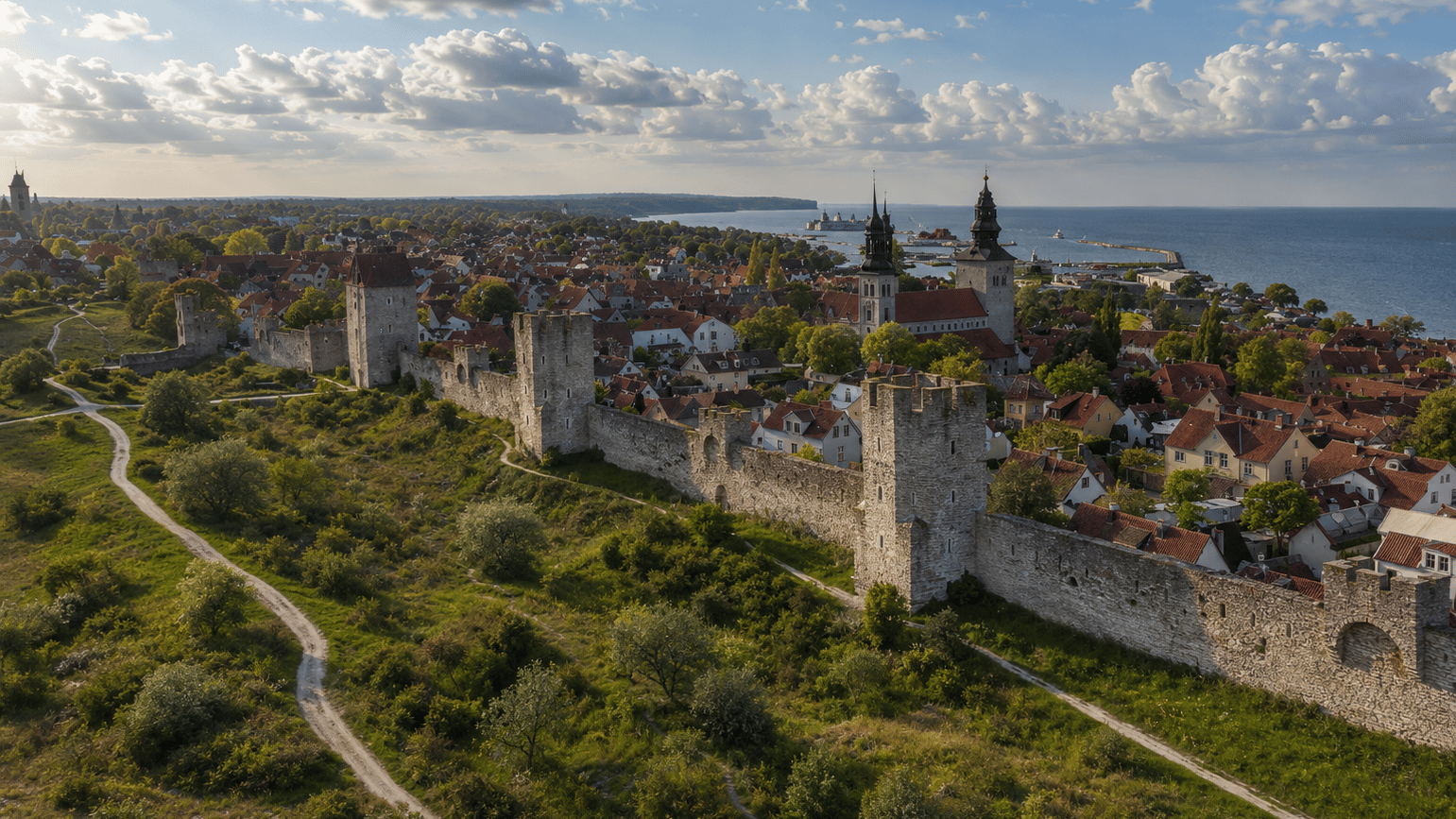
Visby offers a living town behind medieval walls, with housing and municipal services already established. Its problem is scale: a small community inherits kilometres of perimeter beside a larger modern city, while water and heating depend on systems beyond the walls.
Overall
5 out of 10Defensibility
6 out of 10Isolation
1 out of 10Sustainability
8 out of 10Ranking context
How this base ranks
Global
#44 of 88 · Top 50%
Region · Eastern Europe
#6 of 10 · Top 60%
Base Type · Remote Settlement
#8 of 16 · Top 50%
Field assessment
At a glance
Bottom Line
A useful urban refuge if occupation stays manageable. The wall buys resistance, but twenty people cannot treat the entire historic town as watched territory or its municipal connections as independent life support.
Biggest Trade-off
The enclosed town provides far more accommodation than the group needs, but using that space spreads watches and supply journeys across streets next to an active urban threat source.
Most Likely Failure
Attention concentrates on the impressive wall while an inadequately controlled road gate or harbour-side approach exposes the occupied streets. Perimeter length makes gaps in coverage difficult to recover from.
Score rationale
Why it scores this way
Defensibility · 6/10
Stone walls, towers and gates provide genuine resistance to ground entry. The difficulty is staffing the enclosure: public road openings and the harbour-facing edge remain practical weaknesses across an extensive circuit.
Advantages
- The wall channels movement towards openings that can be checked before deciding where to concentrate watches.
Limitations
- A historic gate location does not establish a strong current closure, and leaving a sector unwatched weakens the value of the whole enclosure.
Isolation · 1/10
Gotland’s sea crossing does not separate the walled town from modern Visby immediately outside it. The dominant nearby population source is already across the gates, rather than across the Baltic.
Advantages
- The stone boundary gives a clear place to assess entry from the adjoining city.
Limitations
- The larger urban area remains connected to the historic core through ordinary streets; no untouched island start is assumed.
Sustainability · 8/10
An inhabited town supplies established rooms, commerce, drinking-water service and heat. Those are strong starting conditions, but continued habitation requires utilities and consumables that a small group does not automatically control.
Advantages
- Existing residential and commercial space supports daily living without first creating weatherproof accommodation.
Limitations
- Water-source constraints and technically maintained heating leave essential functions vulnerable even while the masonry remains sound.
Survival horizons
How survival changes over time
Establish a manageable foothold
First 7 Days
Check occupied buildings, water at the tap and access through nearby gates. Choose short daily routes within the town before assigning watches; taking possession of more streets can create obligations faster than it creates useful shelter.
Positive factors
- An existing neighbourhood offers indoor space for organising people and supplies immediately.
Risks
- Open road gates and pressure from the adjoining city can defeat an occupation plan based only on the wall’s appearance.
Reduce the utility burden
First 100 Days
Record consumption, check leaks and ordinary building faults, and consolidate rooms if services deteriorate. Review what the group can maintain itself; a smaller occupied footprint reduces work without making the municipal network independent.
Positive factors
- Durable masonry retains shelter and barrier value while the group prioritises limited repair labour.
Risks
- Declining water or heat can force repeated journeys and emergency work outside the protected daily routine.
Shelter must outlast its supply chain
Long Term
The enduring problem is replacing food, safe water and heat after normal services and deliveries fail. The historic core has useful buildings, but no established independent renewal system; wider Gotland agriculture remains outside the Base.
Positive factors
- Passive walls and existing houses continue to offer a place to organise a smaller occupied refuge.
Risks
- Consuming what shops contain postpones scarcity; it does not establish the next harvest or an independent energy source.
Visual survey
Gallery
Location context
The Lay of the Land
Tactical assessment
Practical Reality
Best Use
Concentrate sleeping, stores and daily work in a manageable part of the existing town. Inspect the routes between those functions and the nearest gates before committing people to patrol the full circuit.
Strengths
- The surviving wall and towers make the town boundary legible and concentrate many routine entries at identifiable gates.
- Housing and lodging provide options for separating sleeping, storage and illness without constructing a new settlement.
- Dry moats and open defensive spaces give observers more warning than buildings pressed directly against every approach.
Key Risk
A service outage can turn spare housing into unusable capacity: loss of safe water or district heating creates demands that ordinary building repairs cannot resolve.
Weaknesses
- A 3.4-kilometre wall creates a watch burden far beyond the number of people needed simply to occupy a few buildings.
- Water and district heating require maintained regional infrastructure; neither is demonstrated as an independent system inside the walls.
- No dependable in-boundary food production is established, so commercial premises cannot be treated as a renewing food supply.
Reality Check & Constraints
This is the historic walled town, not a self-sufficient slice of Gotland. Shops and lodging establish useful facilities, not accessible inventories; a municipal connection establishes service, not a waterworks the group can operate.
Assumptions / constraints
- Twenty capable adults can organise local watches and basic repairs, but cannot replace municipal utility crews. Gate condition, usable rooms and accessible stocks still require inspection.
Decision context
Rivals / Alternatives
Similar rival
Clovelly
United Kingdom · Remote Settlement
Clovelly keeps the same remote settlement strategy, with only 1.3 points between the overall scores and closely matched isolation pressure.
Overall 3.7/10
Strongest alternative
Isle of Eigg Village
United Kingdom · Remote Settlement
Isle of Eigg Village scores 6.3 overall versus 5.0, adding a stronger isolation profile while staying relevant as another remote settlement.
Overall 6.3/10
Wildcard rival
Waw an Namus Caldera
Libya · Natural Landform
Waw an Namus Caldera changes the strategy: it is built around the natural landform strategy with a isolation edge, while Visby holds more of the sustainability advantage.
Overall 4.3/10