UK & Ireland · Remote Settlement
Clovelly
United Kingdom
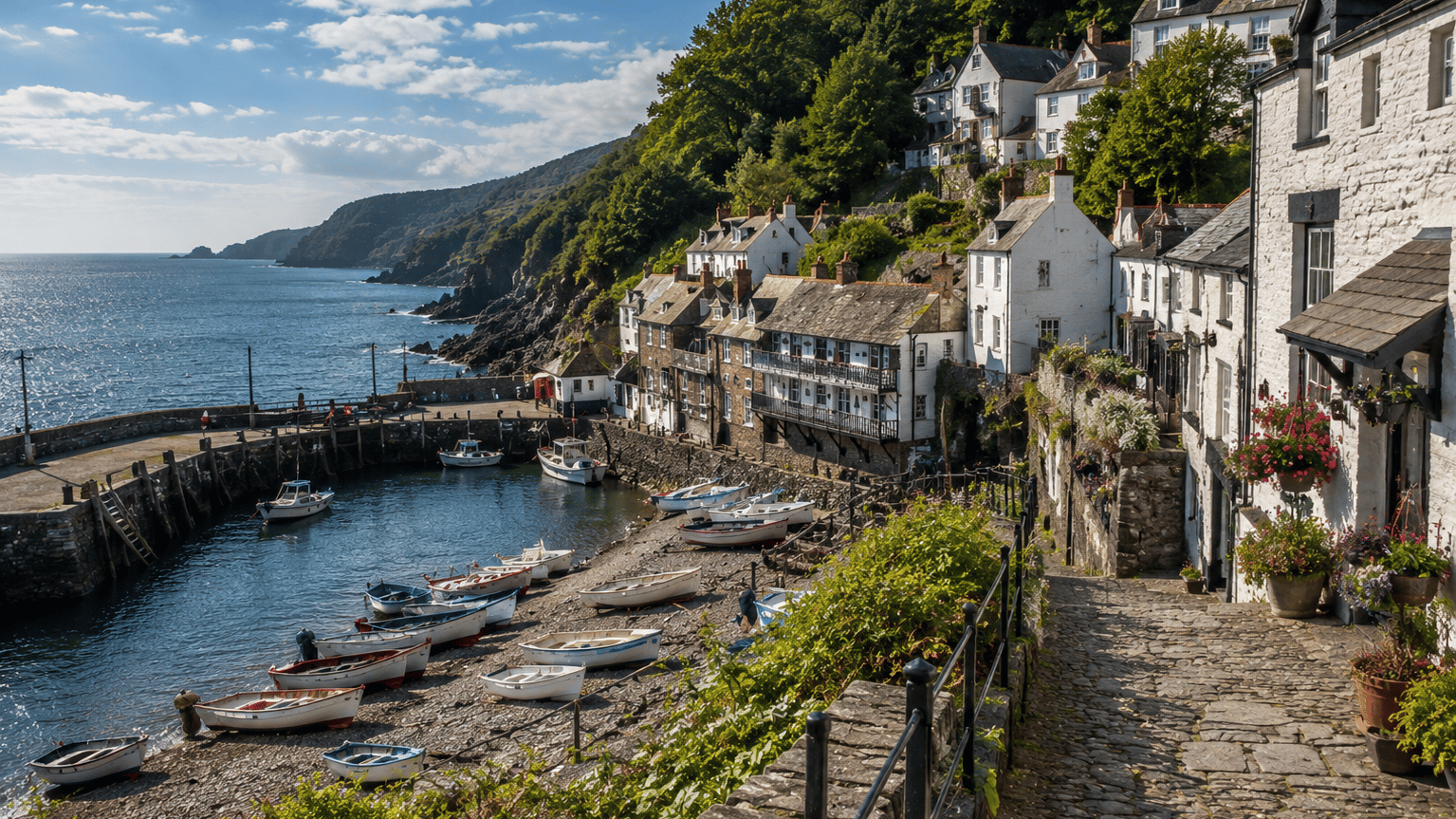
Clovelly offers lived-in houses, hotel space and a working harbour along a steep, vehicle-free street. Its terrain channels movement and its food links are useful, but this road-connected village has no hardened perimeter or verified independent drinking-water supply.
Overall
3.7 out of 10Defensibility
3 out of 10Isolation
1 out of 10Sustainability
7 out of 10Ranking context
How this base ranks
Global
#71 of 88 · Top 81%
Region · UK & Ireland
#9 of 11 · Top 82%
Base Type · Remote Settlement
#14 of 16 · Top 88%
Field assessment
At a glance
Bottom Line
A practical place to establish village life, provided water and essential movements remain workable. The hill shapes approaches without turning occupied cottages and coastal paths into a fortress.
Biggest Trade-off
The steep street channels incoming movement but also makes every load and waste journey a labour task. Useful approach control comes with an everyday carrying burden for the same small workforce.
Most Likely Failure
Water service becomes unreliable and no verified independent replacement is ready. Carrying essentials through the steep village draws people away from watches while the homes remain otherwise usable.
Score rationale
Why it scores this way
Defensibility · 3/10
Managed upper access and steep village geometry concentrate some movement. The civilian settlement still has connected foot approaches and harbour access, with no continuous hardened barrier to contain a local breach.
Advantages
- The street and terrain offer identifiable sectors for watches rather than uniform open frontage.
Limitations
- Admission control is not a security gate system; ordinary buildings and multiple approaches still require local protection.
Isolation · 1/10
Clovelly lies close to Bideford and the ordinary regional road and bus network. Its vehicle-free street affects the last part of the journey, leaving geographic separation from surrounding population very limited.
Advantages
- Coastal terrain restricts the directions of immediate ground approach, a local benefit rather than substantial remoteness.
Limitations
- People can reach the upper village through established regional connections without an expedition or sea crossing.
Sustainability · 7/10
Full-time houses, hotel rooms and food premises give the group an established residential setting. Keeping that habitat supplied means sustaining water, waste handling and the labour of moving goods through a steep historic village.
Advantages
- Existing homes provide domestic functions and separate indoor spaces that a bare refuge would lack.
Limitations
- A community designed around normal utility services and deliveries remains dependent on them unless workable alternatives are actually demonstrated.
Survival horizons
How survival changes over time
Check homes and approaches
First 7 Days
Inspect a manageable occupied cluster and verify water, toilets and accessible provisions. Establish watches covering the upper entry and harbour-side routes, then organise how essential loads move without dispersing the group throughout the village.
Positive factors
- Homes and serviced accommodation provide an immediate basis for indoor routines.
Risks
- The upper visitor approach does not account for every coastal or harbour arrival.
Budget carrying and consumption
First 100 Days
Track water and food use together with time spent moving goods, removing waste and maintaining occupied buildings. Check which local food links continue in practice; existing restaurant supply descriptions cannot be counted as future deliveries.
Positive factors
- Resident-made sledges demonstrate an established low-complexity way of handling loads on the vehicle-free street.
Risks
- A reduction in reliable water or waste service adds work precisely where steep internal routes already limit easy movement.
Prove food and water continuity
Long Term
Lasting residence needs repeatable drinking-water provision and food access within a sustainable workload. Fishing offers a real local pathway, while estate produce depends on links beyond the village; neither establishes a complete independent supply system.
Positive factors
- The working harbour and documented fishing activity provide a renewable food opportunity rather than only finite packaged stores.
Risks
- Catches, equipment condition and safe water remain uncertain; access to estate gardens is not ownership or assured continuing production.
Visual survey
Gallery
Location context
The Lay of the Land
Tactical assessment
Practical Reality
Best Use
Organise a compact occupied area with checked water and sanitation, while watching the upper entry, connected paths and harbour approaches. Use existing village premises and load-moving methods without trying to staff every house and business.
Strengths
- Full-time homes and hotel accommodation provide substantial existing residential space.
- The steep High Street and managed upper entry concentrate some everyday movement into visible routes.
- Harbour fishing and documented local produce supply give food options beyond ordinary imported shop stock alone.
Key Risk
Local food arrives through working people and supply relationships. Landed fish and estate produce are advantages to assess, not a guarantee that twenty generalists can sustain catches, gardens and deliveries while also guarding the village.
Weaknesses
- Coastal paths and harbour access prevent treating the village as a single secured entrance.
- No protected independent potable-water pathway or dependable outage continuity is established.
- Goods and refuse require manual handling on the steep street, competing with watches and maintenance for labour.
Reality Check & Constraints
Full-time homes and a quay-side hotel establish genuine residential capacity. They do not establish vacant rooms, usable reserves or a protected potable-water system; the wider estate’s productive ground is not defended village territory.
Assumptions / constraints
- The Base extends from the upper visitor-centre boundary through village homes and premises to the harbour and directly connected approaches. Wider estate farmland and gardens are external; currently supplied produce does not annex them into the defended area.
- Twenty capable adults can use ordinary tools and organise loads and watches. No resident workforce, fishing crew, operating boat or specialist conservation team is assumed to remain available.
- Actual supplies and safe water must be checked. Harbour water and the nearby waterfall are not credited as potable; no guaranteed catch, estate delivery or survival duration is assumed.
Decision context
Rivals / Alternatives
Similar rival
Eguisheim
France · Remote Settlement
Eguisheim keeps the same remote settlement strategy, with only 0.3 points between the overall scores and closely matched sustainability pressure.
Overall 3.3/10
Strongest alternative
Isle of Eigg Village
United Kingdom · Remote Settlement
Isle of Eigg Village scores 6.3 overall versus 3.7, adding a stronger isolation profile while staying relevant as another remote settlement.
Overall 6.3/10
Wildcard rival
Fort Jefferson
United States · Fortified Structure
Fort Jefferson changes the strategy: it is built around the fortified structure strategy with a isolation edge, while Clovelly holds more of the sustainability advantage.
Overall 6.7/10