Africa · Natural Landform
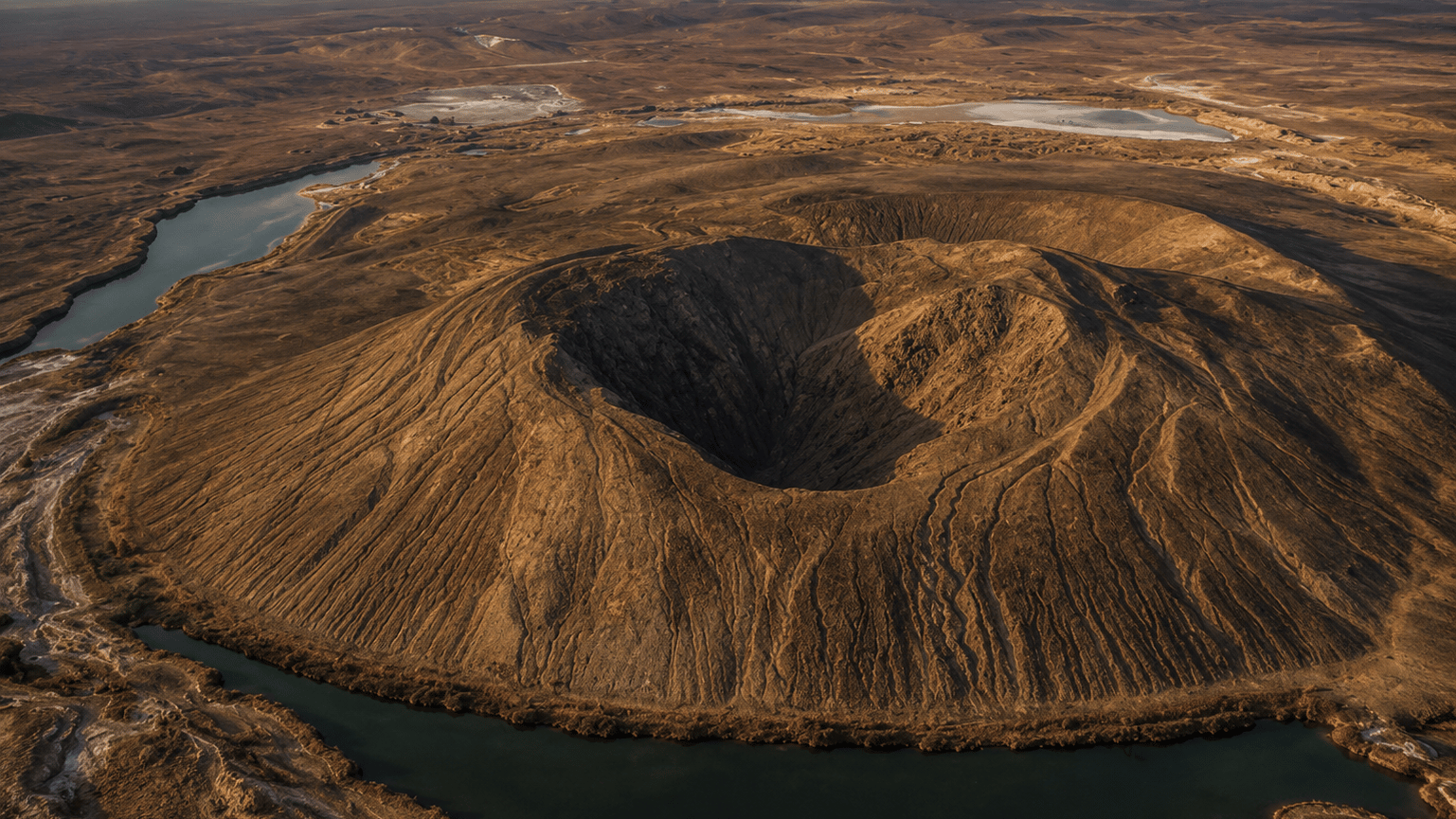
Waw an Namus Caldera
Libya
Waw an Namus places a volcanic caldera deep in the Sahara between survivors and population centres. The same landscape offers saline lakes and little built shelter: distance reduces incoming pressure, but cannot supply the drinking water and habitat a small community needs.
Overall
4.3 out of 10Defensibility
2 out of 10Isolation
10 out of 10Sustainability
1 out of 10Ranking context
How this base ranks
Global
#64 of 88 · Top 73%
Region · Africa
#4 of 11 · Top 36%
Base Type · Natural Landform
#1 of 1 · Top 100%
Field assessment
At a glance
Bottom Line
Exceptional remoteness makes this a poor place to be found and a difficult place to remain alive. No evidenced combination of potable water, shelter and food supports sustained occupation by twenty people.
Biggest Trade-off
Desert separation reduces ordinary arrivals while putting help and replacement supplies far away. The protection comes from distance, not a sealed crater or a functioning refuge.
Most Likely Failure
The group mistakes spring-fed lakes for a dependable drinking-water supply. Without a verified potable source or usable treatment pathway, water becomes critical before the caldera’s remoteness offers much benefit.
Score rationale
Why it scores this way
Defensibility · 2/10
The rim and depression affect approach and observation, but do not form a closed barrier. Twenty people could watch selected ground; they could not reliably hold the whole open caldera.
Advantages
- Elevation offers a way to assess approaching movement before choosing where to go.
Limitations
- A visible approach can still be traversable; the crater has no established gate where movement must stop.
Isolation · 10/10
The surrounding Sahara creates unusually strong separation from ordinary population centres. That geographic advantage persists without roads being blocked or transport facilities being staffed.
Advantages
- Few nearby permanent population sources means less routine incoming ground pressure than at an inhabited oasis or town.
Limitations
- The same separation makes a failed water plan difficult to recover from; remoteness supplies no replacement essentials.
Sustainability · 1/10
Lakes and vegetation interrupt the desert landscape, but the evidence does not establish protected potable water, adequate food or built living facilities. Physical room for a group is not a functioning habitat.
Advantages
- Spring-fed water bodies and limited vegetation are real natural features to investigate, rather than an entirely waterless setting.
Limitations
- The springs’ contribution to saline lakes does not establish a protected drinkable outlet or reliable yield for the group.
Survival horizons
How survival changes over time
Verify water before committing
First 7 Days
Observation is secondary to confirming drinkable water and immediate protection from the environment. If those needs cannot be met with what is actually available, the evidence gives no basis for settling here.
Positive factors
- Open terrain helps assess nearby movement while the group decides whether stopping is viable.
Risks
- The visible lakes can mislead arrivals: their saline character is established, while a usable potable pathway is not.
A pause does not become a settlement
First 100 Days
If the group remains, repeated water collection, food consumption and sanitation become daily obligations. No documented local system replaces those consumables; assess continuing viability from verified resources, not the absence of encounters.
Positive factors
- There is little installed plant demanding fuel or spare parts, so machinery upkeep is not the main competing workload.
Risks
- Limited shelter and supporting facilities make routine living a persistent burden even if no outside threat arrives.
Remoteness cannot renew essentials
Long Term
Long occupation requires recurring safe water, food and durable habitation. Sparse vegetation and spring-fed saline lakes do not demonstrate that system, and no future camp, treatment plant or resupply route is assumed.
Positive factors
- The caldera’s distance from settlements remains useful for limiting external pressure.
Risks
- An unchanged landscape can remain unsuitable for habitation indefinitely; passive durability does not replenish the group’s supplies.
Visual survey
Gallery
Location context
The Lay of the Land
Tactical assessment
Practical Reality
Best Use
Treat the rim as an observation setting during movement, not a destination to occupy on the strength of visible water. Any pause depends on verified drinking water and shelter already available to the group, neither credited as a Base asset.
Strengths
- Deep desert separation sharply limits routine pressure from populated areas.
- Rim positions and open surrounding terrain offer useful opportunities to observe approaching movement.
- The landform’s limited observation and terrain value does not depend on power, fuel or specialist repairs.
Key Risk
Committing to the caldera without an evidenced water pathway leaves the group trying to solve a basic survival need far from alternative supplies.
Weaknesses
- The documented lakes are saline; nearby water is not an established drinking-water reserve.
- No weatherproof residential or sanitation system is evidenced for a community of twenty.
- The broad natural boundary has neither controlled gates nor hardened fallback rooms.
Reality Check & Constraints
Waw an Namus is a natural volcanic landscape, not the cave installation implied by its former catalogue name. Springs, saline lakes and scattered vegetation do not establish safe water, residential shelter or a food system.
Assumptions / constraints
- The reference group brings ordinary capabilities, not a desalination crew, expedition fleet or pre-positioned camp. Distant oases, tour vehicles and hypothetical cave shelter remain excluded.
Decision context
Rivals / Alternatives
Similar rival
Kolmanskop
Namibia · Remote Settlement
Kolmanskop keeps the same Africa risk context, with only 1.0 points between the overall scores and closely matched sustainability pressure.
Overall 3.3/10
Strongest alternative
Amundsen-Scott South Pole Station
Antarctica · Institutional Compound
Amundsen-Scott South Pole Station scores 7.7 overall versus 4.3, adding a stronger sustainability profile while staying relevant as a comparable survival plan.
Overall 7.7/10
Wildcard rival
Edinburgh Castle
United Kingdom · Elevated Stronghold
Edinburgh Castle changes the strategy: it is built around the elevated stronghold strategy with a defensibility edge, while Waw an Namus Caldera holds more of the isolation advantage.
Overall 5/10