Western Europe · Remote Settlement
Eguisheim
France
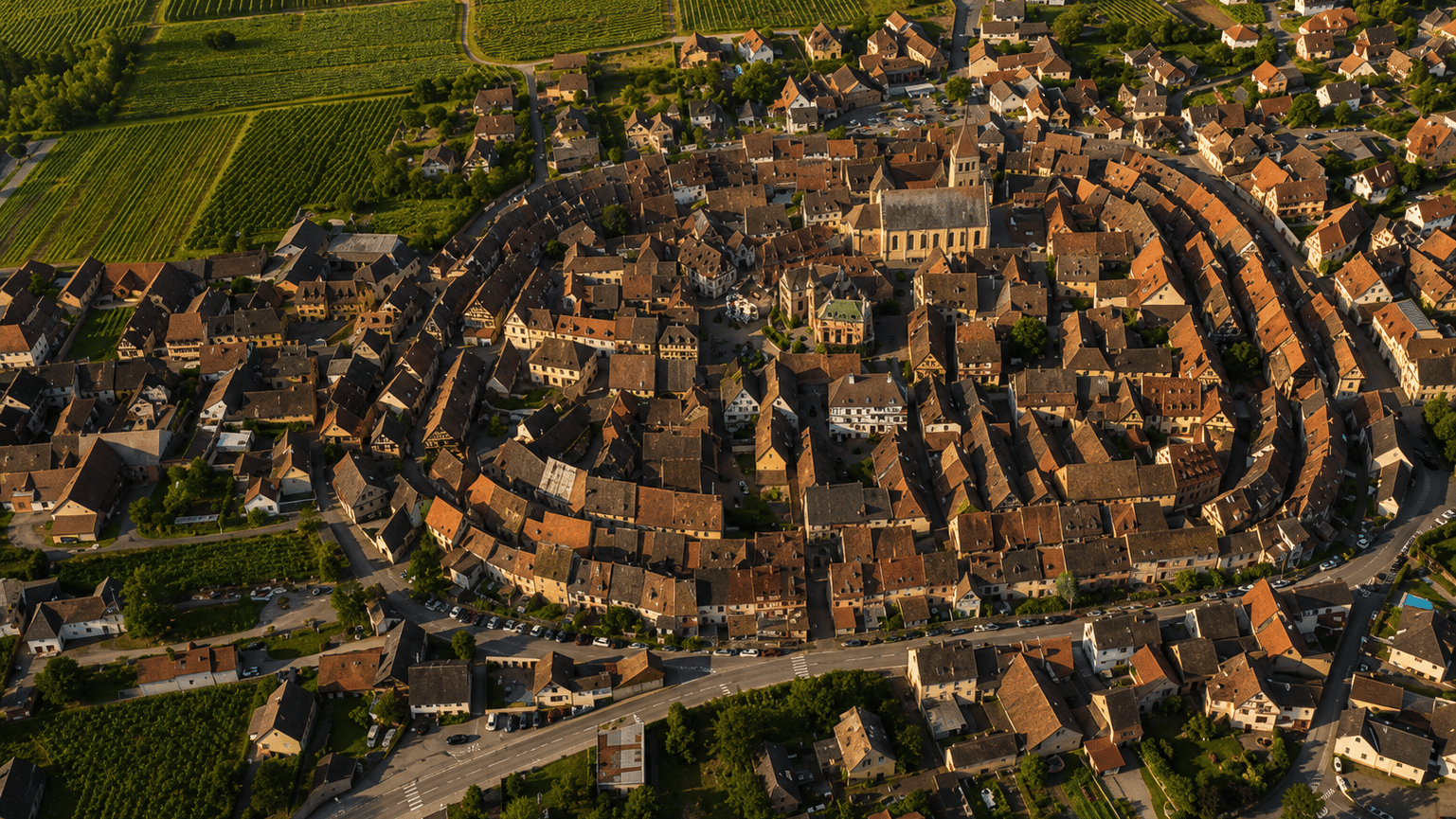
Eguisheim offers lived-in houses, food shops and public water services within a compact medieval village. Its circular streets organise movement, but they do not give a small survivor group a sealed perimeter or independent supplies.
Overall
3.3 out of 10Defensibility
2 out of 10Isolation
1 out of 10Sustainability
7 out of 10Ranking context
How this base ranks
Global
#78 of 88 · Top 89%
Region · Western Europe
#9 of 9 · Top 100%
Base Type · Remote Settlement
#15 of 16 · Top 94%
Field assessment
At a glance
Bottom Line
Comfortable existing habitat with far more space than the group needs, but too many open approaches to treat the whole village as a fortress.
Biggest Trade-off
The housing and businesses that make occupation convenient are spread across an open settlement that twenty people cannot comprehensively guard.
Most Likely Failure
Dispersed supply collection and watch duties stretch the group until an ordinary road or pedestrian approach reaches occupied space without warning.
Score rationale
Why it scores this way
Defensibility · 2/10
Concentric streets give Eguisheim a coherent shape without enclosing it as a hardened compound. Holding the entire inhabited settlement would distribute a small group across too many access points.
Advantages
- The compact historic core makes nearby routes easier to organise than a widely scattered settlement.
Limitations
- No current hardened perimeter or protected fallback sector is established for the village as a whole.
Isolation · 1/10
Eguisheim is part of the Colmar-area road and visitor economy. Its village character does not create meaningful distance or a physical barrier from surrounding population sources.
Advantages
- A compact settlement gives local orientation once people arrive, though it adds no regional separation.
Limitations
- The same connections used by visitors and deliveries remain pathways for approaching threats.
Sustainability · 7/10
Housing, food premises and public water and sanitation provide a strong domestic starting point. The difficulty is preserving those everyday functions after regional utilities, maintenance and deliveries become unreliable.
Advantages
- A settlement with hundreds of households offers ample space to separate living, storage and care for a small community.
Limitations
- Service provision is not self-sufficiency: neither independent water continuity nor diversified food renewal inside the village is established.
Survival horizons
How survival changes over time
Keep occupation compact
First 7 Days
Choose nearby living and supply spaces, check water safety and establish watches on the routes connecting them. Empty rooms are plentiful; spreading people across them would consume the group’s attention.
Positive factors
- Domestic buildings and everyday commercial premises let the group begin with established indoor functions.
Risks
- Other streets remain accessible while people inspect houses or collect provisions; taking shelter does not secure the settlement.
Replace convenience with routines
First 100 Days
Track food use, domestic repairs and wastewater arrangements as shops and utilities lose outside support. Keep essential journeys manageable and reassess any water source rather than relying on its pre-collapse service status.
Positive factors
- Ordinary housing retains passive shelter value and supports maintenance tasks within general practical skills.
Risks
- Regional water treatment and distribution require more than household repairs; their failure cannot be solved by simply occupying another building.
Find renewal within real limits
Long Term
Existing buildings may remain habitable while consumable resources run down. Long-term occupation needs repeatable safe water and food pathways, without assuming control of the surrounding winegrowing landscape.
Positive factors
- A compact occupied area can keep domestic work and local observation close together.
Risks
- Wine commerce does not replace a varied diet, and supply trips beyond the village increase the area a small group must negotiate.
Visual survey
Gallery
Location context
The Lay of the Land
Tactical assessment
Practical Reality
Best Use
Keep sleeping, supplies and daily journeys close together within the inhabited village. Monitor the routes actually used rather than attempting to hold every street or substituting the central château for the Base.
Strengths
- Existing houses provide indoor living space without first converting a visitor monument into accommodation.
- Everyday food businesses offer premises suited to handling and distributing food, subject to the stocks actually found.
- Compact ring streets give the group a recognisable local layout for organising short routes and watches.
Key Risk
Once water services and shop deliveries falter, the group must meet basic needs while still watching multiple open approaches.
Weaknesses
- Ordinary road and pedestrian access remains open; the historic rings are not a verified controlled gate system.
- Water production, distribution and wastewater treatment rely on wider services that occupying houses does not place under group control.
- Surrounding vineyards are outside the defended village footprint and do not establish diversified survival crops inside it.
Reality Check & Constraints
Wine production and attractive medieval streets do not establish a balanced food supply or working fortifications. Public water and sewer services are genuine starting infrastructure, but their continued operation and present water safety need checking.
Assumptions / constraints
- The canonical Base is the inhabited village, not one château, winery or preferred house; nearby communes and vineyard acreage are not annexed.
- Twenty capable adults can manage ordinary domestic tasks, but cannot be assumed to operate the regional water and treatment network.
- Food inventory, current water quality and durable energy are unverified; dated service indicators do not certify conditions at occupation.
Decision context
Rivals / Alternatives
Similar rival
Hallstatt
Austria · Remote Settlement
Hallstatt keeps the same remote settlement strategy, with only 1.0 points between the overall scores and closely matched isolation pressure.
Overall 4.3/10
Strongest alternative
Isle of Eigg Village
United Kingdom · Remote Settlement
Isle of Eigg Village scores 6.3 overall versus 3.3, adding a stronger isolation profile while staying relevant as another remote settlement.
Overall 6.3/10
Wildcard rival
Fort Jefferson
United States · Fortified Structure
Fort Jefferson changes the strategy: it is built around the fortified structure strategy with a isolation edge, while Eguisheim holds more of the sustainability advantage.
Overall 6.7/10