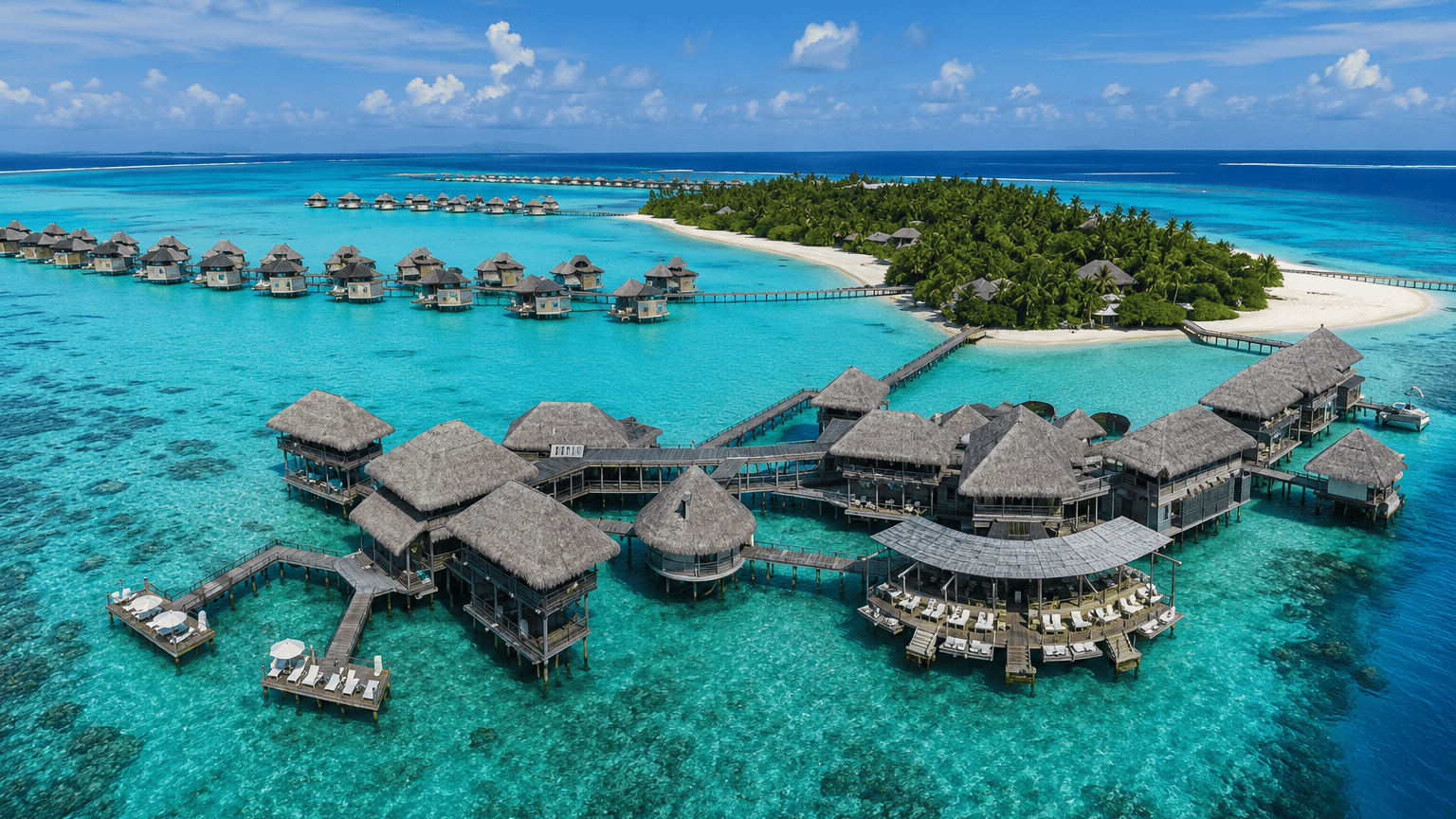
South Asia · Isolated Landmass
Lakshadweep
India
Lakshadweep combines sea separation with inhabited islands, fisheries and established utilities. The challenge is keeping a usable local foothold supplied: twenty people cannot defend the archipelago or operate its dispersed boats, water plants and power systems.
Overall
5 out of 10Defensibility
1 out of 10Isolation
7 out of 10Sustainability
7 out of 10Ranking context
How this base ranks
Global
#37 of 88 · Top 42%
Region · South Asia
#4 of 7 · Top 57%
Base Type · Isolated Landmass
#7 of 19 · Top 37%
Field assessment
At a glance
Bottom Line
A promising setting for habitation and local resource use, but a poor single defensive unit. Survival depends on matching daily needs to systems the group can actually reach and operate.
Biggest Trade-off
Sea gaps limit mainland pressure while dividing useful facilities between islands; accessing that distributed capability introduces transport and maintenance demands.
Most Likely Failure
Fuel or plant failures interrupt dependable water and transport, leaving nearby marine resources unable to meet daily needs through the equipment and skills actually available.
Score rationale
Why it scores this way
Defensibility · 1/10
Lakshadweep is a dispersed set of inhabited islands, reefs and coasts rather than a fortified enclosure. Water between islands does not give twenty people control of all landing places or local settlements.
Advantages
- An occupied building or small area offers a more concentrated watch task than the archipelago as a whole.
Limitations
- Securing one foothold leaves other shores, facilities and inter-island journeys outside continuous protection.
Isolation · 7/10
Hundreds of kilometres of sea separate the islands from mainland population sources. Regular transport connections and existing island communities still allow local pressure and internal infection.
Advantages
- There is no continuous road route for ordinary mainland ground movement to reach the islands.
Limitations
- Distance makes missing supplies harder to replace as well as limiting incoming pressure.
Sustainability · 7/10
Homes, public services, drinking-water plants and food activity support established island life. The practical question is which connected set of those services remains usable with a much smaller workforce.
Advantages
- Existing settlement infrastructure offers organised living space without building a new island camp.
Limitations
- Habitation depends on water, sanitation and power operation; empty capacity does not supply their fuel or technical upkeep.
Survival horizons
How survival changes over time
Find a workable service base
First 7 Days
Confirm safe drinking water, shelter and accessible supplies at the occupied location. Inspect the practical routes between them before committing people to journeys across the wider island network.
Positive factors
- Existing homes and utility connections provide a substantial starting point for organising daily life.
Risks
- A facility elsewhere in the archipelago cannot be counted as immediately usable without a reliable journey and working access.
Measure use, maintain access
First 100 Days
Track fuel and water consumption, inspect essential plant and assess what fishing and cultivation the group can sustain. Reduced personal demand does not remove the fixed work of operating vessels and utilities.
Positive factors
- Established fisheries and household cultivation offer activities to assess before all food must come from dwindling stocks.
Risks
- Fishing, food preservation and repairs compete with watches; historical regional output is not the catch of twenty newcomers.
Renew food and vital inputs
Long Term
Continued habitation needs repeatable food and potable water alongside replacement of worn equipment. Local fish, crops and solar contribute, but no complete alternative to imported fuel, dietary gaps and manufactured parts is established.
Positive factors
- Marine food resources and existing cultivation retain recurring potential beyond a one-off store of provisions.
Risks
- Losing technical support can reduce usable resource access even while the sea and installed infrastructure remain physically present.
Visual survey
Gallery
Location context
The Lay of the Land
Tactical assessment
Practical Reality
Best Use
Prioritise a manageable occupied area with verified drinking water and usable food pathways. Keep the whole archipelago as the evaluated Base, without treating every island service as available on demand.
Strengths
- Established settlements provide housing and communal facilities far beyond the basic space needs of twenty people.
- An active tuna fishery establishes a genuine local food pathway, subject to access, gear and competence.
- Desalination and solar generation diversify the starting resource position beyond imported stores alone.
Key Risk
Desalination, electricity and inter-island movement depend on equipment, parts and operating knowledge; imported diesel remains a particular vulnerability.
Weaknesses
- Separated shorelines cannot be watched as one continuous boundary by a small community.
- Imported fuel and replacement parts remain important to water, power and vessel continuity.
- Limited crop diversity leaves a dietary problem that fish and coconuts alone do not resolve.
Reality Check & Constraints
Productive fisheries and installed solar are real advantages, but they do not establish a complete diet, a guaranteed catch or an independently operable utility system for a small group.
Assumptions / constraints
- The canonical Base remains the whole archipelago; choosing an occupation point does not substitute a single island evaluation.
- Current stocks, boat condition and plant output available to the group must be checked rather than inferred from regional totals.
- Twenty capable adults do not inherit the fisheries workforce, utility crews or specialist marine knowledge.
Decision context
Rivals / Alternatives
Similar rival
Galápagos Islands
Ecuador · Isolated Landmass
Galápagos Islands keeps the same isolated landmass strategy, with only 0.3 points between the overall scores and closely matched isolation pressure.
Overall 5.3/10
Strongest alternative
Heligoland
Germany · Isolated Landmass
Heligoland scores 6.3 overall versus 5.0, adding a stronger isolation profile while staying relevant as another isolated landmass.
Overall 6.3/10
Wildcard rival
San Felipe Fortress
Colombia · Fortified Structure
San Felipe Fortress changes the strategy: it is built around the fortified structure strategy with a defensibility edge, while Lakshadweep holds more of the isolation advantage.
Overall 3.7/10