Western Europe · Remote Settlement
Hallstatt
Austria
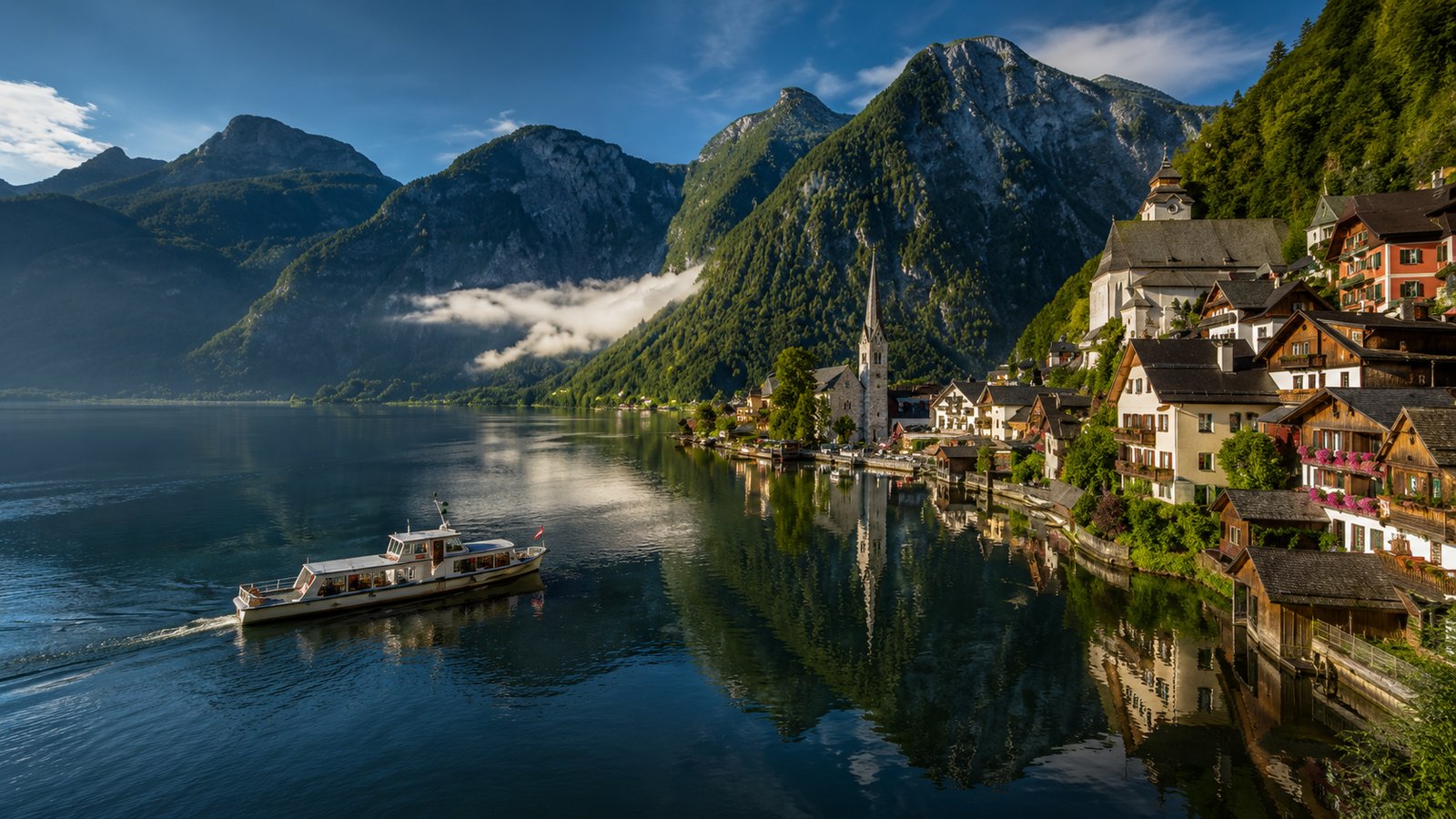
Hallstatt offers village housing, municipal water and local hydro in a narrow lakeside setting. Its mountain backdrop channels access, but an open settlement still needs watches, maintained utilities and food from beyond the village.
Overall
4.3 out of 10Defensibility
2 out of 10Isolation
4 out of 10Sustainability
7 out of 10Ranking context
How this base ranks
Global
#60 of 88 · Top 68%
Region · Western Europe
#8 of 9 · Top 89%
Base Type · Remote Settlement
#12 of 16 · Top 75%
Field assessment
At a glance
Bottom Line
A useful inhabited refuge if the group keeps its occupied area manageable and verifies water continuity; the picturesque setting does not secure the whole village.
Biggest Trade-off
The lake and mountains limit approaches while also constraining movement out when roads or essential services fail.
Most Likely Failure
An unrepairable water-system fault or interrupted food supply forces increasingly exposed collection trips, undoing the advantage of a compact occupied refuge.
Score rationale
Why it scores this way
Defensibility · 2/10
The lake and steep rock wall shape movement, but Hallstatt remains an open village. Secure selected buildings and their connecting journeys rather than mistake the entire shoreline for a defended enclosure.
Advantages
- Closely arranged village buildings allow a compact occupied sector with fewer routine journeys than occupation of the full settlement.
Limitations
- A watched road does not cover waterfront arrivals or every path between the mountain and occupied buildings.
Isolation · 4/10
The narrow alpine setting separates Hallstatt from surrounding ground, yet road and lake transport connect it to an active visitor network. Terrain reduces routes, not the possibility of local outbreak pressure.
Advantages
- Lake and mountain interrupt broad overland movement and concentrate attention on identifiable approach corridors.
Limitations
- Existing residents and visitor connections prevent assuming an empty village or a uniquely late arrival of infection.
Sustainability · 7/10
Housing, municipal water and local generation support ordinary residential life. Their value depends on keeping essential services usable while replacing food and consumables normally supplied through the region.
Advantages
- Established domestic and public spaces provide substantial residential headroom for a small organised community.
Limitations
- Spare rooms do not renew food stocks, repair water pipes or demonstrate independent operation of the hydro systems.
Survival horizons
How survival changes over time
Choose a compact foothold
First 7 Days
Inspect habitable rooms, trace the drinking-water supply and inventory accessible food. Establish watches around the occupied sector before attempting wider control of the village.
Positive factors
- Existing housing lets the group prioritise safe daily routines rather than start by building shelter.
Risks
- Narrow circulation can concentrate both arrivals and the group's own supply journeys in the same few corridors.
Keep daily services dependable
First 100 Days
Occupation becomes a repeated workload: monitor water, manage waste, track food consumption and address ordinary faults. Judge the margin from inspected stocks and functioning services, not the village's pre-outbreak population.
Positive factors
- Municipal water and local hydro provide existing systems around which to organise routine checks.
Risks
- Maintaining public-scale infrastructure can absorb hands needed for watches and supply collection.
Replace what the village consumes
Long Term
Long occupation requires repeatable food provision and continued water-system maintenance. The documented hydro and residential fabric are useful foundations, but neither proves a complete renewable livelihood inside this narrow settlement.
Positive factors
- Ordinary buildings retain shelter value as more elaborate services become unreliable.
Risks
- Food, fuel and replacement parts still link the refuge to external supply networks whose continuity is unproven.
Visual survey
Gallery
Location context
The Lay of the Land
Tactical assessment
Practical Reality
Best Use
Choose housing with short, observable journeys to verified water and accessible stores. Watch road approaches and nearby landings rather than dispersing twenty people along the waterfront.
Strengths
- Existing homes and public buildings provide choices for separating sleep, storage and work without constructing an alpine settlement.
- A municipal drinking-water system gives the group an existing supply pathway to inspect instead of treating lake water as ready to drink.
- Locally integrated hydro adds an energy asset, although its usable contribution after wider network failure must be established.
Key Risk
Water, hydro controls, wastewater and access routes each need upkeep. A small group can inherit more service obligations than it can reliably maintain.
Weaknesses
- Roads, village streets, landings and mountain-side routes leave more access to monitor than a single controlled gate.
- Food retail supplies a possible starting inventory, not a documented cycle of food production inside the village.
- Water distribution and hydro machinery retain technical dependencies even when fewer people occupy the buildings.
Reality Check & Constraints
Municipal services establish a real starting habitat, not an inventory or a survival duration. Local hydro output does not prove that village electricity can operate independently after the wider grid fails.
Assumptions / constraints
- The reference group is twenty capable adults with ordinary tools and maintenance skills; municipal specialists and emergency responders are not inherited.
- The settlement and directly integrated services remain the Base. The salt mine, wider lake and neighbouring settlements are not secured resources.
- Actual food, fuel, equipment condition and independent power operation require inspection; no resupply or guaranteed time at the site is assumed.
Decision context
Rivals / Alternatives
Similar rival
Eguisheim
France · Remote Settlement
Eguisheim keeps the same remote settlement strategy, with only 1.0 points between the overall scores and closely matched defensibility pressure.
Overall 3.3/10
Strongest alternative
Isle of Eigg Village
United Kingdom · Remote Settlement
Isle of Eigg Village scores 6.3 overall versus 4.3, adding a stronger isolation profile while staying relevant as another remote settlement.
Overall 6.3/10
Wildcard rival
Fort Jefferson
United States · Fortified Structure
Fort Jefferson changes the strategy: it is built around the fortified structure strategy with a defensibility edge, while Hallstatt holds more of the sustainability advantage.
Overall 6.7/10