Eastern Europe · Elevated Stronghold
Predjama Castle
Slovenia
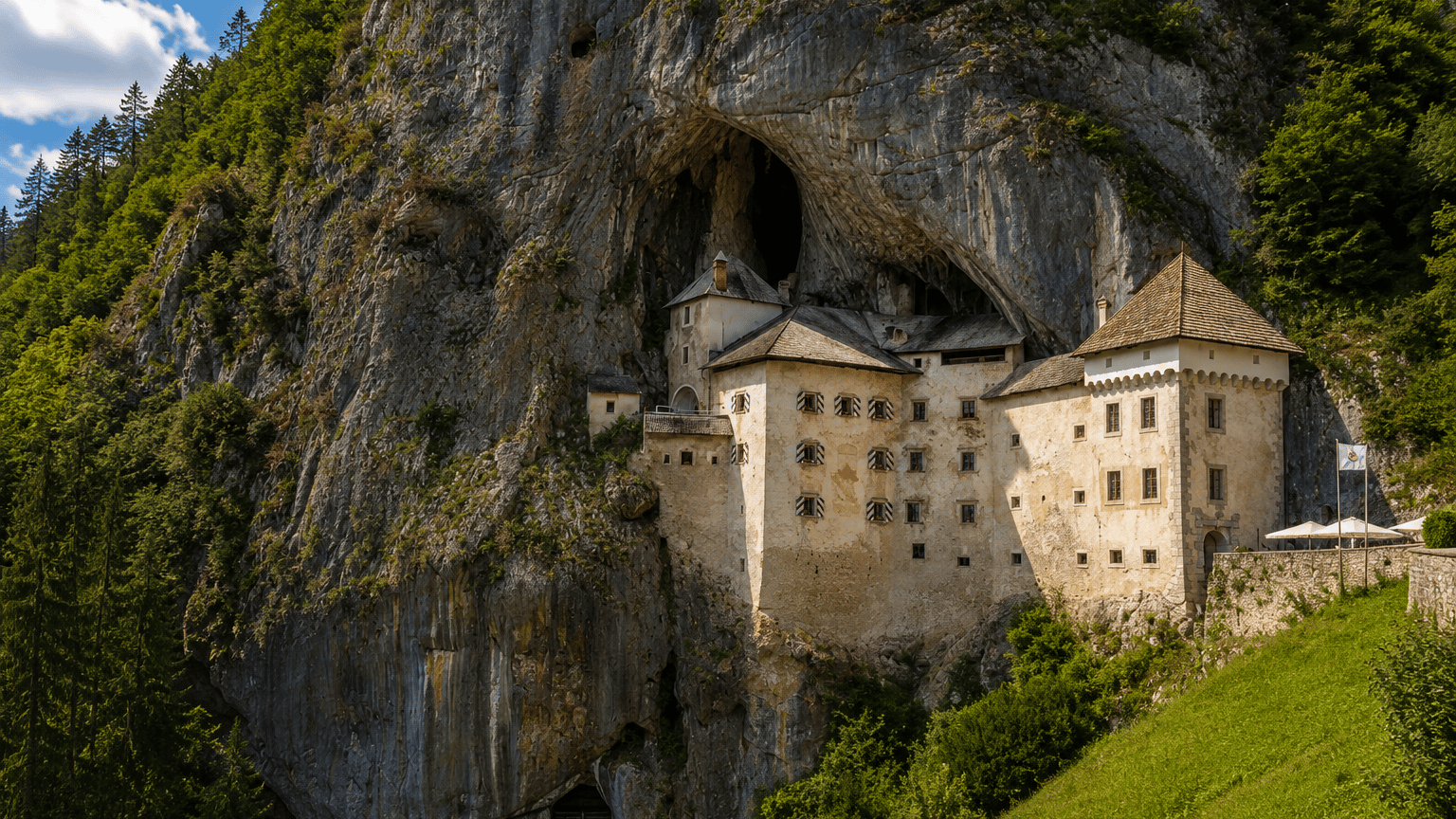
Predjama Castle backs enclosed rooms into a sheer cliff, concentrating approaches and giving strong passive protection. Its cave passages also connect it to the outside. Historic living spaces make occupation plausible, but neither the castle's reputation nor its supply tunnel establishes independent drinking water or food.
Overall
5 out of 10Defensibility
8 out of 10Isolation
4 out of 10Sustainability
3 out of 10Ranking context
How this base ranks
Global
#41 of 88 · Top 47%
Region · Eastern Europe
#5 of 10 · Top 50%
Base Type · Elevated Stronghold
#5 of 13 · Top 38%
Field assessment
At a glance
Bottom Line
A strong defensive refuge whose domestic essentials need verification before settlement. The cliff reduces the access problem; it does not solve the daily work of supplying the rooms behind it.
Biggest Trade-off
The cave passage offers an alternative route beyond the main entrance, but also another connection to inspect and watch. Moving supplies through it still depends on resources outside the castle.
Most Likely Failure
Drinking-water or food needs force increasing trips outside, thinning watches and making the household dependent on a route that the cliff cannot protect from end to end.
Score rationale
Why it scores this way
Defensibility · 8/10
A castle integrated into the cliff channels practical entry and shelters rooms behind rock and masonry. That is substantial passive defence, but present museum access is not evidence of modern sealed compartments or reliable doors throughout.
Advantages
- Limited observable approaches let a small watch concentrate attention rather than cover an open perimeter.
Limitations
- The cave connection must be accounted for when controlling entry; the main entrance alone is insufficient.
Isolation · 4/10
The cliff makes the last approach difficult without putting the castle far from roads and settlement. Local inaccessibility and regional remoteness are separate advantages, and only the former is strong here.
Advantages
- Steep terrain delays straightforward ground movement at the castle itself.
Limitations
- Developed visitor connections still provide an established way to reach the site.
Sustainability · 3/10
Enclosed living rooms and a documented kitchen give more usable domestic space than a bare ruin. Sustained residence still needs safe water, waste disposal and habitable warmth that the present heritage evidence does not establish independently.
Advantages
- Separate functional rooms allow sleeping, stores and work to be organised indoors.
Limitations
- Physical room capacity does not establish the sanitation throughput needed for twenty residents.
Survival horizons
How survival changes over time
Inspect both routes inward
First 7 Days
Check the main access, connected passages, room condition and exits. Inventory supplies and identify where water and waste can be managed before choosing sleeping areas inside the castle.
Positive factors
- The cliff-backed enclosure offers immediate cover while basic routines are organised.
Risks
- Assuming the historic passage is usable can leave an unexamined route in the watch plan.
Domestic needs test the refuge
First 100 Days
Monitor consumption, hygiene and the carrying work required from outside. Inspect essential rooms and access regularly; reassess the occupation if supply journeys increasingly compete with watches and upkeep.
Positive factors
- Rock and masonry retain useful protection without operating an extensive powered defensive system.
Risks
- Repeated water collection can become the daily limiting task despite strong barriers at the castle.
A passage is not a supply system
Long Term
Continued residence needs repeatable safe water and food replacement alongside habitable rooms. Connected caves may assist access, but no internal renewable provision is established, and outside agriculture remains beyond the Base boundary.
Positive factors
- Passive enclosure can preserve refuge value after more ambitious settlement plans prove impractical.
Risks
- Deferred structural care and external provisioning can outgrow the labour available to a small household.
Visual survey
Gallery
Location context
The Lay of the Land
Tactical assessment
Practical Reality
Best Use
Connect inspected living rooms to watched entrances and a clear fallback route. Check cave access as carefully as the main doorway, and establish water and waste arrangements before relying on the castle for continued residence.
Strengths
- The cliff removes ordinary ground approach from much of the castle's envelope.
- Rock-backed chambers give protected internal space and fallback depth.
- The connected passage provides an alternative route worth inspecting beyond the main access.
Key Risk
No current protected potable-water pathway is established inside the castle. External collection would require repeated movement beyond its defensive envelope, regardless of which passage is used.
Weaknesses
- Road-connected visitor access leaves surrounding population pressure within reach.
- Current independent sanitation and heating for a resident group are not established.
- The castle has no evidenced internal food-production or protected potable-water system.
Reality Check & Constraints
The documented kitchen and living rooms are heritage spaces, not proof of working modern domestic services or stocked stores. The historical supply story demonstrates a route, not present-day independent provision.
Assumptions / constraints
- Only the castle, connected passages and immediate approaches are included; village services and farms remain external.
- Passage condition, accessible supplies and usable domestic equipment require inspection; the historic escape route is not guaranteed safe.
- Twenty capable adults can organise ordinary watches and upkeep without a specialist castle-conservation or cave-safety team.
Decision context
Rivals / Alternatives
Similar rival
Sigiriya
Sri Lanka · Elevated Stronghold
Sigiriya keeps the same elevated stronghold strategy, with only 0.0 points between the overall scores and closely matched isolation pressure.
Overall 5/10
Strongest alternative
Suomenlinna Fortress
Finland · Fortified Structure
Suomenlinna Fortress scores 6.3 overall versus 5.0, adding a stronger sustainability profile while staying relevant as a Eastern Europe option.
Overall 6.3/10
Wildcard rival
Amundsen-Scott South Pole Station
Antarctica · Institutional Compound
Amundsen-Scott South Pole Station changes the strategy: it is built around the institutional compound strategy with a sustainability edge, while Predjama Castle holds more of the defensibility advantage.
Overall 7.7/10