South Asia · Elevated Stronghold
Sigiriya
Sri Lanka
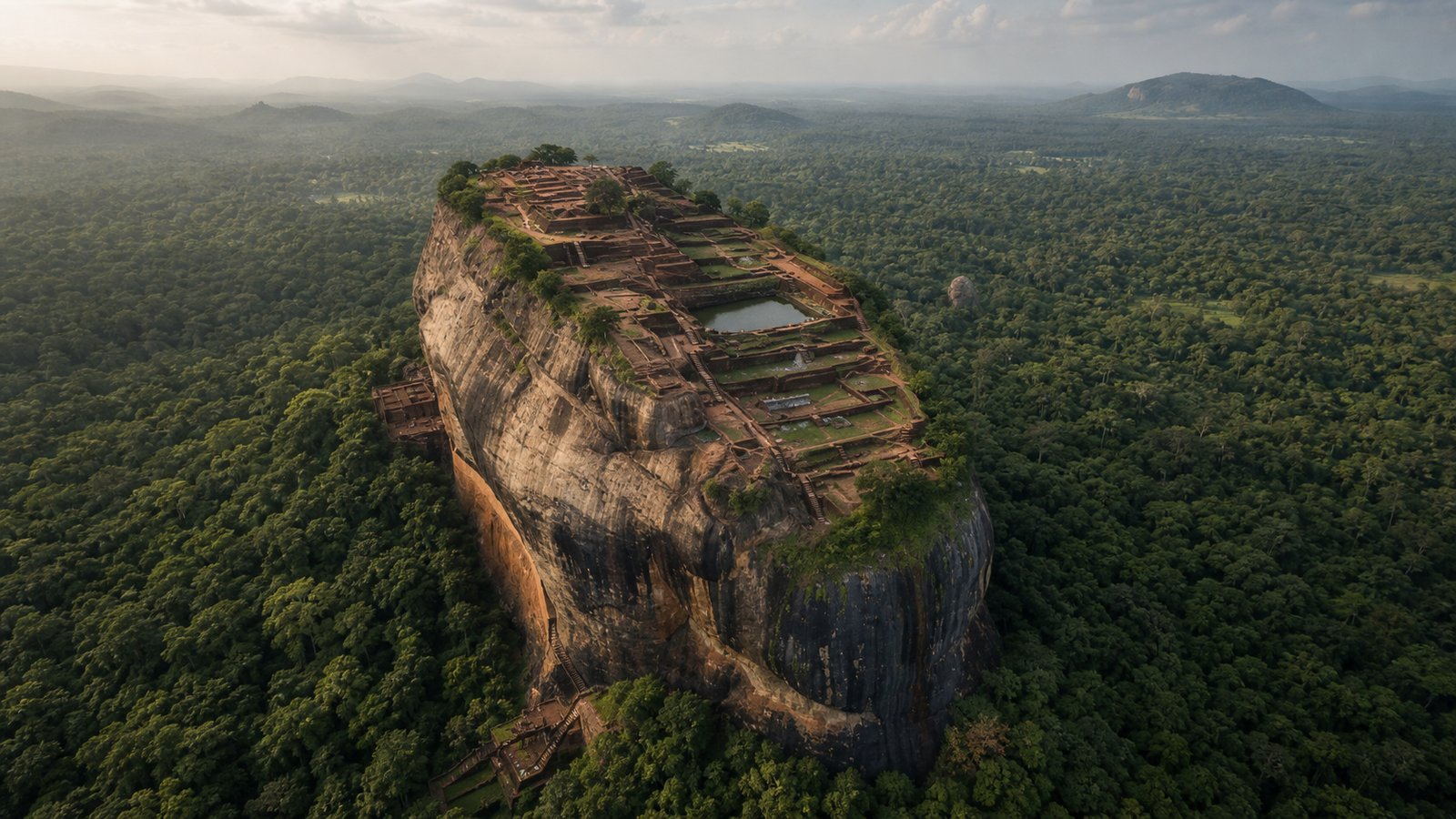
Sigiriya turns sheer rock and narrow stairs into a formidable summit position. Above those approaches, however, twenty people face ruined shelter, unproven drinking water and no established food production. The rock makes arrival difficult; it also makes every essential supply journey harder.
Overall
5 out of 10Defensibility
8 out of 10Isolation
5 out of 10Sustainability
2 out of 10Ranking context
How this base ranks
Global
#42 of 88 · Top 48%
Region · South Asia
#6 of 7 · Top 86%
Base Type · Elevated Stronghold
#6 of 13 · Top 46%
Field assessment
At a glance
Bottom Line
Useful for observation and temporary refuge if essentials are already secured. Remaining on the summit requires a credible water and domestic-support plan that the surviving citadel does not establish.
Biggest Trade-off
The constrained ascent helps protect the group while concentrating its own carrying, evacuation and resupply needs on the same stairs.
Most Likely Failure
Usable water runs short or proves unsafe, forcing frequent descents that consume carrying capacity and weaken the protection gained by staying above the plain.
Score rationale
Why it scores this way
Defensibility · 8/10
Sheer faces restrict direct approach and the engineered ascent concentrates movement where it can be observed. The summit is a ruined citadel, so terrain supplies much of the protection that intact buildings would otherwise provide.
Advantages
- Galleries and stairs create identifiable stages at which to organise a watch.
Limitations
- An obstructed or unsafe stair route also constrains the group's own movement and escape.
Isolation · 5/10
Height separates the summit from the plain, but the surrounding region remains inhabited and connected. A difficult final climb reduces immediate access without removing the possibility of pressure gathering below.
Advantages
- Reaching the occupied summit requires a deliberate ascent rather than ordinary movement across level ground.
Limitations
- Surrounding settlements remain outside the Base; their services cannot be counted while their potential contact is ignored.
Sustainability · 2/10
Palace remains and rock-cut storage offer a starting position rather than a functioning home. Twenty people still need weatherproof sleeping space, safe water and sanitation whose present capability has not been established.
Advantages
- The summit has existing cistern structures that can be inspected before any reliance on collected water.
Limitations
- Space on the plateau does not establish usable beds, kitchens or a prolonged waste-management arrangement.
Survival horizons
How survival changes over time
Check water before committing
First 7 Days
Inspect the ascent, shelter and cistern condition, then decide whether confirmed supplies justify occupation. Keep daily work close enough that guarding the route does not leave water and domestic checks undone.
Positive factors
- Rock and established access geometry offer immediate protection without building a new perimeter.
Risks
- Do not consume apparently stored water on the assumption that an ancient tank is a functioning potable-water system.
Measure the cost of staying
First 100 Days
Track consumption and the carrying effort needed to replace essentials. Repeated descents and exposed domestic work can become the dominant burden even while the summit remains easy to watch.
Positive factors
- The core terrain advantage persists without generator fuel or powered surveillance.
Risks
- Limited intact shelter and unverified sanitation make prolonged occupation harder than simply fitting twenty people on the rock.
Require repeatable renewal
Long Term
A lasting settlement needs dependable potable yield and food replenishment that the defined summit does not demonstrate. Treat continued occupation as conditional on that evidence, rather than allowing defensive success to decide duration.
Positive factors
- Rainwater-storage architecture gives a specific existing feature to assess for condition and seasonal usefulness.
Risks
- The lower hydraulic gardens cannot become secure summit farmland or drinking-water supply by extending the boundary in prose.
Visual survey
Gallery
Location context
The Lay of the Land
Tactical assessment
Practical Reality
Best Use
Watch the integrated stair and gallery approaches from a compact occupied position. Keep a practical descent option rather than committing everyone to a summit whose essential services remain unverified.
Strengths
- Passive cliffs retain protective value when powered equipment is unavailable.
- Elevated views help observe the plain and the connected ascent.
- A compact summit and identifiable access routes make local watch planning concrete.
Key Risk
Historic cisterns establish storage architecture, not drinkable contents or a dependable seasonal yield. No protected summit food pathway offsets that uncertainty.
Weaknesses
- Usable potable reserves and treatment remain unresolved despite the visible cisterns.
- Ruined structures provide limited demonstrated weatherproof residential support.
- Moving essentials uphill competes with watches and ordinary domestic work.
Reality Check & Constraints
This assessment covers the summit and integrated access, not the lower gardens or surrounding hotels and villages. Twenty capable adults cannot assume ancient waterworks still provide safe residential services.
Assumptions / constraints
- No cistern fill, usable stock, specialist operator or guaranteed off-rock supply is assumed; current condition requires inspection.
Decision context
Rivals / Alternatives
Similar rival
Kumbhalgarh Fort
India · Elevated Stronghold
Kumbhalgarh Fort keeps the same elevated stronghold strategy, with only 0.0 points between the overall scores and closely matched sustainability pressure.
Overall 5/10
Strongest alternative
Amundsen-Scott South Pole Station
Antarctica · Institutional Compound
Amundsen-Scott South Pole Station scores 7.7 overall versus 5.0, adding a stronger sustainability profile while staying relevant as a comparable survival plan.
Overall 7.7/10
Wildcard rival
Okinawa
Japan · Isolated Landmass
Okinawa changes the strategy: it is built around the isolated landmass strategy with a sustainability edge, while Sigiriya holds more of the defensibility advantage.
Overall 3.7/10