Polar/Arctic · Subterranean
Olavsvern Naval Base
Norway
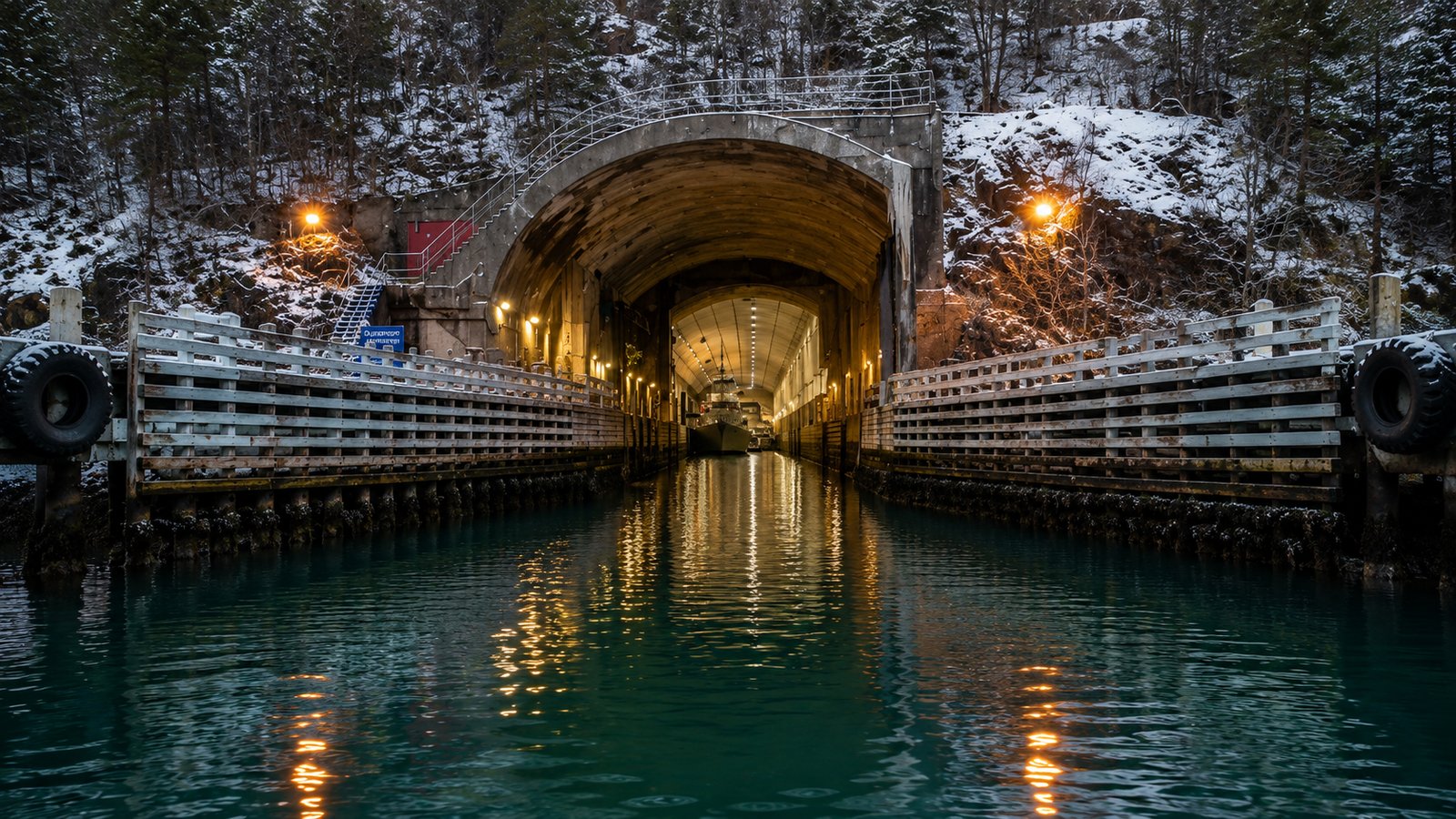
Olavsvern combines a hardened mountain core with accommodation, kitchens, workshops and quays near Tromsø. It offers far more than bare bunker space, but its strongest protection and easiest living areas are not interchangeable. Continued refuge depends on keeping a manageable set of services running without the normal operating workforce.
Overall
6.3 out of 10Defensibility
7 out of 10Isolation
4 out of 10Sustainability
8 out of 10Ranking context
How this base ranks
Global
#9 of 88 · Top 10%
Region · Polar/Arctic
#3 of 3 · Top 100%
Base Type · Subterranean
#1 of 10 · Top 10%
Field assessment
At a glance
Bottom Line
A strong refuge with substantial domestic support, if the group can connect occupied rooms to protected access and maintain essential services. The mountain core offers fallback; the full compound still demands selective occupation.
Biggest Trade-off
The cavern gives hard protection while surface accommodation supplies established domestic comfort. Moving activities inward can reduce exposure but increase dependence on powered ventilation and other technical services.
Most Likely Failure
A utility fault or fuel shortage makes the preferred occupied area difficult to inhabit, forcing relocation across the compound while the group is already stretched by repairs and watches.
Score rationale
Why it scores this way
Defensibility · 7/10
Heavy rock cover and dimension-limited tunnel access give the mountain core strong local protection. The internal dock, surface buildings and quays mean the whole facility is more complicated to secure than a single bunker door.
Advantages
- Separable cavern spaces allow fallback if part of the occupied compound becomes unsafe.
Limitations
- Landward control alone leaves the dock and journeys to surface services unresolved.
Isolation · 4/10
Separation from Tromsø buys some warning, but road and fjord connections remain ordinary access routes. Rock above the rooms hardens the position; it does not make the surrounding region remote.
Advantages
- The compound is removed from the immediate urban centre rather than embedded in its streets.
Limitations
- Nearby regional routes can carry pressure to both land and maritime approaches.
Sustainability · 8/10
Accommodation, bathrooms, laundry and commercial kitchens make a small community's routines credible from the start. Keeping them useful depends on utilities and safe movement between domestic facilities and the hardened core.
Advantages
- Purpose-built residential rooms reduce the need to turn workshop floors into living quarters.
Limitations
- Capacity for many occupants does not reduce the technical load of heating, ventilation and water systems.
Survival horizons
How survival changes over time
Connect shelter to working services
First 7 Days
Verify entrances, dock access, habitable rooms and water before settling. Inventory accessible stores and choose essential circuits through the compound rather than assuming every building is safe and operational.
Positive factors
- Existing kitchens and accommodation provide an immediate basis for organised indoor living.
Risks
- Domestic rooms and hardened fallback may require watches along different routes.
Operate less of the compound
First 100 Days
Measure actual fuel and food use, share routine operating knowledge and inspect essential plant. Keep occupation within what the group can maintain, with fallback plans for utility faults that exceed ordinary repair skills.
Positive factors
- Storage and workshop space help separate usable supplies, repair work and daily living.
Risks
- Keeping lightly occupied technical spaces running can consume labour and energy out of proportion to headcount.
Replace inputs, not just parts
Long Term
Continued occupation needs food replacement, dependable potable water and a maintainable energy supply. Fuel handling and warehouses support consumption management, but establish neither replenishment nor independent production after external logistics fail.
Positive factors
- Passive mountain protection remains valuable even as powered functions become harder to maintain.
Risks
- Accumulating plant faults can remove habitable capacity long before available floor space is exhausted.
Visual survey
Gallery
Location context
The Lay of the Land
Tactical assessment
Practical Reality
Best Use
Inspect the links between accommodation, kitchens, water and the mountain core. Keep watches on both tunnel and dock access, and avoid spreading a small workforce across every quay, warehouse and surface building.
Strengths
- Rock-covered halls provide genuine hardened fallback behind restricted land access.
- Bedrooms, bathrooms and kitchens offer established household facilities beyond bare shelter.
- Workshops and varied storage support organisation and ordinary upkeep.
Key Risk
Maintaining heat, ventilation and water services may demand skills and spares beyond ordinary repairs. An extensive workshop does not establish either a specialist crew or the parts required for a critical fault.
Weaknesses
- The internal dock and extensive surface areas add approaches beyond the mountain entrance.
- Heated and ventilated spaces carry continuing energy and plant-maintenance demands.
- Own water/sewer infrastructure does not establish independent drinking-water production through an outage.
Reality Check & Constraints
The operator documents accommodation, fuel handling and water/sewer systems. Public information does not establish accessible stock quantities, independent potable-water yield or a replacement for food and fuel deliveries.
Assumptions / constraints
- The full facility remains the Base; selecting a mountain fallback does not erase the compound's surface and maritime connections.
- Fuel levels, food inventory, water condition and functioning equipment must be verified at occupation.
- Twenty capable adults can perform routine upkeep without an assumed naval, marine-engineering or specialist ventilation crew.
Decision context
Rivals / Alternatives
Similar rival
Ligatne Bunker
Latvia · Subterranean
Ligatne Bunker keeps the same subterranean strategy, with only 0.7 points between the overall scores and closely matched defensibility pressure.
Overall 5.7/10
Strongest alternative
Amundsen-Scott South Pole Station
Antarctica · Institutional Compound
Amundsen-Scott South Pole Station scores 7.7 overall versus 6.3, adding a stronger isolation profile while staying relevant as a Polar/Arctic option.
Overall 7.7/10
Wildcard rival
Great Mosque of Djenné
Mali · Landmark Structure
Great Mosque of Djenné changes the strategy: it is built around the landmark structure strategy without a headline-pillar edge over Olavsvern Naval Base, while Olavsvern Naval Base holds more of the sustainability advantage.
Overall 1.3/10