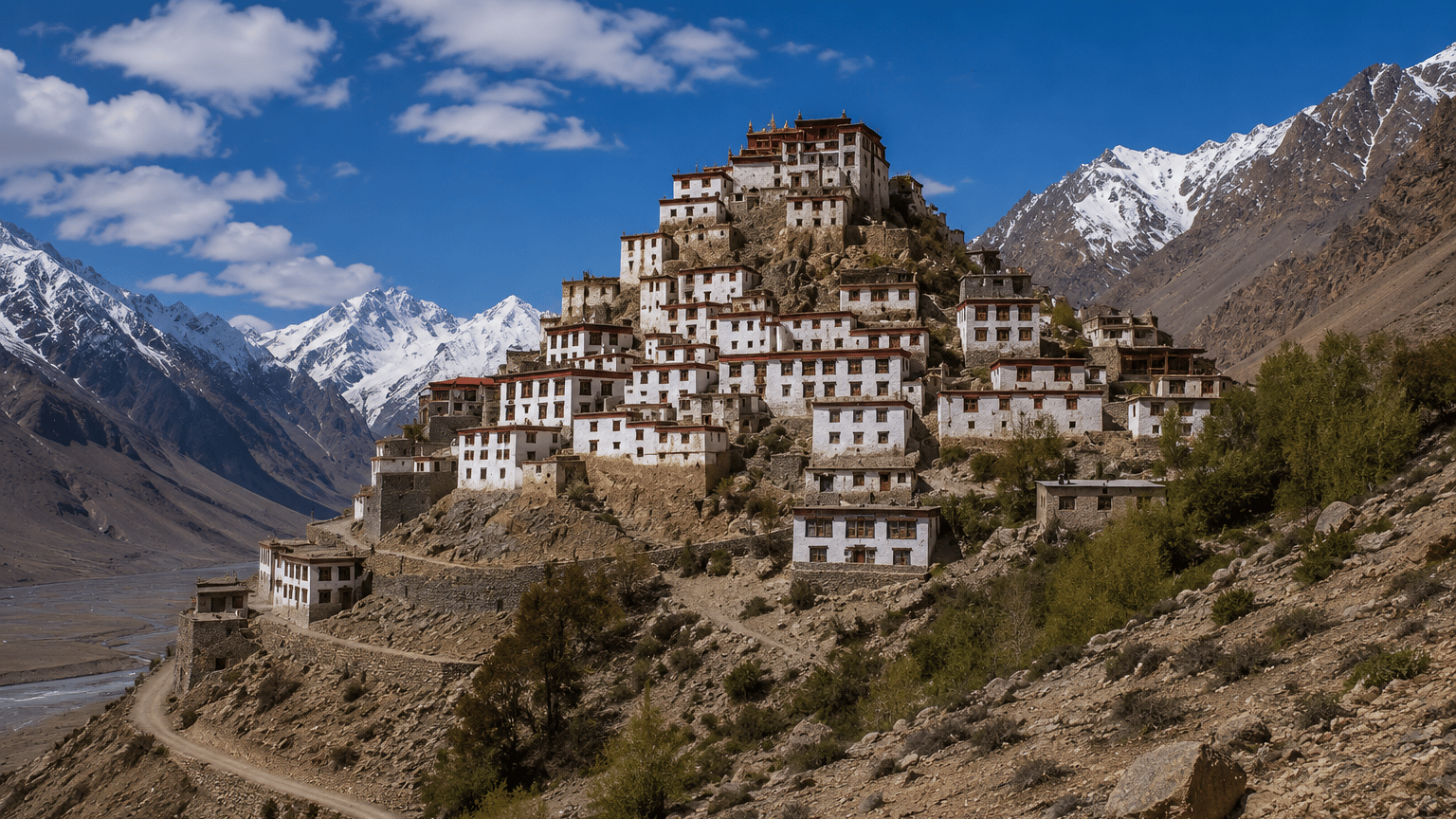
South Asia · Remote Settlement
Kibber Village
India
Kibber offers homes and cultivated fields high in Spiti, with difficult access and seasonal isolation. But the village is open, and evidence for local agriculture does not establish protected drinking water or dependable winter fuel for twenty survivors.
Overall
5.3 out of 10Defensibility
2 out of 10Isolation
8 out of 10Sustainability
6 out of 10Ranking context
How this base ranks
Global
#29 of 88 · Top 33%
Region · South Asia
#2 of 7 · Top 29%
Base Type · Remote Settlement
#5 of 16 · Top 31%
Field assessment
At a glance
Bottom Line
A real high-altitude habitat with useful separation, conditional on verified drinking water and a credible way to carry essentials through interrupted road access.
Biggest Trade-off
Conditions that delay outside pressure also make food replacement, repairs and medical help difficult when local provision falls short.
Most Likely Failure
Road access is lost before water and essential supplies are dependable, leaving the isolated village unable to replace what daily life consumes.
Score rationale
Why it scores this way
Defensibility · 2/10
Compact homes offer local shelter, but Kibber has no established fortified boundary. Terrain shapes approach without securing paths between homes, fields and essential services.
Advantages
- Occupation can concentrate in existing buildings rather than disperse across the landscape.
Limitations
- Watching the road leaves foot approaches and outdoor agricultural work exposed.
Isolation · 8/10
Altitude, difficult access and prolonged seasonal closure create substantial separation. The summer road to Kaza remains a real connection, and winter remoteness can trap shortages as effectively as it delays arrivals.
Advantages
- Severe access constraints reduce the ease of regional travel towards the village.
Limitations
- The same closure can remove a practical route to replacement essentials or medical help.
Sustainability · 6/10
Residential buildings, fields and services make Kibber more usable than an undeveloped mountain refuge. Continued occupation needs drinking water, winter essentials and maintained systems that the evidence does not establish as independent.
Advantages
- Shelter and cultivation provide an existing basis for domestic life and productive work.
Limitations
- Irrigated fields and household space cannot substitute for a verified drinking-water pathway.
Survival horizons
How survival changes over time
Verify the winter essentials
First 7 Days
Check drinking water, usable rooms and accessible food and fuel before settling into a watch routine. Judge the road’s condition and keep initial journeys within a manageable village area.
Positive factors
- The inhabited village supplies rooms and domestic infrastructure to inspect rather than construct.
Risks
- High-altitude effort and uncertain water provision can consume the early margin.
Balance stores with seasonal work
First 100 Days
Measure consumption against reserves and actual field output. Fit irrigation care, repairs and watches around the season; a ration-distribution record does not guarantee deliveries through disruption.
Positive factors
- Cultivation gives productive work beyond using household provisions.
Risks
- A missed work cycle or inaccessible input can leave little margin when roads become unreliable.
Survive closure and renew again
Long Term
Endurance needs safe water and sufficient food and fuel through isolation, then another production cycle. Regional farming offers a pathway, but dependable village water and independent energy continuity remain unresolved.
Positive factors
- Buildings and agricultural land retain useful functions without industrial life-support machinery.
Risks
- Isolation becomes a liability if depleted essentials or a service fault cannot be addressed locally.
Visual survey
Gallery
Location context
The Lay of the Land
Tactical assessment
Practical Reality
Best Use
Keep occupation close to checked water, usable shelter and practical field access. Assess winter essentials before extending watches or work into the surrounding sanctuary landscape.
Strengths
- Homes and community buildings provide a residential starting point in a severe environment.
- Village fields connect food work to an established Spiti agricultural system.
- High terrain, difficult roads and seasonal isolation constrain ordinary regional movement.
Key Risk
A local service or ration-distribution channel does not establish supply after road disruption. Water, fuel and food must be judged from accessible provision rather than listed village amenities.
Weaknesses
- Village paths and surrounding foot terrain remain open; the vehicle road is not the only approach.
- A protected potable-water source, treatment and storage pathway inside the Base remains unestablished.
- Seasonal isolation interrupts replenishment and specialist repair when existing systems deteriorate.
Reality Check & Constraints
Regional snowmelt irrigation supports farming, not proof of safe water at a Kibber home. A dispensary and power-development programme establish services, not available clinicians or autonomous electricity.
Assumptions / constraints
- Twenty capable adults do not automatically include high-altitude farmers, clinicians or power specialists. Existing residents are not added to their workforce.
- The village, its fields and immediate operating area remain the Base. Kaza supplies and the wider wildlife sanctuary are excluded.
- Crop stage, reserves, winter fuel, water safety and utility condition are unknown. Regional irrigation and planned power improvements are not verified new village capability.
Decision context
Rivals / Alternatives
Similar rival
Utqiagvik
United States · Remote Settlement
Utqiagvik keeps the same remote settlement strategy, with only 0.0 points between the overall scores and closely matched defensibility pressure.
Overall 5.3/10
Strongest alternative
Amundsen-Scott South Pole Station
Antarctica · Institutional Compound
Amundsen-Scott South Pole Station scores 7.7 overall versus 5.3, adding a stronger sustainability profile while staying relevant as a comparable survival plan.
Overall 7.7/10
Wildcard rival
San Felipe Fortress
Colombia · Fortified Structure
San Felipe Fortress changes the strategy: it is built around the fortified structure strategy with a defensibility edge, while Kibber Village holds more of the isolation advantage.
Overall 3.7/10