South Asia · Fortified Structure
Mehrangarh Fort
India
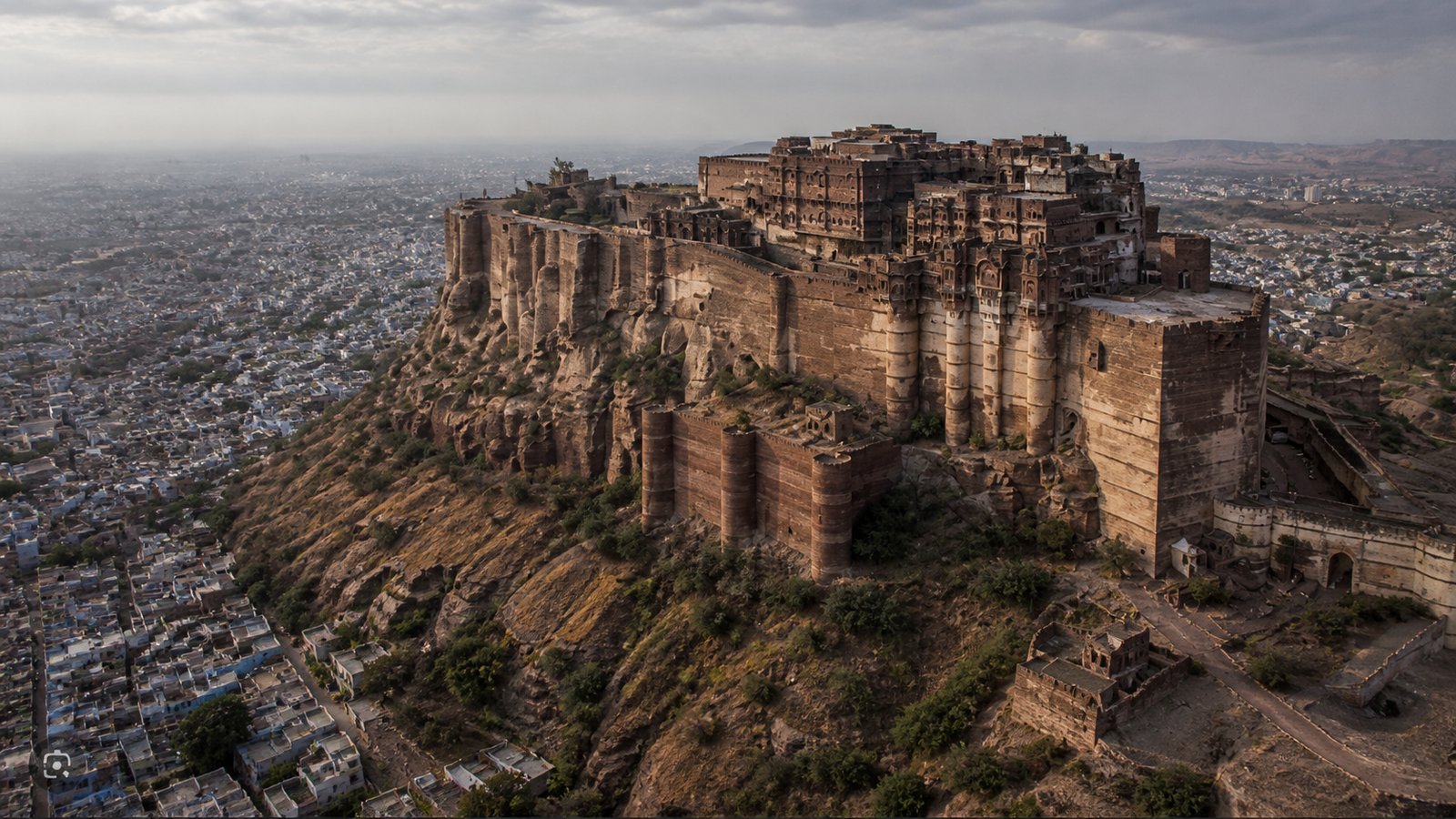
Mehrangarh puts massive walls, strengthened gates and an inner keep above Jodhpur. Its palace rooms and cafes offer a substantial foothold, but the city begins at the hill's foot. Secure drinking water matters more to continued occupation than the height of the battlements.
Overall
5 out of 10Defensibility
9 out of 10Isolation
1 out of 10Sustainability
5 out of 10Ranking context
How this base ranks
Global
#40 of 88 · Top 45%
Region · South Asia
#5 of 7 · Top 71%
Base Type · Fortified Structure
#11 of 18 · Top 61%
Field assessment
At a glance
Bottom Line
A formidable refuge from nearby ground pressure, provided the group can verify water and organise daily life inside a manageable part of the fort. Strong enclosure buys protection; it does not supply the household.
Biggest Trade-off
The hill and walls make entry difficult without putting Jodhpur far away. Obtaining supplies from below would repeatedly exchange the fort's protected position for contact with the surrounding city.
Most Likely Failure
Water shortage forces repeated journeys beyond the walls, drawing people away from watches and upkeep even while the fort itself remains difficult to enter.
Score rationale
Why it scores this way
Defensibility · 9/10
Massive masonry, strengthened gates, outworks and a central keep create real resistance and depth. The operational task is to connect occupied areas to that protection without leaving the larger complex unwatched.
Advantages
- Retreat through successive defended positions can preserve options after an outer breach.
Limitations
- A strong keep does not secure daily movement through every palace and service area.
Isolation · 1/10
The fort rises above an urban population source rather than away from it. Elevation helps observe and resist arrivals; it supplies little geographic delay before pressure reaches the hill.
Advantages
- The exposed hill approach gives useful separation from immediate street-level contact.
Limitations
- There is no remote hinterland between the fort and Jodhpur.
Sustainability · 5/10
Maintained palace rooms, courtyards and cafes offer credible indoor living space. Safe water, sanitation continuity and suitable everyday cooking arrangements must still be checked before museum space becomes a dependable home.
Advantages
- Existing built space reduces the need to construct shelter before organising domestic routines.
Limitations
- Current visitor operation does not demonstrate autonomous residential services after city utilities fail.
Survival horizons
How survival changes over time
Check water behind the walls
First 7 Days
Inspect gates, habitable rooms and food-service areas, then confirm a safe daily water route. Set a compact watch plan around those necessities before expanding occupation.
Positive factors
- Strong enclosure offers an immediate place to organise and inventory accessible supplies.
Risks
- Choosing rooms far from usable water multiplies internal carrying work from the start.
Keep the household inside
First 100 Days
Measure consumption and inspect sanitation, occupied roofs and gates. If daily provision increasingly requires city trips, include the lost watch and maintenance time in the decision to remain.
Positive factors
- Much of the defensive mass remains useful without powered equipment.
Risks
- A supply problem can erode the occupation before masonry loses its protective value.
Renew provision, preserve shelter
Long Term
Lasting residence requires repeatable safe water and food replacement while essential rooms and gates remain serviceable. Historic water-management fabric warrants investigation, but no independent renewal system is established inside this boundary.
Positive factors
- The inner defensive layers retain value even if only part of the fort stays occupied.
Risks
- Deferred conservation and external provision can demand more labour than the group can sustain.
Visual survey
Gallery
Location context
The Lay of the Land
Tactical assessment
Practical Reality
Best Use
Link inspected living rooms and food-service spaces to watched gates and a clear route towards the inner keep. Occupy selectively rather than assigning a tiny garrison to every courtyard and outwork.
Strengths
- Outworks and an inner keep provide fallback beyond the outer gate line.
- Substantial rooms and courtyards allow sleeping, stores and work to be separated.
- Food-service premises give domestic organisation a useful starting point.
Key Risk
A dependable potable-water pathway inside the occupied fort remains unverified. Historic waterworks and nearby Ranisar do not establish protected drinking water at the point of use.
Weaknesses
- Jodhpur lies immediately below, allowing pressure to accumulate close to the fort.
- No independent current potable-water provision is established within the core.
- Maintaining a large occupied heritage site competes with watchkeeping for labour.
Reality Check & Constraints
Cafes establish places to prepare and serve food, not a measured reserve or future harvest. The fort inherits neither Jodhpur's supply system nor the Trust's conservation workforce.
Assumptions / constraints
- The fort and directly controlled approach are included; surrounding city, farms and most of the rock park remain outside.
- Water condition and accessible food quantities require inspection; neither a full pantry nor usable lake water is assumed.
- Twenty capable adults can organise ordinary watches and repairs without inheriting specialist staff.
Decision context
Rivals / Alternatives
Similar rival
Fort Copacabana
Brazil · Fortified Structure
Fort Copacabana keeps the same fortified structure strategy, with only 0.3 points between the overall scores and closely matched sustainability pressure.
Overall 4.7/10
Strongest alternative
Fort George
United Kingdom · Fortified Structure
Fort George scores 6.7 overall versus 5.0, adding a stronger isolation profile while staying relevant as another fortified structure.
Overall 6.7/10
Wildcard rival
Amundsen-Scott South Pole Station
Antarctica · Institutional Compound
Amundsen-Scott South Pole Station changes the strategy: it is built around the institutional compound strategy with a isolation edge, while Mehrangarh Fort holds more of the defensibility advantage.
Overall 7.7/10