South America · Fortified Structure
Fort Copacabana
Brazil
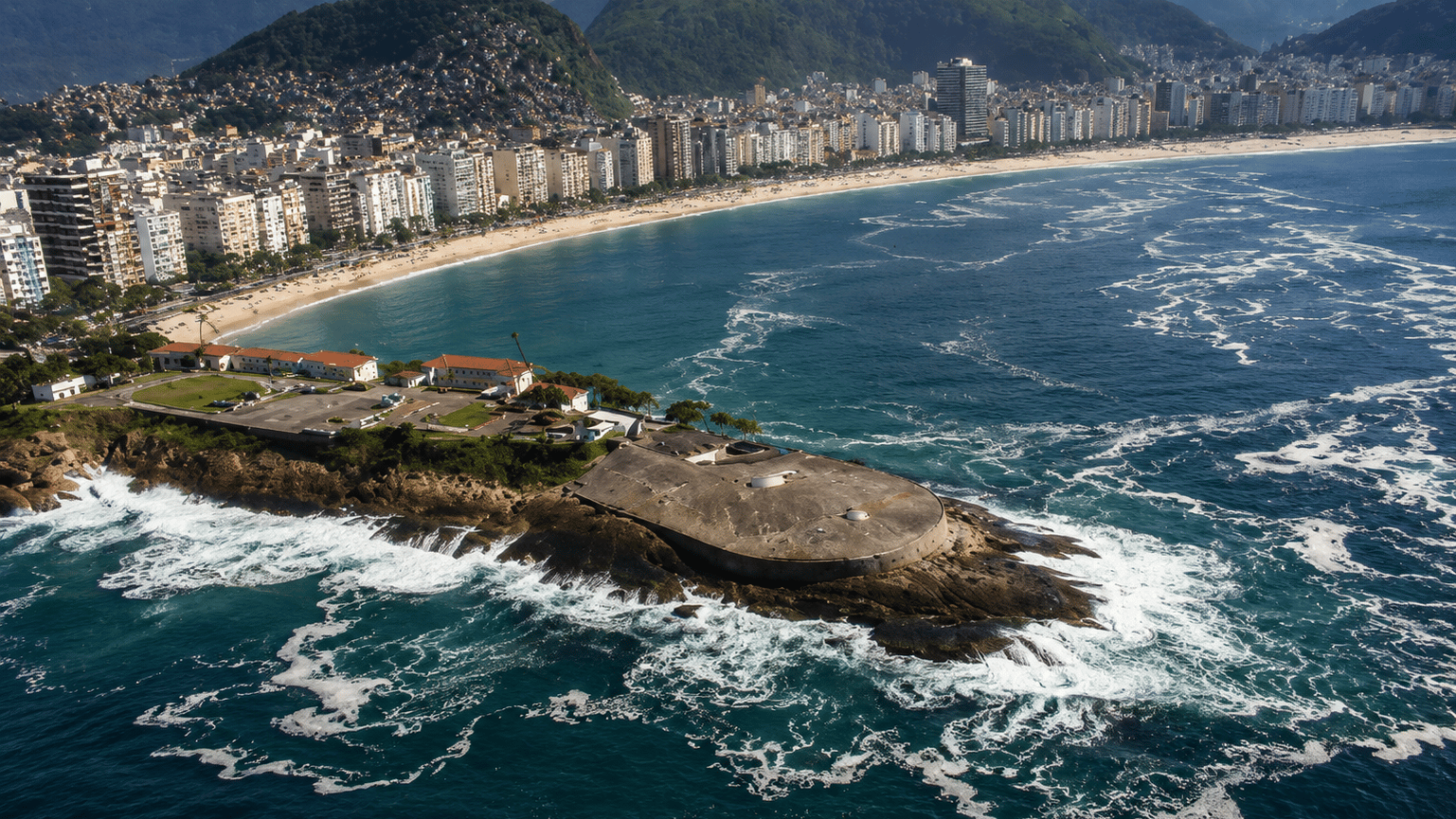
Fort Copacabana places hardened casemates and internal support spaces on a rocky promontory in Rio. Its controlled entrance aids local defence, but twenty survivors still depend on unverified supplies beside a dense urban population.
Overall
4.7 out of 10Defensibility
8 out of 10Isolation
1 out of 10Sustainability
5 out of 10Ranking context
How this base ranks
Global
#48 of 88 · Top 55%
Region · South America
#4 of 7 · Top 57%
Base Type · Fortified Structure
#12 of 18 · Top 67%
Field assessment
At a glance
Bottom Line
A strong position to occupy, with credible room for daily life, whose lasting value hinges on essentials that the surrounding city may no longer supply.
Biggest Trade-off
The promontory and controlled gate concentrate local approaches while leaving the group directly beside the urban pressure it needs protection from.
Most Likely Failure
Unverified water and food provision proves inadequate, forcing increasingly exposed journeys through Copacabana while the fort itself remains protective.
Score rationale
Why it scores this way
Defensibility · 8/10
Purpose-built casemates, protective rock and a controlled gate offer much stronger local resistance than an ordinary urban building. The evidence supports a hardened position, without proving every internal route is compartmentalised or every closure remains sound.
Advantages
- Substantial protected internal space allows daily tasks to remain behind the defensive envelope.
Limitations
- The landward connection still requires a watch and verified closures; the sea does not turn the fort into an inaccessible island.
Isolation · 1/10
Fort Copacabana sits within Rio's urban fabric. Water and rock narrow the immediate approach but add little distance from the surrounding population, so the group gains a barrier rather than regional remoteness.
Advantages
- The promontory distinguishes the occupied site from the surrounding street network and concentrates ordinary access.
Limitations
- Leaving for essential supplies immediately returns people to the neighbouring urban environment.
Sustainability · 5/10
The fort retains internal accommodation and support spaces, supplemented by current museum and food-service use. These make twenty-person occupation plausible, but a working residential household still needs verified sanitation, water and equipment.
Advantages
- Separate halls and service areas offer more scope to organise stores, rest and work than a single improvised shelter.
Limitations
- The historic cistern and utility plant have no established current stock, safe output or independent replenishment pathway.
Survival horizons
How survival changes over time
Inspect the protected living area
First 7 Days
Check the gate, internal circulation and usable rooms while establishing watches. Test the actual water and sanitation arrangements and inventory provisions; do not confuse a museum display of support facilities with services ready for use.
Positive factors
- Existing hardened rooms and service spaces give shelter and organisation an immediate physical starting point.
Risks
- Assuming the old cistern is ready drinking water can undermine occupation before the perimeter is seriously tested.
Keep the household inside the defences
First 100 Days
Track consumption, cleaning and repairs, then review how many essential tasks still require the city. Give ordinary upkeep priority without attempting specialist plant restoration on the strength of its historic role alone.
Positive factors
- The passive casemate structure retains protective value as powered services become less dependable.
Risks
- Supply journeys draw people away from watches and expose them outside the entrance the fort helps control.
Replace essentials before reserves fail
Long Term
Continued habitation needs repeatable safe-water and food pathways within the group's capabilities. Those are not established by the historic siege design; walls can preserve the home position while growing external dependence erodes the ability to live there.
Positive factors
- A durable enclosure remains a useful place to organise storage and routine work if essential provision is resolved.
Risks
- Accumulating service failures can make the surrounding city indispensable precisely when movement through it is least manageable.
Visual survey
Gallery
Location context
The Lay of the Land
Tactical assessment
Practical Reality
Best Use
Establish a compact occupied area inside the fort, inspect the gate and internal routes, and verify water, food preparation and waste arrangements before relying on the historic support layout.
Strengths
- Rock-protected casemates provide substantial passive shelter without relying on working artillery.
- The controlled entrance and surrounding water make ordinary land approaches easier to observe.
- Internal kitchen, storage, bathroom and workshop spaces give the group an existing functional layout to inspect.
Key Risk
A cistern, food store and diesel plant are documented spaces and equipment, not proof of safe water, stored provisions or a functioning independent utility system.
Weaknesses
- The fort is attached to metropolitan Rio rather than separated from it by a remote regional buffer.
- Museum circulation and visitor throughput do not prove comfortable sleeping and residential sanitation for an expanded community.
- Municipal and commercial disruption can remove essentials without overcoming the defensive structure.
Reality Check & Constraints
The surviving fort is an operating museum with food-service spaces. Its historic ability to support a garrison does not establish present supplies, working military equipment, a medical team or residential services through a city outage.
Assumptions / constraints
- The fort, integrated service spaces and immediately controlled entrance and promontory are the Base; beaches, city streets and neighbourhood supplies remain external.
- Twenty capable adults provide ordinary watches and upkeep, without an assumed garrison, medical staff, boat or artillery capability.
- Cistern contents and potability, machinery condition and actual provisions require checking; historic endurance and visitor numbers establish no guaranteed duration.
Decision context
Rivals / Alternatives
Similar rival
San Felipe Fortress
Colombia · Fortified Structure
San Felipe Fortress keeps the same fortified structure strategy, with only 1.0 points between the overall scores and closely matched defensibility pressure.
Overall 3.7/10
Strongest alternative
Fort George
United Kingdom · Fortified Structure
Fort George scores 6.7 overall versus 4.7, adding a stronger isolation profile while staying relevant as another fortified structure.
Overall 6.7/10
Wildcard rival
Amundsen-Scott South Pole Station
Antarctica · Institutional Compound
Amundsen-Scott South Pole Station changes the strategy: it is built around the institutional compound strategy with a isolation edge, while Fort Copacabana holds more of the defensibility advantage.
Overall 7.7/10