UK & Ireland · Isolated Landmass
Lindisfarne
United Kingdom
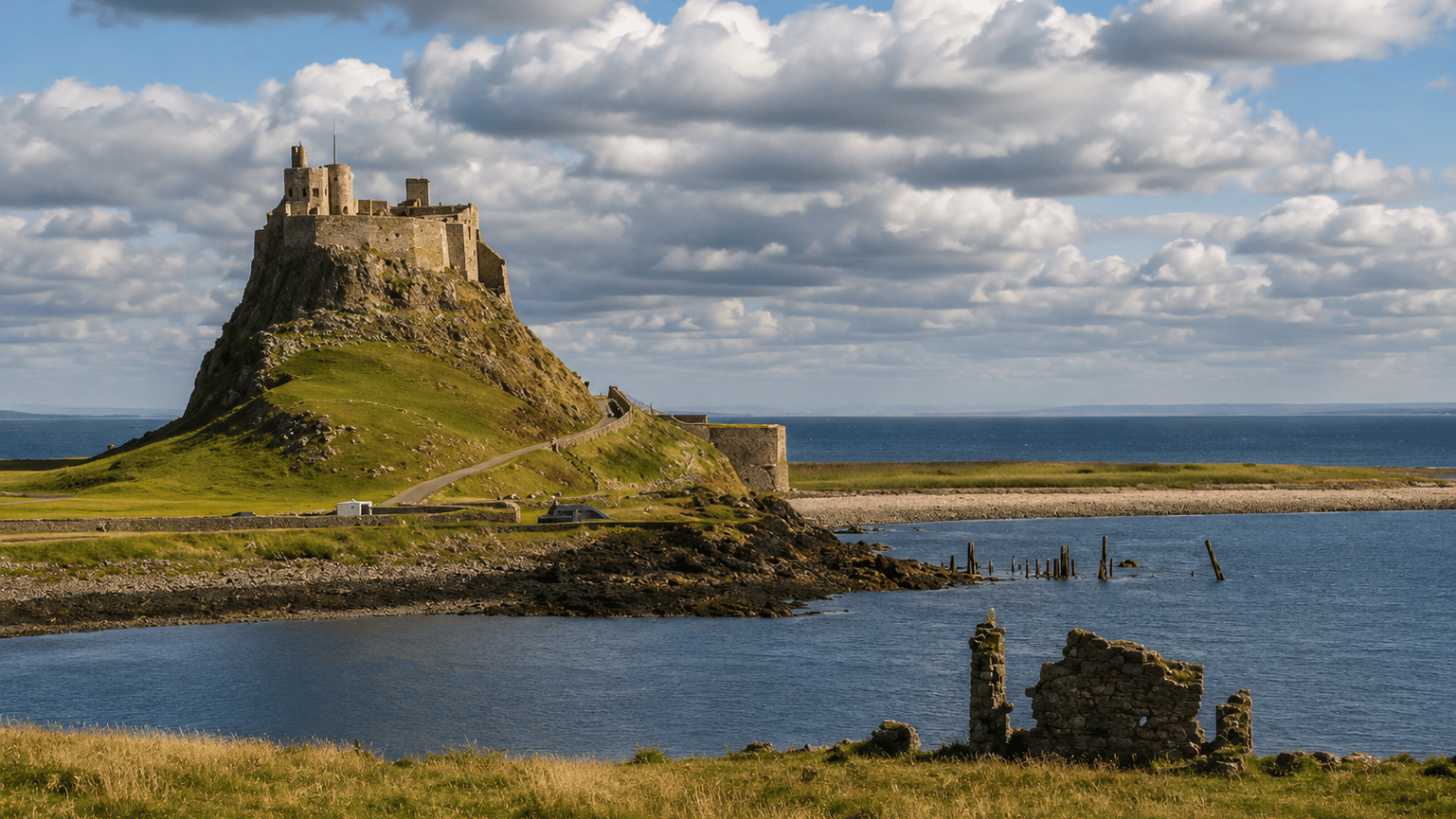
Lindisfarne Castle combines crag-top fortification with the rooms of a former home. Tides interrupt mainland road access, but the castle’s limited services and unproven independent water supply make prolonged occupation harder than its dramatic position suggests.
Overall
6 out of 10Defensibility
7 out of 10Isolation
5 out of 10Sustainability
6 out of 10Ranking context
How this base ranks
Global
#15 of 88 · Top 17%
Region · UK & Ireland
#4 of 11 · Top 36%
Base Type · Isolated Landmass
#2 of 19 · Top 11%
Field assessment
At a glance
Bottom Line
A strong local refuge with modest residential capacity, whose daily water, sanitation and food needs must be resolved within a narrow castle boundary.
Biggest Trade-off
Tidal separation reduces through-access only part of each day, while restricting the group’s own journeys. It does not supply what the castle lacks.
Most Likely Failure
Safe water or hygiene fails, forcing provision journeys outside the castle while tide windows restrict access and split attention from the occupied refuge.
Score rationale
Why it scores this way
Defensibility · 7/10
The fort’s elevated crag and surviving batteries provide strong local defensive geometry. Residential conversion and uncertain present barriers prevent treating every part of the house as a hardened fighting position.
Advantages
- The climb to the castle concentrates the immediate access task around an identifiable occupied structure.
Limitations
- A defensible exterior does not prevent an infection or breach already inside shared residential rooms.
Isolation · 5/10
The single road onto Holy Island is submerged twice daily, interrupting the mainland connection. It reopens with the tide, and the castle is still near an established village and visitor destination.
Advantages
- Periodic loss of the road limits continuous movement from the mainland.
Limitations
- Island access control is not castle access control: people already on Holy Island remain local pressure.
Sustainability · 6/10
Kitchen, dining and bedroom spaces make this more than a bare military ruin. The limiting question is whether a small community can maintain safe water and sanitation, with only modest documented present services.
Advantages
- The domestic layout supports differentiated living tasks within the existing building.
Limitations
- Historic bedrooms do not establish enough current sleeping fit-out or hygiene throughput for an enduring twenty-person household.
Survival horizons
How survival changes over time
Check rooms and necessities
First 7 Days
Inspect usable rooms and immediate approaches, then confirm drinking water, sanitation and actual provisions. Plan essential journeys around verified access conditions rather than relying on the tide as a complete defence.
Positive factors
- Existing domestic spaces provide a sheltered starting point for organising a small community.
Risks
- The first shortage can force travel beyond the castle; the surrounding village is not an inherited store.
Hygiene and upkeep compete
First 100 Days
As stored provisions diminish, water collection, waste handling and attention to exposed fabric become recurring work. Judge the occupation by service capacity rather than the number of available rooms.
Positive factors
- Heavy fort fabric continues to provide shelter and local access advantages without powered defences.
Risks
- Restricted sanitation and weather-related deterioration can absorb labour needed for watches and provision.
A home needs renewed inputs
Long Term
Continued residence requires dependable water and food renewal while keeping the coastal building serviceable. Neither independent provision nor an ordinary group’s ability to replace specialist conservation is established.
Positive factors
- Crag-top geography retains its protective value after modern services become unreliable.
Risks
- The castle may remain defensible while essential supplies and recurring repairs make it an impractical permanent home.
Visual survey
Gallery
Location context
The Lay of the Land
Tactical assessment
Practical Reality
Best Use
Organise a compact occupation of inspected residential rooms, keeping water and hygiene needs central. Watch the immediate castle approach rather than claiming control of Holy Island.
Strengths
- A former coastal fort and its batteries provide substantial passive protection.
- The crag gives useful visibility over immediate approaches.
- Residential rooms offer separate spaces for sleeping and communal activity.
Key Risk
Limited sanitation and no established independent potable-water pathway could make twenty-person residence unsustainable despite ample defensive strength.
Weaknesses
- One documented visitor toilet is a narrow service provision for prolonged communal residence.
- Protected potable-water renewal, food production and independent survival energy are not established inside the castle.
- Wind, water ingress and deterioration impose recurring fabric work beyond ordinary housekeeping.
Reality Check & Constraints
Kitchen and bedroom fabric demonstrates a real domestic past, not current household stocks or autonomous utilities. Village shops, farmland and wider island services are outside the assessed Base.
Assumptions / constraints
- Lindisfarne means the castle, crag and immediate access here, not the village or the whole tidal island.
- Existing rooms are not assumed furnished, stocked or serviced for twenty permanent occupants.
- Tidal closure is a recurring access constraint, not permanent separation or a guaranteed safe crossing window.
Decision context
Rivals / Alternatives
Similar rival
Fort George
United Kingdom · Fortified Structure
Fort George keeps the same UK & Ireland risk context, with only 0.7 points between the overall scores and closely matched defensibility pressure.
Overall 6.7/10
Strongest alternative
Amundsen-Scott South Pole Station
Antarctica · Institutional Compound
Amundsen-Scott South Pole Station scores 7.7 overall versus 6.0, adding a stronger isolation profile while staying relevant as a comparable survival plan.
Overall 7.7/10
Wildcard rival
Great Mosque of Djenné
Mali · Landmark Structure
Great Mosque of Djenné changes the strategy: it is built around the landmark structure strategy without a headline-pillar edge over Lindisfarne, while Lindisfarne holds more of the defensibility advantage.
Overall 1.3/10