North America · Institutional Compound
Guantanamo Bay
Cuba
Guantanamo Bay has housing, utility infrastructure and its own drinking-water production. Its difficulty is scale: a small group must keep essential services working inside a sprawling mainland installation without inheriting the Navy’s workforce.
Overall
6 out of 10Defensibility
5 out of 10Isolation
4 out of 10Sustainability
9 out of 10Ranking context
How this base ranks
Global
#13 of 88 · Top 15%
Region · North America
#3 of 9 · Top 33%
Base Type · Institutional Compound
#3 of 6 · Top 50%
Field assessment
At a glance
Bottom Line
An unusually complete starting habitat, provided the group can sustain a manageable occupied area and operate the utilities on which daily life depends.
Biggest Trade-off
Extensive facilities create choices and redundancy, but every service retained adds operating demands that a small group must actually meet.
Most Likely Failure
A power or treatment fault exceeds the group’s repair skills, interrupting drinking-water production while food, fuel and replacement parts become harder to obtain.
Score rationale
Why it scores this way
Defensibility · 5/10
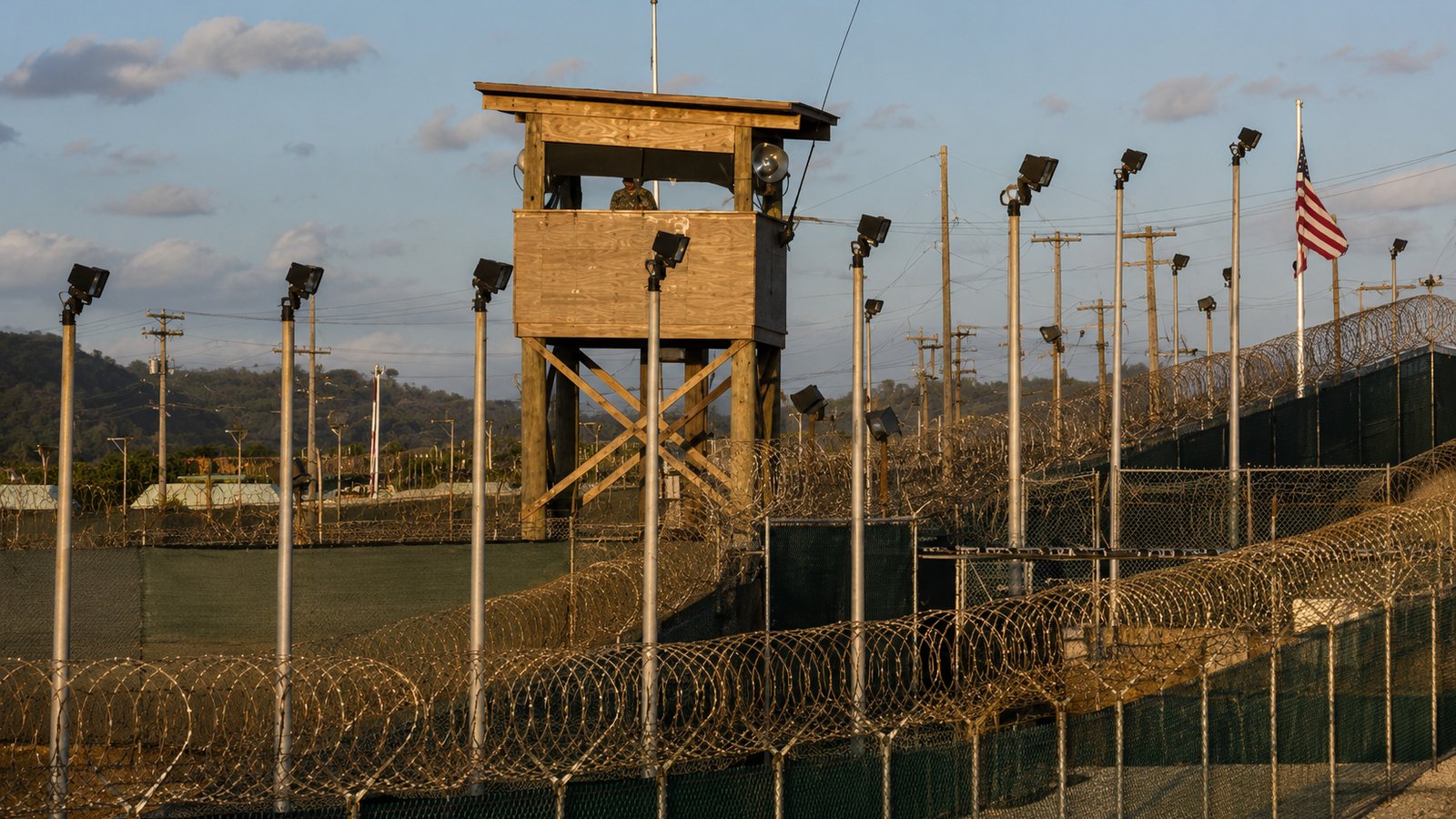
A closed installation provides a real boundary and buildings that can be secured. The station’s extensive footprint turns that advantage into a staffing problem: a small group cannot treat the whole fence line as an actively watched position.
Advantages
- Existing access control and secureable buildings support a deliberate choice of occupied area.
Limitations
- The long installation boundary exceeds what the reference group can continuously supervise.
Isolation · 4/10
This is a restricted enclave on Cuba’s mainland, not a remote offshore island. Distance from the United States complicates replacement supplies without placing the station equally far from nearby population pressure.
Advantages
- The coastal setting separates the station from U.S. population centres and their immediate disruption.
Limitations
- Administrative separation and fencing do not remove the surrounding Cuban mainland.
Sustainability · 9/10
Housing, services and independent water infrastructure make this an exceptionally developed habitat. Continued habitation still depends on making selected utilities work; capacity for many residents does not make the infrastructure simple to run.
Advantages
- Residential buildings and established everyday services provide far more usable accommodation than a bare compound.
Limitations
- Water treatment, generation and other essential systems retain fuel, maintenance and specialist dependencies.
Survival horizons
How survival changes over time
Choose what can be operated
First 7 Days
Inventory accessible supplies and check water, power and sanitation before committing to a residential area. Keep the occupied footprint manageable; taking possession of a large station is different from making every facility useful.
Positive factors
- Established housing and ordinary support buildings provide options for shelter and organisation.
Risks
- Scattered facilities can draw people into competing journeys and watch duties before essential routines are secure.
Consumption meets maintenance
First 100 Days
Track food and fuel use against verified reserves while learning which services the group can maintain. Reduced personal consumption helps, but it does not proportionately shrink the machinery, distribution and repair demands of the installation.
Positive factors
- Existing utility and support infrastructure gives the group more options than an undeveloped site.
Risks
- Treatment and generation faults can demand skills or parts beyond ordinary repair capability.
Independence has limits
Long Term
Continued occupation needs replenishable food, survival-critical energy and replacement parts. Producing water locally reduces one external dependency only while the supporting plant remains serviceable; no reliable maritime or air resupply is assumed.
Positive factors
- The station already has its own water-production and power infrastructure, rather than relying on Cuban utility connections.
Risks
- Losing imported fuel or critical parts can undermine several services together, even while housing remains intact.
Visual survey
Gallery
Location context
The Lay of the Land
Tactical assessment
Practical Reality
Best Use
A limited residential and service foothold within the existing station, with essentials prioritised over operating the entire installation.
Strengths
- Existing residential accommodation greatly exceeds the group’s physical shelter requirement.
- The documented water-production and storage pathway is an actual installation asset.
- Ordinary medical, food-service and community buildings provide a mature setting for habitation.
Key Risk
Independence from Cuban utilities can obscure continued dependence on fuel, technical upkeep and imported food.
Weaknesses
- The installation’s scale creates a major watch and movement burden.
- Geographic separation from the United States does not mean separation from Cuba’s population.
- Technically complex utilities lose value when fuel, skills or replacement parts are unavailable.
Reality Check & Constraints
A hospital, housing and utility plant establish facilities, not an inherited medical team, engineering crew or measured reserve. Detention assets, weapons and classified systems are outside this assessment.
Assumptions / constraints
- The canonical Base remains the whole naval station; selecting an occupied area does not redraw the evaluation boundary or improve its scores.
- The group has ordinary practical skills, not a retained military workforce, treatment-plant crew or hospital staff.
- Accessible stocks and system condition must be established on occupation; no inventory, continuous utility output or resupply interval is guaranteed.
Decision context
Rivals / Alternatives
Similar rival
Al Udeid Air Base
Qatar · Institutional Compound
Al Udeid Air Base keeps the same institutional compound strategy, with only 0.3 points between the overall scores and closely matched defensibility pressure.
Overall 5.7/10
Strongest alternative
Amundsen-Scott South Pole Station
Antarctica · Institutional Compound
Amundsen-Scott South Pole Station scores 7.7 overall versus 6.0, adding a stronger isolation profile while staying relevant as another institutional compound.
Overall 7.7/10
Wildcard rival
Great Mosque of Djenné
Mali · Landmark Structure
Great Mosque of Djenné changes the strategy: it is built around the landmark structure strategy without a headline-pillar edge over Guantanamo Bay, while Guantanamo Bay holds more of the sustainability advantage.
Overall 1.3/10