Africa · Remote Settlement
Kolmanskop
Namibia
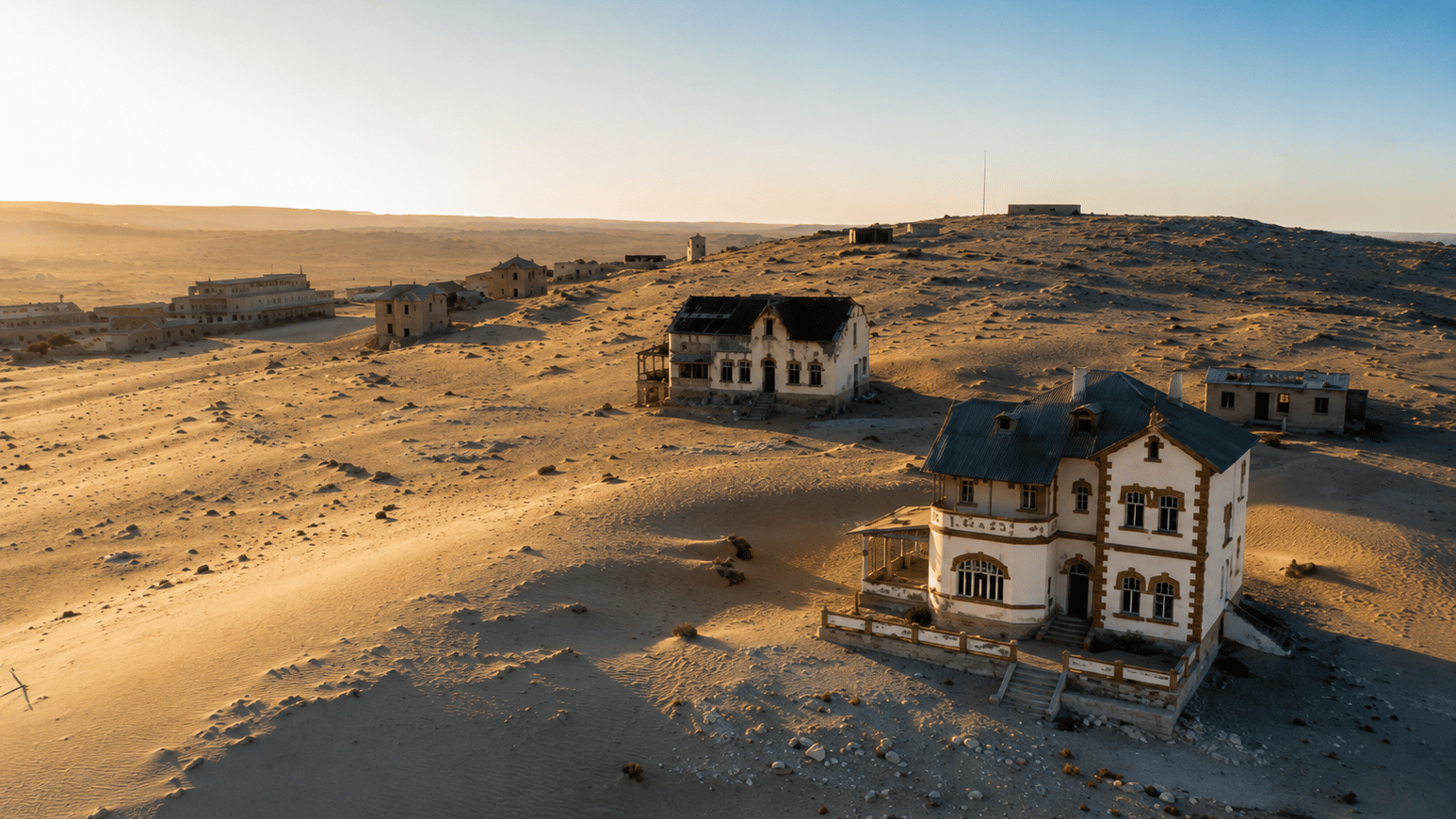
Kolmanskop offers substantial buildings and a working visitor tavern in an open desert ghost town. Shelter is tangible, but sand encroachment and an unproven independent water supply make a lasting settlement a difficult proposition.
Overall
3.3 out of 10Defensibility
2 out of 10Isolation
5 out of 10Sustainability
3 out of 10Ranking context
How this base ranks
Global
#80 of 88 · Top 91%
Region · Africa
#7 of 11 · Top 64%
Base Type · Remote Settlement
#16 of 16 · Top 100%
Field assessment
At a glance
Bottom Line
A shelter and inventory opportunity whose continued use depends on resolving water and safe living space, rather than reviving the town’s historic scale.
Biggest Trade-off
Desert separation and open sightlines reduce surprise, but the scattered buildings leave the group exposed between shelter, visitor facilities and watch positions.
Most Likely Failure
Supplied drinking water is exhausted without a dependable local replacement, forcing movement away from shelter into a harsh surrounding landscape.
Score rationale
Why it scores this way
Defensibility · 2/10
Ordinary abandoned buildings offer local cover, but gaps between them and the absence of a strong enclosing perimeter make sustained defence difficult. Administrative access control supplies little physical depth.
Advantages
- A defined visitor entrance provides one obvious point to observe.
Limitations
- Watching that entrance cannot secure every approach to the dispersed houses and civic buildings.
Isolation · 5/10
The Namib setting and surrounding restricted area provide separation from dense settlement. Nearby Lüderitz and routine visitor access keep the town connected rather than deeply isolated.
Advantages
- Open desert makes ordinary regional movement less direct than through a continuous built-up area.
Limitations
- Permit restrictions are an administrative arrangement, not a dependable post-collapse obstacle to arrivals.
Sustainability · 3/10
Substantial indoor space and visitor facilities support an initial occupation, but a day-use ghost town lacks the established residential services of a living settlement. Safe rooms need assessment individually.
Advantages
- The existing tavern and toilets provide specific service points to inspect before adapting other rooms.
Limitations
- A former hospital or house does not establish working healthcare, plumbing or habitable sleeping space today.
Survival horizons
How survival changes over time
Inspect before spreading out
First 7 Days
Check building safety, locate drinkable water and inventory the visitor facilities. Concentrate occupation where daily needs can actually be met rather than distributing people through attractive empty buildings.
Positive factors
- Existing rooms offer immediate cover where their condition permits use.
Risks
- Café service proves neither a stocked storeroom for the group nor a source of replacement drinking water.
Upkeep competes with supply
First 100 Days
Repeat water provision and sanitation become more demanding than finding spare rooms. Sand clearance and deteriorating fabric add work while the group must protect trips between scattered facilities.
Positive factors
- Limiting the occupied rooms can keep routine inspection and cleaning within a smaller daily circuit.
Risks
- Visitor toilets do not establish a sanitation system that will keep functioning after normal services stop.
Shelter cannot renew supplies
Long Term
Enduring residence would require dependable water and food renewal alongside continuing building upkeep. The surviving town supplies useful space, but the evidence does not establish that independent livelihood.
Positive factors
- Sound masonry can retain shelter value after visitor operations cease.
Risks
- Maintaining empty buildings cannot replace the consumables and outside services on which current visitor support depends.
Visual survey
Gallery
Location context
The Lay of the Land
Tactical assessment
Practical Reality
Best Use
Inspect a small set of sound rooms near verified daily essentials. Treat the tavern as a source of facilities and inventory to check, not a promise of continued catering.
Strengths
- Surviving houses and civic buildings give the group multiple spaces to inspect for shelter and storage.
- The former Casino Building retains active visitor food service rather than only historic kitchen associations.
- Open terrain offers useful views of movement toward the occupied area.
Key Risk
Keeping rooms usable against sand and deterioration consumes effort while water and food still depend on supplies that the town does not renew.
Weaknesses
- A visitor entrance does not create a continuous fortified boundary around the town.
- Windblown sand and long abandonment progressively reduce the usable building stock.
- No independent potable-water production or durable food supply is established within the ghost town.
Reality Check & Constraints
Current daytime food service and toilets distinguish Kolmanskop from an entirely unsupported ruin. They do not restore residential services, prove usable reserves or bring Lüderitz utilities inside the Base.
Assumptions / constraints
- The assessed area includes integrated visitor facilities but excludes Lüderitz and the wider restricted diamond area.
- Current visitor services establish facilities, not the quantity or condition of stock found on arrival.
- Twenty capable adults inherit neither tour staff nor the external suppliers maintaining daytime operations.
Decision context
Rivals / Alternatives
Similar rival
Aït Benhaddou
Morocco · Remote Settlement
Aït Benhaddou keeps the same remote settlement strategy, with only 0.7 points between the overall scores and closely matched defensibility pressure.
Overall 4/10
Strongest alternative
Isle of Eigg Village
United Kingdom · Remote Settlement
Isle of Eigg Village scores 6.3 overall versus 3.3, adding a stronger sustainability profile while staying relevant as another remote settlement.
Overall 6.3/10
Wildcard rival
Amundsen-Scott South Pole Station
Antarctica · Institutional Compound
Amundsen-Scott South Pole Station changes the strategy: it is built around the institutional compound strategy with a sustainability edge, while Kolmanskop has no headline-pillar edge in return.
Overall 7.7/10