South Asia · Institutional Compound
Hanle Observatory
India
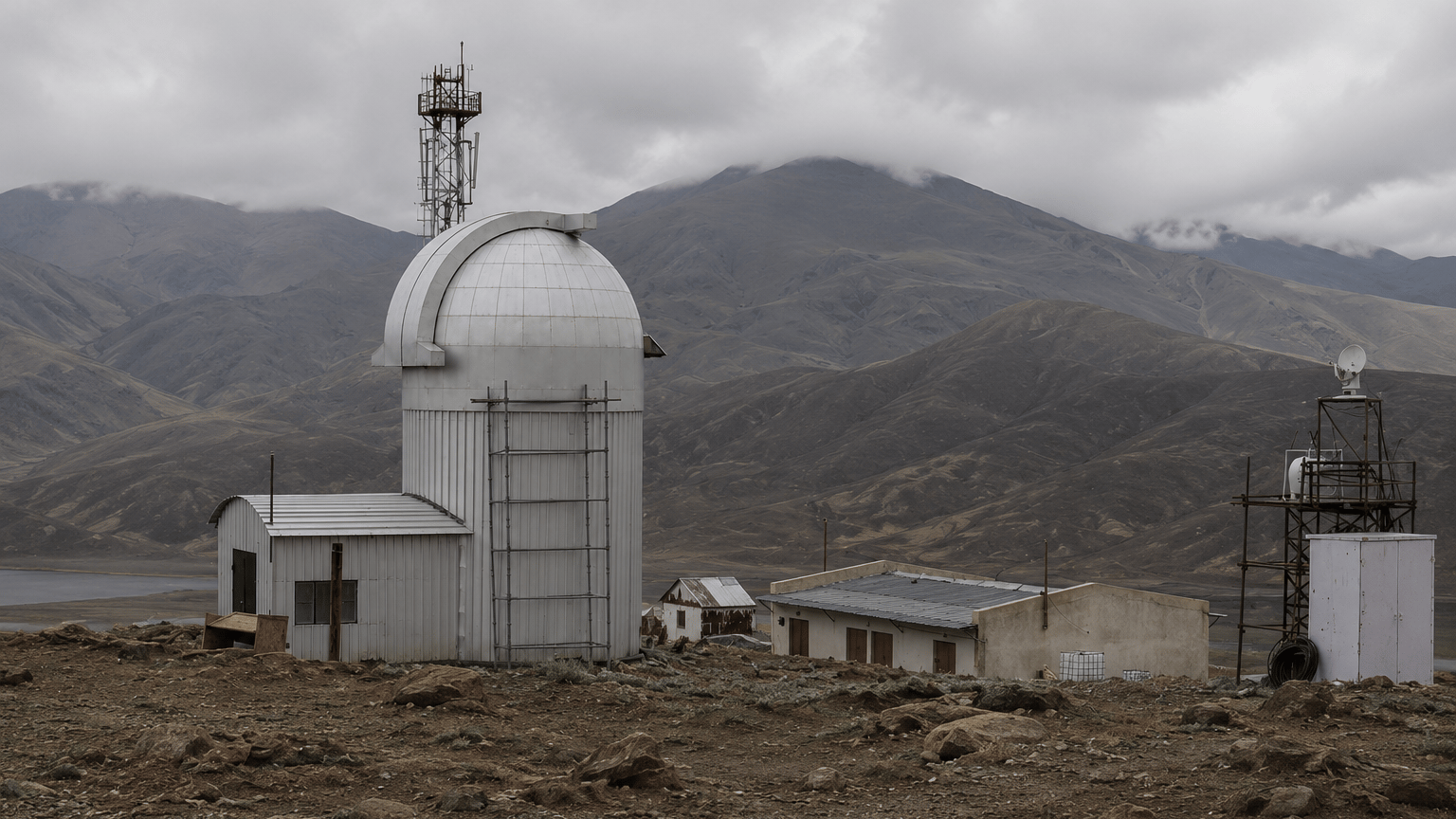
Hanle Observatory offers exceptional separation in a high-altitude cold desert, with purpose-built staff shelter. Distance limits incoming pressure, but protected water, supplies and comfortable accommodation for twenty remain unproven within the scientific campus.
Overall
5.3 out of 10Defensibility
2 out of 10Isolation
9 out of 10Sustainability
5 out of 10Ranking context
How this base ranks
Global
#28 of 88 · Top 32%
Region · South Asia
#1 of 7 · Top 14%
Base Type · Institutional Compound
#6 of 6 · Top 100%
Field assessment
At a glance
Bottom Line
A remote shelter opportunity with a decisive entry condition: confirm usable drinking water and residential capacity before committing the whole group.
Biggest Trade-off
The sparse high-altitude setting limits outside pressure while making every missing supply, specialist repair or need for help harder to resolve.
Most Likely Failure
Interruption of an unverified drinking-water supply leaves sheltered occupants unable to meet daily needs, with no established independent fallback inside the campus.
Score rationale
Why it scores this way
Defensibility · 2/10
Terrain and buildings help the group observe and limit local contact, but the campus was built for science rather than containment. Visibility must be backed by manageable occupied rooms and watches.
Advantages
- Demarcated visitor areas provide a starting pattern for separating occupied space from incoming movement.
Limitations
- Visitor restrictions do not establish a physical barrier capable of resisting sustained pressure.
Isolation · 9/10
At roughly 4,500 metres in a sparsely populated cold desert, Hanle is strongly separated from major population sources. Its road access and existing staff still connect it to the surrounding outbreak.
Advantages
- Sparse surrounding settlement reduces the concentration of nearby population sources compared with an urban campus.
Limitations
- The same distance makes a supply or health problem harder to resolve; remoteness cannot substitute for a verified local water pathway.
Sustainability · 5/10
Staff accommodation and guest-house support demonstrate real habitation at altitude. They do not establish enough sanitation, medical support or independent utilities for twenty people through prolonged supply interruption.
Advantages
- Solar-passive accommodation gives the group an existing way to reduce part of its heating burden.
Limitations
- A documented room is not proof of a usable bed today, adequate water per occupant or enough capacity for the full group.
Survival horizons
How survival changes over time
Verify the basics before settling
First 7 Days
Locate usable sleeping space, inspect sanitation and establish where potable water actually comes from. Inventory accessible supplies before treating the observatory's remoteness as a reason to stay.
Positive factors
- Existing staff accommodation offers a foothold without first constructing high-altitude shelter.
Risks
- The missing water and capacity evidence makes commitment risky even if the buildings appear intact.
Make habitation repeatable
First 100 Days
If the initial checks succeed, daily consumption and ordinary repairs become the test. Track water and food use, keep shelter weatherproof and compare the actual workload with what twenty people can sustain.
Positive factors
- Passive features in the documented rooms reduce some dependence on continuous powered heating.
Risks
- Recurring deliveries during normal operation do not show that accessible stocks cover a prolonged interruption.
Distance cannot renew supplies
Long Term
Long-term occupation needs repeatable water, food and essential maintenance inside the bounded operation. The current evidence does not establish those independent pathways; careful rationing alone cannot make the campus self-supporting.
Positive factors
- Geographic separation remains useful for limiting external pressure while the group assesses whether habitation is still viable.
Risks
- Without verified resource renewal, accumulating shortages or a specialist fault can end occupation while the remote setting remains unchanged.
Visual survey
Gallery
Location context
The Lay of the Land
Tactical assessment
Practical Reality
Best Use
Concentrate on the campus accommodation and essential support rooms. Verify water and sanitation before allocating people to watches or nonessential scientific equipment.
Strengths
- Sparse surroundings and elevated visibility make movement toward the campus easier to notice.
- Purpose-built staff rooms offer a genuine residential starting point in a demanding environment.
- Documented solar-passive construction retains a shelter benefit without assuming every powered scientific system remains operational.
Key Risk
Twenty occupants may exceed the documented residential and sanitation provision; a working observatory is not evidence of a self-supporting twenty-person settlement.
Weaknesses
- No hardened perimeter or protected fallback position is established for the scientific installation.
- Protected potable-water production, storage and interruption tolerance remain unresolved inside the Base.
- Specialised equipment and remote support arrangements make replacement parts and uncommon repairs difficult to substitute locally.
Reality Check & Constraints
The evidence establishes staff accommodation, not present stocks, a protected water reserve or an inherited technical crew. Solar-passive rooms reduce some heating dependence; they do not establish all-season comfort or independent life support.
Assumptions / constraints
- Twenty capable adults can organise and perform ordinary repairs; they are not assumed to include observatory engineers or a specialist medical team.
- Only the campus and directly integrated support accommodation count. Village homestays, monasteries, valley grazing and off-site water are not inherited resources.
- Cold and altitude do not grant immunity, remove walkers or guarantee a safe occupation period. Water, shelter condition and usable supplies require verification.
Decision context
Rivals / Alternatives
Similar rival
Kibber Village
India · Remote Settlement
Kibber Village keeps the same South Asia risk context, with only 0.0 points between the overall scores and closely matched sustainability pressure.
Overall 5.3/10
Strongest alternative
Amundsen-Scott South Pole Station
Antarctica · Institutional Compound
Amundsen-Scott South Pole Station scores 7.7 overall versus 5.3, adding a stronger sustainability profile while staying relevant as another institutional compound.
Overall 7.7/10
Wildcard rival
San Felipe Fortress
Colombia · Fortified Structure
San Felipe Fortress changes the strategy: it is built around the fortified structure strategy with a defensibility edge, while Hanle Observatory holds more of the isolation advantage.
Overall 3.7/10