Western Europe · Fortified Structure
Carcassonne
France
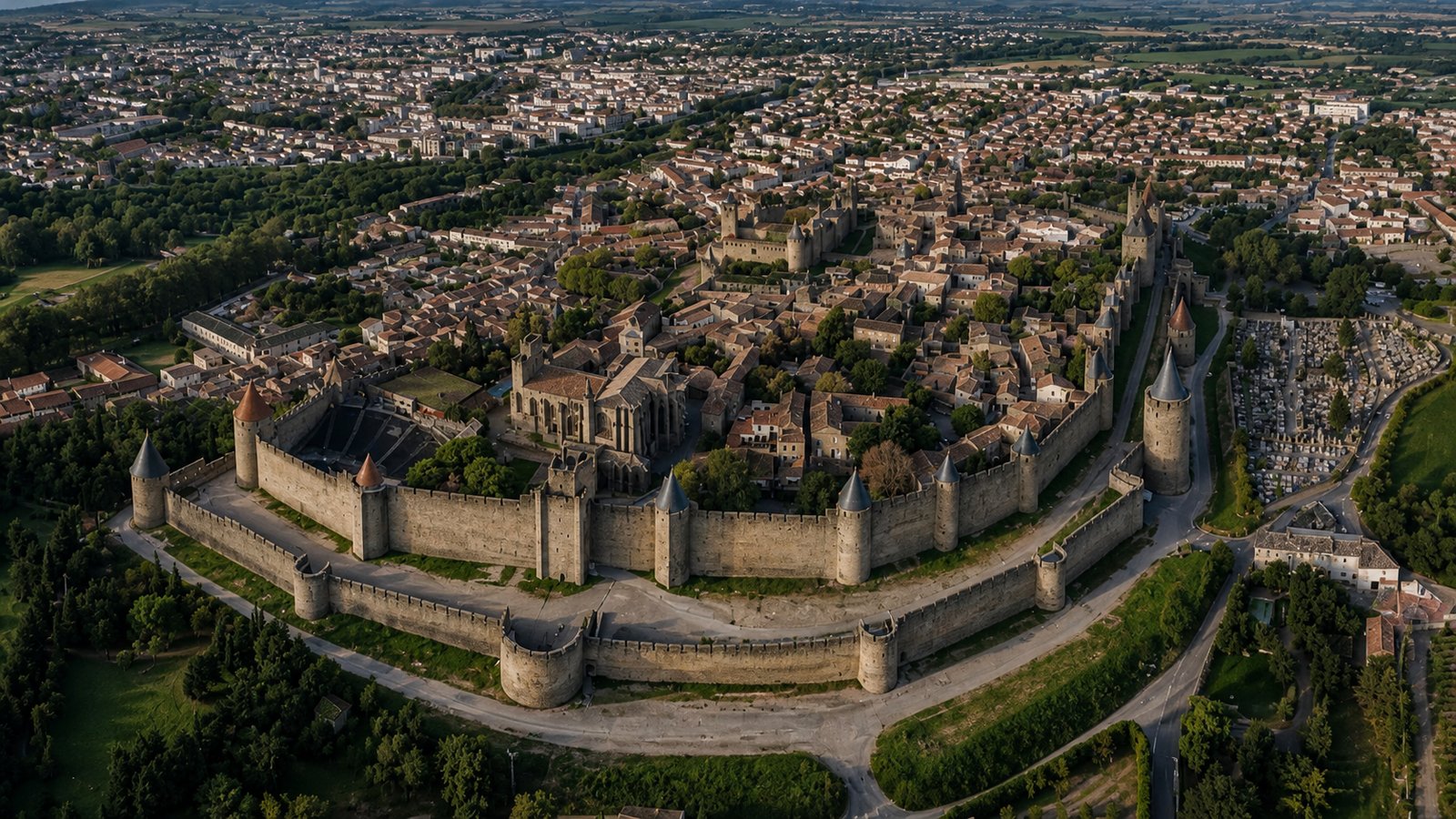
Carcassonne encloses an inhabited town within double walls, with homes, hotel accommodation and food-service spaces already inside. Its challenge is supplying and watching that extensive refuge when municipal services and normal deliveries cease to be dependable.
Overall
5.7 out of 10Defensibility
8 out of 10Isolation
2 out of 10Sustainability
7 out of 10Ranking context
How this base ranks
Global
#19 of 88 · Top 22%
Region · Western Europe
#4 of 9 · Top 44%
Base Type · Fortified Structure
#8 of 18 · Top 44%
Field assessment
At a glance
Bottom Line
A strong place to establish daily life behind layered defences, but a small group must choose what it can actually watch and supply rather than inherit responsibility for the whole walled town.
Biggest Trade-off
The enclosure contains far more useful living space than the group needs, yet its long perimeter and internal streets still demand attention. Spare accommodation increases choice without adding defenders or renewable supplies.
Most Likely Failure
Water and food continuity fail while walls remain intact. Repeated supply journeys draw people away from watches, turning a spacious refuge into more territory than the remaining group can manage.
Score rationale
Why it scores this way
Defensibility · 8/10
Double walls, towers, barbicans and elaborate principal entrances provide depth beyond a single defended doorway. The castle offers further fallback, but a small group cannot give the entire enclosure and dense interior equal attention.
Advantages
- Successive barriers and distinct inner positions provide options if one approach or occupied area becomes untenable.
Limitations
- The extensive ramparts and internal streets create competing watch duties; holding the gates does not establish that every building is clear.
Isolation · 2/10
The Cité is a distinct fortified hilltop within connected modern Carcassonne. Walls restrict final entry, but ordinary road and rail access brings regional movement close to the Base rather than keeping it geographically remote.
Advantages
- The defined enclosure provides a clear edge between the occupied town and its immediate surroundings.
Limitations
- The lower city and transport network remain nearby sources of pressure; hilltop prominence cannot substitute for distance from them.
Sustainability · 7/10
Homes, current hotel accommodation, toilets and year-round catering give Carcassonne an established residential fabric. That capacity supports organised living, while continued habitability depends on water, waste handling and supplies beyond the amount of available floor space.
Advantages
- Existing residential and service buildings allow sleeping, storage and communal work to occupy separate spaces.
Limitations
- Food-service premises and municipal utilities support a supplied town, not an independently renewing food, water and energy system.
Survival horizons
How survival changes over time
Establish one workable neighbourhood
First 7 Days
Check a compact occupied cluster, its internal routes and access to the principal gates. Verify water and sanitation and inventory what is actually usable in accommodation and catering spaces before extending occupation through the Cité.
Positive factors
- Residential buildings offer an immediate basis for sleeping and daily organisation behind the enclosure.
Risks
- A small team can lose oversight by searching and occupying too many streets at once; defensive scale is not the same as local control.
Keep the occupied town working
First 100 Days
Consumption and service reliability now determine how much space remains useful. Monitor stocks, waste handling and water continuity while allocating time to watches and building upkeep. Closed restaurants are premises, not a continuing supply chain.
Positive factors
- Established kitchens and accommodation let the group organise practical routines without first converting a bare fort into housing.
Risks
- Supply journeys and utility faults consume the same limited labour needed to watch entrances and maintain safe occupied buildings.
A walled town still needs renewal
Long Term
Repeated food and potable-water provision must become dependable for residence to endure. The existing evidence does not establish that independence inside the Cité. Retain only the accommodation and routes the group can maintain; external farms and historic aqueducts are not ready solutions by default.
Positive factors
- Long-lived masonry retains shelter and fallback value as modern services become less reliable.
Risks
- The enclosure can preserve its form while losing the supplies and functioning services that made it a viable inhabited town.
Visual survey
Gallery
Location context
The Lay of the Land
Tactical assessment
Practical Reality
Best Use
Choose an occupied cluster near verified usable water, sanitation and food-preparation facilities. Keep routes to the principal gates and fallback positions manageable before taking on the surveillance and upkeep of additional streets and buildings.
Strengths
- A double enclosure, towers and barbicans place several defensive layers between approaches and occupied buildings.
- Residential and hotel accommodation provides substantial living capacity within the walls, rather than only visitor standing space.
- Internal streets and service premises allow separate living, storage and food-preparation areas.
Key Risk
A functioning town brings interconnected services as well as shelter. Losing municipal supply can undermine kitchens, toilets and accommodation together, even though none of the defensive masonry has failed.
Weaknesses
- The modern city and its transport connections remain close to the fortified boundary.
- No current independent protected water system or durable internal food-production pathway is established.
- Watching a large enclosure and maintaining occupied buildings compete for the same small workforce.
Reality Check & Constraints
Current accommodation and year-round restaurants establish real living and catering infrastructure inside the Cité. They establish neither available stocks nor independent food production. Historic waterworks are not proof of a current protected potable supply within the walls.
Assumptions / constraints
- The Base is the inhabited Cité inside the double enclosure and its immediate operating approaches. The lower city, outside farms and wider municipal network are excluded.
- Ordinary capable adults do not constitute a hotel workforce, utility team and full garrison at once. Existing rooms do not guarantee resident staff or usable inventories.
- Hotel authorisation demonstrates accommodation capacity, not guaranteed availability or current supply reserves. No revived historic aqueduct, new production system or assured external delivery is credited.
Decision context
Rivals / Alternatives
Similar rival
Mont Saint-Michel
France · Fortified Structure
Mont Saint-Michel keeps the same fortified structure strategy, with only 0.7 points between the overall scores and closely matched isolation pressure.
Overall 6.3/10
Strongest alternative
Fort George
United Kingdom · Fortified Structure
Fort George scores 6.7 overall versus 5.7, adding a stronger isolation profile while staying relevant as another fortified structure.
Overall 6.7/10
Wildcard rival
Waw an Namus Caldera
Libya · Natural Landform
Waw an Namus Caldera changes the strategy: it is built around the natural landform strategy with a isolation edge, while Carcassonne holds more of the defensibility advantage.
Overall 4.3/10