UK & Ireland · Fortified Structure
Caerphilly Castle
United Kingdom
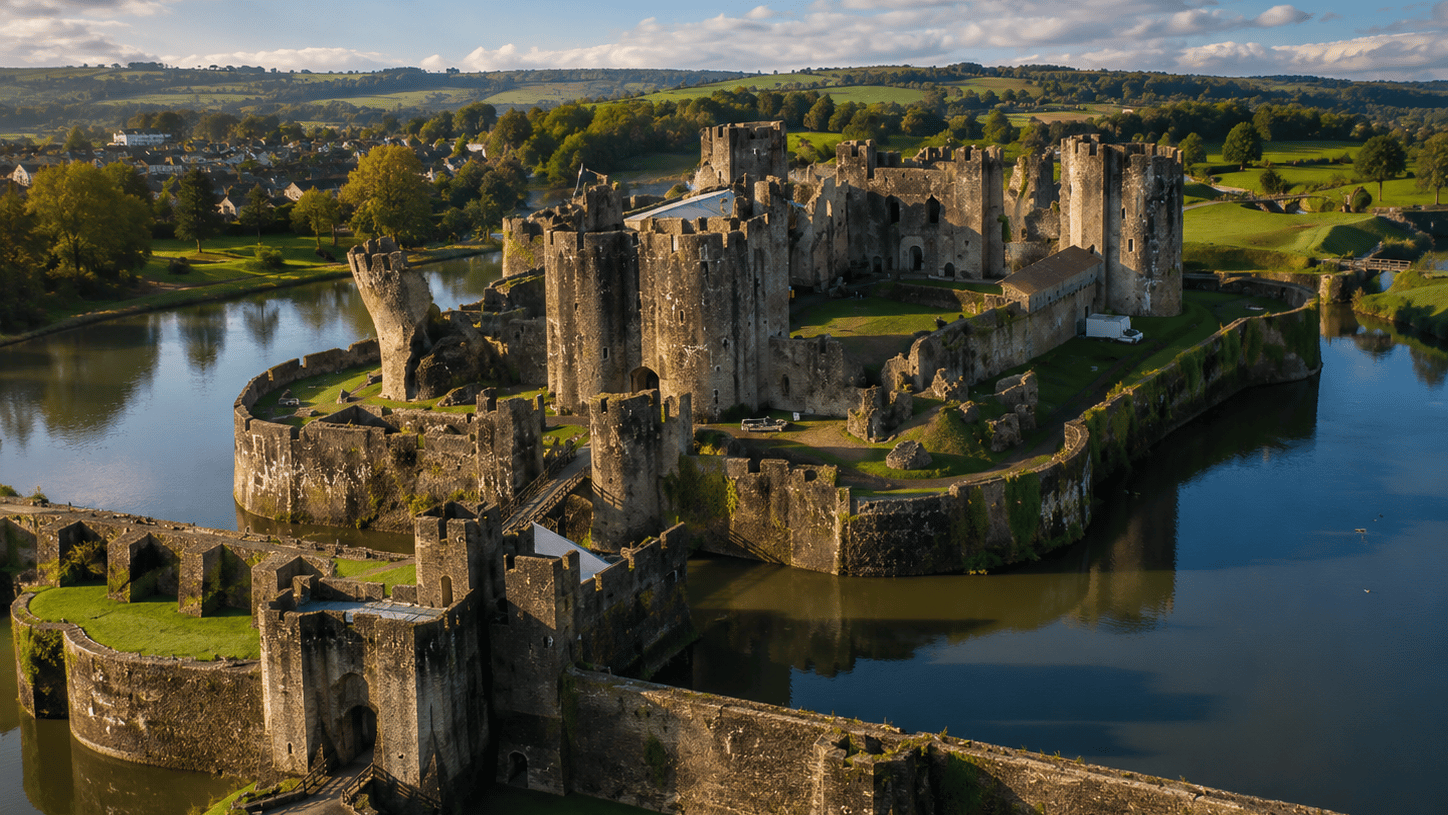
Caerphilly combines concentric walls and broad water defences with a restored Great Hall, kitchen and toilets. It offers strong shelter in the middle of town, while drinking water and daily services remain tied to outside utilities.
Overall
5.3 out of 10Defensibility
8 out of 10Isolation
1 out of 10Sustainability
7 out of 10Ranking context
How this base ranks
Global
#26 of 88 · Top 30%
Region · UK & Ireland
#6 of 11 · Top 55%
Base Type · Fortified Structure
#9 of 18 · Top 50%
Field assessment
At a glance
Bottom Line
A usable foothold behind substantial defences, provided the group can manage the approaches and keep daily necessities working when mains services become unreliable.
Biggest Trade-off
The lakes and successive gates make close approach difficult, but neither removes the surrounding town nor reduces the full castle to a perimeter a small watch team can cover effortlessly.
Most Likely Failure
Mains interruption leaves the group with impressive walls and usable rooms but no verified independent drinking-water supply. Obtaining essentials outside then competes with guarding the castle approaches.
Score rationale
Why it scores this way
Defensibility · 8/10
Concentric defences, gatehouses and water barriers provide successive obstacles and fallback positions. Their value is strongest around a manageable occupied core; the scale of the complex imposes a continuing watch burden.
Advantages
- Bridges, gates and narrow internal routes concentrate movement where a small team can observe it.
Limitations
- Large outer defences and areas under conservation require inspection rather than assuming every section is equally sound or easily watched.
Isolation · 1/10
The castle stands within Caerphilly town, with ordinary road and public-transport access nearby. Its lakes create local separation at the walls, rather than remoteness from the people and movement surrounding them.
Advantages
- Water around the complex interrupts direct ground movement across much of the immediate perimeter.
Limitations
- Established town approaches still lead to the entrance, so proximity to population pressure remains even when gates are controlled.
Sustainability · 7/10
The restored hall, kitchen, toilets and internal spaces support organised shelter and daily routines. That is a substantial starting habitat, while the ability to renew drinking water, food and energy remains a separate unresolved problem.
Advantages
- Existing catering and sanitary facilities reduce the work needed to establish basic communal living while their supplies function.
Limitations
- Mains-fed services can fail without damaging the castle; event capacity does not establish resilient residential support at the same scale.
Survival horizons
How survival changes over time
Choose the occupied core
First 7 Days
Inspect the hall, inner ward and routes through gates and bridges. Confirm water, toilets and kitchen operation, then inventory accessible provisions. Set watches around essential movements instead of dispersing people across the whole complex.
Positive factors
- Restored indoor space and current sanitary facilities give the group an established place to organise.
Risks
- Nearby urban movement can reach the approaches while the group is still checking the site and its internal routes.
Keep services ahead of consumption
First 100 Days
Track actual provisions and test what daily life can retain as mains reliability declines. Assign labour between watches, sanitation and routine upkeep; a venue equipped for occasional crowds does not provide their supplies indefinitely.
Positive factors
- The existing kitchen and toilets provide useful functions to preserve while the group assesses its remaining margin.
Risks
- A mains-water failure affects drinking, washing and food preparation together; the surrounding lakes are not verified drinking-water replacements.
Separate upkeep from renewal
Long Term
Lasting occupation needs repeatable water, food and energy provision alongside care of the stonework and water defences. Continuing conservation shows that even passive barriers need attention; no completed independent supply system is evidenced inside the boundary.
Positive factors
- Masonry and water barriers retain defensive value without powered security equipment.
Risks
- Keeping the lakes and walls effective involves maintenance, while external supply dependence continues even if every gate remains secure.
Visual survey
Gallery
Location context
The Lay of the Land
Tactical assessment
Practical Reality
Best Use
Centre daily life around verified usable Great Hall and inner-ward facilities. Prioritise the approaches serving that occupied area and check water and waste arrangements before treating every tower and ward as territory to hold.
Strengths
- Successive gates, walls and water barriers create defensive depth around the inner castle.
- The restored Great Hall offers weather-protected communal space without requiring new accommodation to be built.
- A modern event kitchen and visitor toilets support practical daily routines while utilities remain available.
Key Risk
The castle can accommodate a small community without feeding or supplying it independently. Event facilities make occupation easier; their utility demand persists after the last external delivery.
Weaknesses
- The surrounding town remains close enough to generate pressure on ordinary access routes.
- Documented water and power are mains supplies; no independent survival supply is established.
- Conservation of walls retaining the lakes demonstrates a specialist upkeep burden beyond simply shutting the gates.
Reality Check & Constraints
The modern kitchen, toilets and mains connections are real improvements. They do not establish food reserves, potable lake water or independent power, and ongoing conservation still calls for skills beyond ordinary household maintenance.
Assumptions / constraints
- The group has ordinary practical skills and can organise watches; it does not inherit Cadw staff, caterers or specialist conservation contractors.
- The castle, its defining water defences and immediate operating approaches form the Base. The town, nearby shops and regional transport are outside it.
- Mains water is credited as an existing service, not guaranteed continuity. No lake-water potability, snack quantity, independent power or completed future work is assumed.
Decision context
Rivals / Alternatives
Similar rival
Fort George
United Kingdom · Fortified Structure
Fort George keeps the same fortified structure strategy, with only 1.3 points between the overall scores and closely matched isolation pressure.
Overall 6.7/10
Strongest alternative
Mont Saint-Michel
France · Fortified Structure
Mont Saint-Michel scores 6.3 overall versus 5.3, adding a stronger isolation profile while staying relevant as another fortified structure.
Overall 6.3/10
Wildcard rival
Waw an Namus Caldera
Libya · Natural Landform
Waw an Namus Caldera changes the strategy: it is built around the natural landform strategy with a isolation edge, while Caerphilly Castle holds more of the defensibility advantage.
Overall 4.3/10