UK & Ireland · Isolated Landmass
St Kilda
United Kingdom
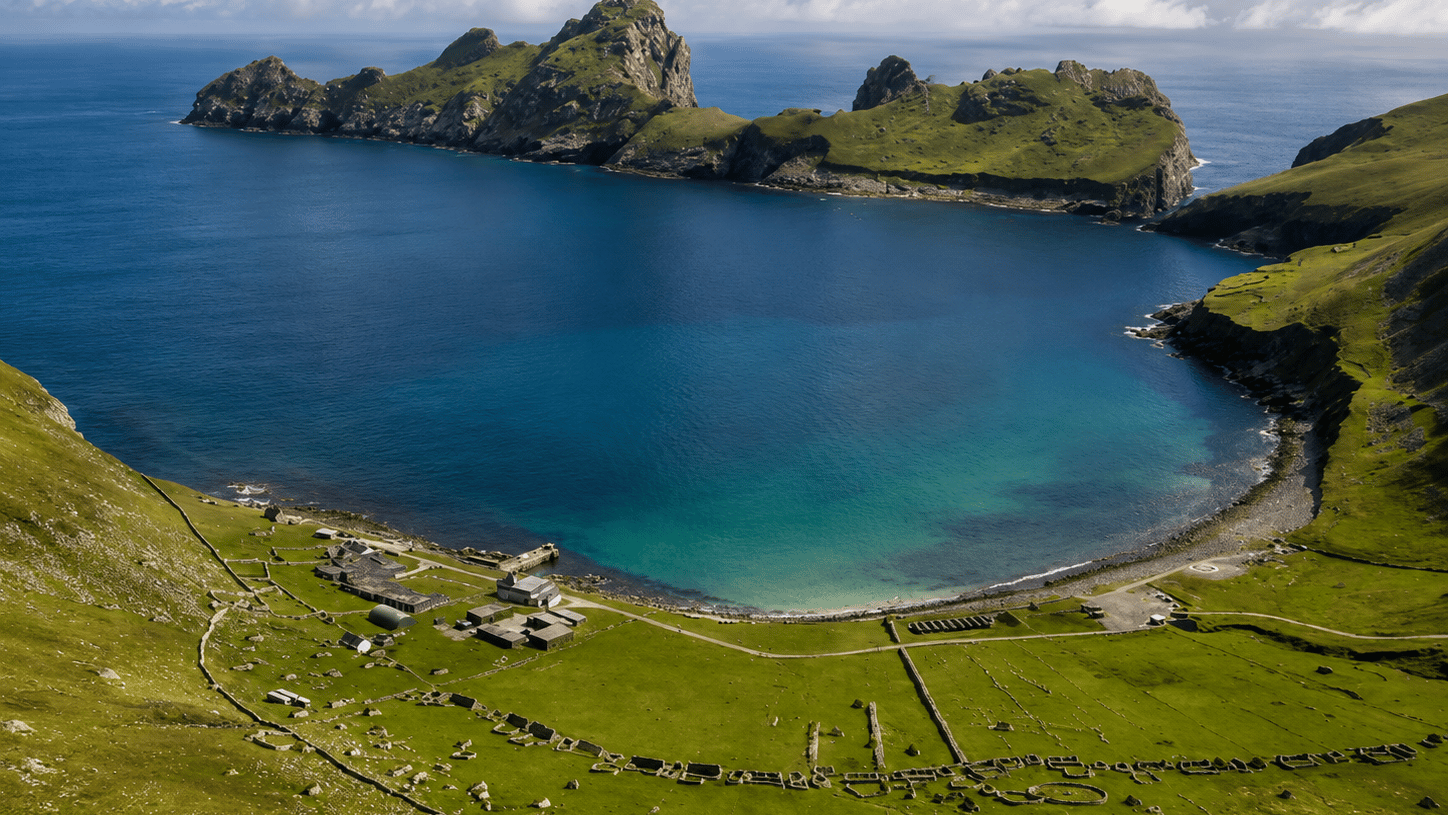
Village Bay on Hirta offers exceptional sea separation, occupied infrastructure and a documented drinking-water supply. The same Atlantic crossing that restricts arrivals can stop provisions and repairs. Twenty people gain a remote foothold, but neither the historic stores nor nearby military occupation guarantees the resources to remain.
Overall
6 out of 10Defensibility
3 out of 10Isolation
10 out of 10Sustainability
5 out of 10Ranking context
How this base ranks
Global
#17 of 88 · Top 19%
Region · UK & Ireland
#5 of 11 · Top 45%
Base Type · Isolated Landmass
#3 of 19 · Top 16%
Field assessment
At a glance
Bottom Line
A remote refuge with a credible domestic starting point and a demanding supply problem. Verify public facilities and usable shelter before relying on sea isolation to make the position viable.
Biggest Trade-off
Weather that prevents outside landing also prevents food, fuel and replacement parts from arriving or the group from leaving.
Most Likely Failure
A prolonged supply interruption coincides with storm damage or a service fault, leaving fewer usable rooms and more repair work as provisions decline.
Score rationale
Why it scores this way
Defensibility · 3/10
Buildings and steep ground offer limited local fallback around a concentrated landing area. Village Bay lacks a demonstrated hardened perimeter, and the sea's separation cannot be counted again as direct protection once a threat is ashore.
Advantages
- A small pier gives a definite place to observe ordinary boat arrivals.
Limitations
- The occupied village still needs a local watch across buildings and slopes after landing.
Isolation · 10/10
Outside access requires an exposed boat journey and a weather-dependent landing. This creates exceptional regional separation, with the operational cost that help, provisions and departure use the same unreliable connection.
Advantages
- Weather can force boats to turn back before passengers reach Hirta.
Limitations
- A difficult crossing does not establish that every possible shore approach is impassable or that no one is already present.
Sustainability · 5/10
Occupied buildings and documented campsite water, showers and toilets provide real support infrastructure. Public accommodation remains limited, and harsh weather and imported provisions make prolonged residence a greater commitment than a short visit.
Advantages
- Public drinking water and sanitation are documented independently of non-public military services.
Limitations
- Historic storage structures are not stocked homes, and their total island-wide number is not usable capacity inside Village Bay.
Survival horizons
How survival changes over time
Secure a usable foothold
First 7 Days
Inspect shelter and public water facilities, account for the food and cooking equipment actually available, and map the route between them and the pier. Keep a weather margin rather than planning around a promised next boat.
Positive factors
- Concentrated Village Bay facilities give the group concrete water and sanitation points to verify.
Risks
- Seasonal campsite provision is not proof that every facility operates in winter or remains usable after normal staffing ends.
Protect stores and building fabric
First 100 Days
As provisions decline, inspect occupied shelter after weather events and match repair needs to actual materials and skills. Budget food and work around interrupted access rather than treating a scheduled crossing as dependable resupply.
Positive factors
- Dry-stone storage fabric can retain passive usefulness where its condition and in-boundary access are confirmed.
Risks
- External parts and technical support become harder to replace precisely when exposed buildings need attention.
Prove more than isolation
Long Term
Continued residence needs a dependable food pathway and maintenance of water, sanitation and weatherproof shelter. Public evidence supports a supplied foothold, not a self-renewing twenty-person community after boat logistics cease.
Positive factors
- The sea barrier continues to restrict outside movement without powered defences.
Risks
- Surrounding seas, wildlife and other islands are not guaranteed harvests, working vessels or secure resources within the Base.
Visual survey
Gallery
Location context
The Lay of the Land
Tactical assessment
Practical Reality
Best Use
Concentrate daily life around verified Village Bay shelter, water and the landing approach. Account for local movement ashore as well as watching the pier.
Strengths
- Geographic separation greatly reduces routine outside contact.
- Village Bay has documented drinking-water and sanitation provision.
- Existing occupied and historic structures provide infrastructure to inspect rather than bare terrain.
Key Risk
Food and technical supplies remain external. A functioning drinking-water tap is valuable, but it does not establish independent energy, treatment spares or a renewable food supply.
Weaknesses
- Visitors must supply their own food and cooking equipment; there are no shops to assume remain stocked.
- Atlantic conditions impose a recurring repair and logistics burden.
- Twenty-person accommodation headroom is limited by what buildings are actually available and serviceable.
Reality Check & Constraints
The Base is Village Bay's integrated Hirta infrastructure, not the whole archipelago. Year-round MOD occupation proves human habitation; it does not grant twenty survivors access to military buildings, stores, weapons or technical systems.
Assumptions / constraints
- No military resources, boat, fishing skill, stored fuel or independent utility fallback is assumed; seasonal services and accessible shelter require inspection.
Decision context
Rivals / Alternatives
Similar rival
Lindisfarne
United Kingdom · Isolated Landmass
Lindisfarne keeps the same isolated landmass strategy, with only 0.0 points between the overall scores and closely matched defensibility pressure.
Overall 6/10
Strongest alternative
Amundsen-Scott South Pole Station
Antarctica · Institutional Compound
Amundsen-Scott South Pole Station scores 7.7 overall versus 6.0, adding a stronger sustainability profile while staying relevant as a comparable survival plan.
Overall 7.7/10
Wildcard rival
San Felipe Fortress
Colombia · Fortified Structure
San Felipe Fortress changes the strategy: it is built around the fortified structure strategy with a defensibility edge, while St Kilda holds more of the isolation advantage.
Overall 3.7/10