Middle East · Remote Settlement
Siwa Oasis
Egypt
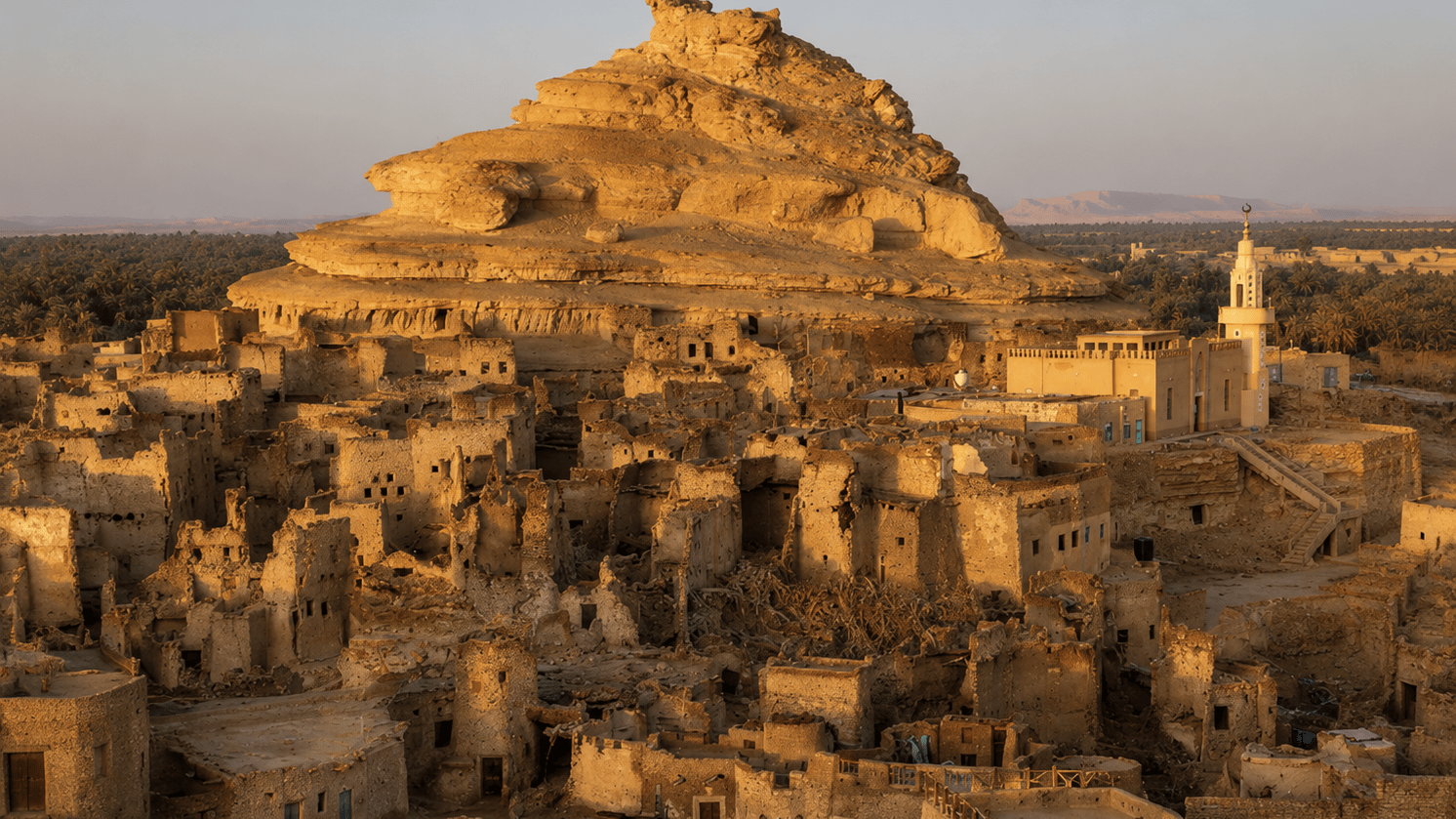
Siwa combines real housing, aquifer water and productive gardens in a remote desert setting. Its opportunity is continued oasis life, not a ready-made fortress: twenty people cannot defend the entire settlement, and sustaining its crops depends on water management and skills they do not automatically inherit.
Overall
5.7 out of 10Defensibility
2 out of 10Isolation
7 out of 10Sustainability
8 out of 10Ranking context
How this base ranks
Global
#24 of 88 · Top 27%
Region · Middle East
#3 of 5 · Top 60%
Base Type · Remote Settlement
#4 of 16 · Top 25%
Field assessment
At a glance
Bottom Line
A strong domestic and agricultural starting point if the group can manage a reachable portion of its existing systems. Resource abundance matters only where water, cultivation and daily access remain workable.
Biggest Trade-off
The productive oasis offers several essential resources, but they are spread across an open settlement rather than enclosed behind a manageable defensive boundary.
Most Likely Failure
Maintenance and agricultural work exceed the group's skills or labour, reducing usable production and driving longer journeys for goods that the desert setting makes difficult to replace.
Score rationale
Why it scores this way
Defensibility · 2/10
Open streets and agricultural edges spread access across the inhabited oasis. Desert approaches constrain the wider direction of arrival but do not create a continuous local barrier that a small group can hold.
Advantages
- Existing housing allows a limited occupied position rather than requiring everyone to remain in exposed gardens.
Limitations
- Protecting accommodation cannot secure every well, canal and productive plot across the settlement.
Isolation · 7/10
The Western Desert creates substantial distance from major population centres. Siwa remains an inhabited, road-connected town, so that separation delays outside movement without eliminating local contact or overland arrivals.
Advantages
- The surrounding arid region narrows practical large-scale approach routes.
Limitations
- Residents and dispersed oasis activity remain inside the same broad geographic boundary.
Sustainability · 8/10
Housing, water management, orchards and varied cultivation form an established habitat with more than stored supplies. Keeping it useful requires continuing irrigation and agricultural work, while fuel and manufactured goods retain external dependencies.
Advantages
- Date palms, olives, secondary crops and livestock provide several existing productive pathways to assess.
Limitations
- Large total production does not establish accessible harvests, a balanced diet or the group's ability to maintain those systems.
Survival horizons
How survival changes over time
Find a manageable daily circuit
First 7 Days
Confirm a drinking-water point, usable accommodation and safe access to nearby productive areas. Identify which irrigation and service links those locations need before dispersing the group across the oasis.
Positive factors
- Existing domestic infrastructure reduces the need to create basic shelter in extreme aridity.
Risks
- An inhabited house or orchard is not evidence of vacant accommodation, available stores or uncontested access.
Sustain cultivation and distribution
First 100 Days
As initial supplies are consumed, match irrigation, harvest and repair duties to available skills and labour. Monitor whether water and drainage remain suitable for the plots being relied upon rather than assuming the whole oasis will keep operating.
Positive factors
- Gravity irrigation can distribute water with relatively low energy requirements.
Risks
- Heat, salinity and drainage pressures can turn a productive landscape into a growing maintenance burden.
Preserve the living system
Long Term
Endurance depends on repeatable harvests and managed water, with a plan for goods that cannot be locally renewed. Maintaining a viable section of the existing system is more credible than inheriting the output of the entire community.
Positive factors
- Water and established cultivation offer recurring resource potential beyond the contents of stores.
Risks
- Twenty capable adults are not automatically experienced oasis farmers, irrigation managers or maintainers of every modern service.
Visual survey
Gallery
Location context
The Lay of the Land
Tactical assessment
Practical Reality
Best Use
Organise accommodation around verified water access and reachable existing cultivation. Keep the operating area small enough that irrigation, harvesting and watches can share a twenty-person workforce.
Strengths
- Existing homes and community infrastructure provide substantial domestic space.
- Aquifer water and established irrigation underpin real local agriculture.
- Several crop and livestock categories reduce dependence on a single food pathway.
Key Risk
Water abundance can mask the work needed to distribute it and manage drainage and salinity. Losing that management undermines crops even while wells still appear productive.
Weaknesses
- Useful resources are dispersed beyond a small group's continuous watch.
- Water distribution and drainage need continuing attention despite low-energy irrigation.
- Fuel, parts and some food and specialist needs still depend on external supply.
Reality Check & Constraints
The Base is inhabited Siwa and its integrated oasis systems. Shali's ruins are not a substitute perimeter, and the existing community's production and knowledge are not twenty survivors' guaranteed property or workforce.
Assumptions / constraints
- Crop access, current yield, potable-water condition, usable stocks and relevant skills require verification; no community workforce or indefinite aquifer performance is assumed.
Decision context
Rivals / Alternatives
Similar rival
Coober Pedy Underground Settlement
Australia · Remote Settlement
Coober Pedy Underground Settlement keeps the same remote settlement strategy, with only 0.0 points between the overall scores and closely matched defensibility pressure.
Overall 5.7/10
Strongest alternative
Amundsen-Scott South Pole Station
Antarctica · Institutional Compound
Amundsen-Scott South Pole Station scores 7.7 overall versus 5.7, adding a stronger isolation profile while staying relevant as a comparable survival plan.
Overall 7.7/10
Wildcard rival
San Felipe Fortress
Colombia · Fortified Structure
San Felipe Fortress changes the strategy: it is built around the fortified structure strategy with a defensibility edge, while Siwa Oasis holds more of the isolation advantage.
Overall 3.7/10