Oceania · Isolated Landmass
Tasmania
Australia
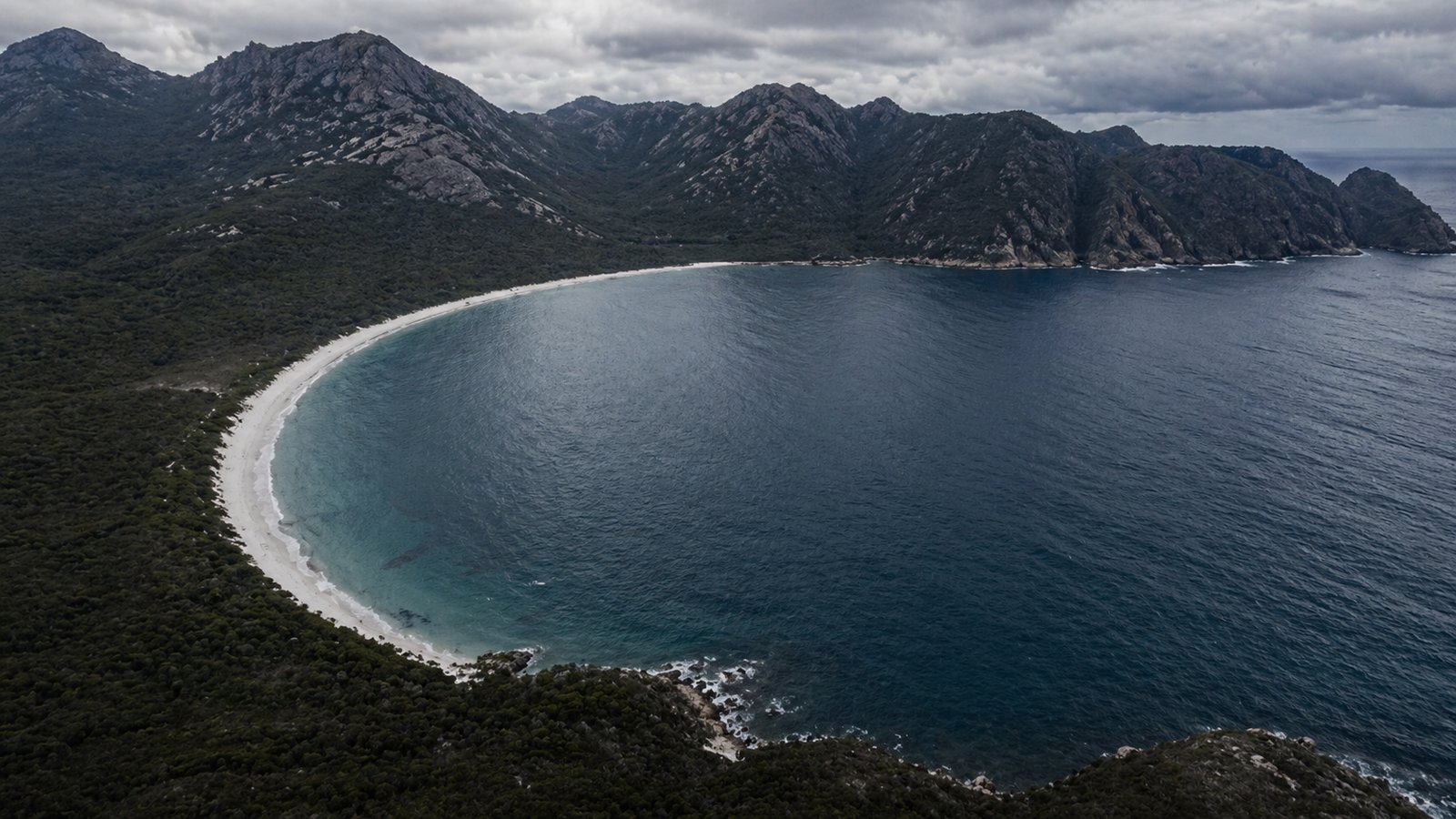
Tasmania offers farmland, freshwater systems and renewable generation on an exceptional scale. Bass Strait separates it from mainland pressure, but the island already contains substantial towns and cities: twenty survivors inherit opportunities across a landscape they cannot defend or operate as a whole.
Overall
4.3 out of 10Defensibility
1 out of 10Isolation
3 out of 10Sustainability
9 out of 10Ranking context
How this base ranks
Global
#63 of 88 · Top 72%
Region · Oceania
#2 of 4 · Top 50%
Base Type · Isolated Landmass
#11 of 19 · Top 58%
Field assessment
At a glance
Bottom Line
The strongest opportunity is access to an existing food, water and housing economy. Survival depends on bringing a manageable part of that economy within the group’s reach; statewide abundance does not establish a working household supply.
Biggest Trade-off
The same scale that offers alternative resources stretches travel, watches and maintenance. Losing access to one system need not exhaust the island’s options, but reaching another consumes labour and exposes the group.
Most Likely Failure
Water or power faults interrupt local service while the group spends its available labour travelling between dispersed assets instead of sustaining daily food and hygiene.
Score rationale
Why it scores this way
Defensibility · 1/10
The island boundary is much larger than a defensible living position. Housing can provide local shelter, but roads and settlements connect countless approaches that twenty people cannot contain.
Advantages
- Existing buildings provide places to concentrate occupation rather than keeping the group permanently in the open.
Limitations
- Controlling an occupied building would not secure its surrounding town or the wider island.
Isolation · 3/10
Bass Strait interrupts ordinary walker movement from mainland Australia. That regional barrier leaves substantial population pressure within the island, so distance across water cannot substitute for local assessment.
Advantages
- External pressure must cross a major water separation before reaching Tasmania.
Limitations
- Movement between settlements can still bring the group into contact with the island’s own outbreak.
Sustainability · 9/10
Housing, agriculture, treated water and renewable power form an unusually complete existing habitat. Keeping useful links between them working is the practical challenge; the group cannot inherit their normal staffing and supply chains.
Advantages
- Existing farms and catchments provide a basis for repeated production rather than only consuming stored goods.
Limitations
- Pumps, treatment, dams and grid equipment impose different maintenance demands; abundance does not make every source usable without them.
Survival horizons
How survival changes over time
Find a workable daily footprint
First 7 Days
Verify occupied shelter, a safe water pathway and the routes linking them before spreading people across the island. Assess nearby population pressure independently of the mainland barrier.
Positive factors
- The established settlement fabric offers choices without first creating residential infrastructure.
Risks
- Exploring too widely divides the same small workforce between movement, supply and watch duties.
Keep useful systems within reach
First 100 Days
Track consumption and routine faults at the assets actually serving the group. Prioritise maintainable food and water links over trying to preserve normal statewide services.
Positive factors
- Established agricultural activity gives the group existing production to assess, rather than relying on an imagined future farm.
Risks
- A functioning network today may degrade when technical support and replacement parts cease.
Renew locally; avoid network overreach
Long Term
Endurance requires repeatable food and safe water, plus an energy demand the group can maintain. Retain the whole-island assessment without turning it into a promise that any particular site achieves independence.
Positive factors
- The island combines several renewable resource pathways, reducing reliance on a single imported category.
Risks
- Dry conditions, equipment wear and broken distribution can separate productive capacity from what reaches the occupied shelter.
Visual survey
Gallery
Location context
The Lay of the Land
Tactical assessment
Practical Reality
Best Use
A regional resource setting for a small community able to verify and maintain its daily supply routes, rather than a single island-wide defended position.
Strengths
- Existing settlements offer far more residential space than twenty people require; room count is unlikely to be the first constraint.
- Food production is established locally, giving renewal a stronger basis than dependence on imported emergency stores alone.
- Hydro and wind diversify energy supply beyond continuously burning imported fuel, while retaining technical operating demands.
Key Risk
Treating renewable electricity and agricultural output as services that twenty generalists can keep running without operators, parts or distribution.
Weaknesses
- A vast coast and internal road network leave no perimeter that this group can continuously watch.
- Mainland separation does little to contain pressure already inside Tasmanian settlements.
- Dry-period restrictions and ageing water assets make the choice of supply pathway matter despite apparent freshwater abundance.
Reality Check & Constraints
This assessment retains the whole main island. It does not select a secure farm, dam or town for you, establish access to usable stocks, or include King Island, Flinders Island or guaranteed mainland deliveries.
Assumptions / constraints
- Twenty capable adults have ordinary practical skills; no statewide utility workforce, accessible harvest, functioning plant or dependable external supply is assumed.
Decision context
Rivals / Alternatives
Similar rival
Fiji Islands
Fiji · Isolated Landmass
Fiji Islands keeps the same isolated landmass strategy, with only 0.7 points between the overall scores and closely matched defensibility pressure.
Overall 3.7/10
Strongest alternative
Heligoland
Germany · Isolated Landmass
Heligoland scores 6.3 overall versus 4.3, adding a stronger isolation profile while staying relevant as another isolated landmass.
Overall 6.3/10
Wildcard rival
Fort Jefferson
United States · Fortified Structure
Fort Jefferson changes the strategy: it is built around the fortified structure strategy with a defensibility edge, while Tasmania holds more of the sustainability advantage.
Overall 6.7/10