Eastern Europe · Landmark Structure
Kizhi Pogost
Russia
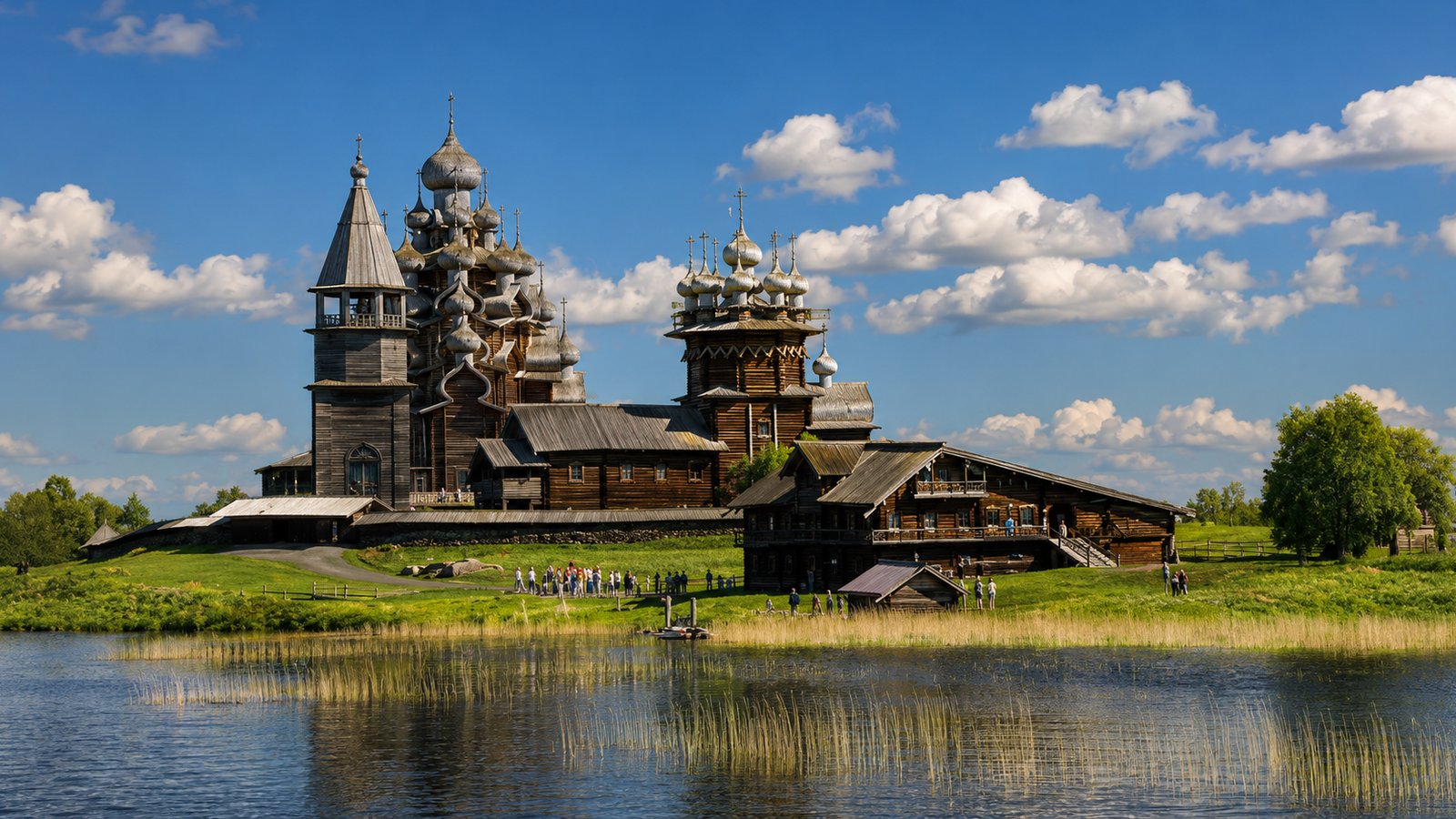
Kizhi Pogost offers wooden churches and communal shelter behind a small fence on Lake Onega. Water separation buys breathing room, but the enclosure lacks an established independent drinking-water and food supply.
Overall
3.3 out of 10Defensibility
2 out of 10Isolation
6 out of 10Sustainability
2 out of 10Ranking context
How this base ranks
Global
#79 of 88 · Top 90%
Region · Eastern Europe
#10 of 10 · Top 100%
Base Type · Landmark Structure
#2 of 3 · Top 67%
Field assessment
At a glance
Bottom Line
A plausible emergency refuge, with little margin for settling in: the group must resolve drinking water and daily living needs before treating the churches as a home.
Biggest Trade-off
The compact enclosure keeps local watch duties concentrated, but leaves little depth if pressure reaches its wooden fence.
Most Likely Failure
Water and food provision cannot support continued occupation, forcing journeys outside the enclosure despite its useful lake separation.
Score rationale
Why it scores this way
Defensibility · 2/10
The fence defines a small occupied boundary, but the churches provide neither a military barrier nor substantial defensive depth. Local contact would demand close attention to vulnerable entry points.
Advantages
- A compact enclosure gives watches a clearly defined area to cover.
Limitations
- Once a weak boundary is crossed, there is little space to absorb pressure before it reaches occupied buildings.
Isolation · 6/10
Lake Onega separates the island from ordinary regional ground movement. Seasonal visitor access still brings people to Kizhi, and distance does not exclude an internal outbreak.
Advantages
- Reaching the island requires a more deliberate journey than following a mainland road.
Limitations
- The wider island and landing approaches remain outside the small enclosure; lake separation does not secure them.
Sustainability · 2/10
Churches and a refectory offer weather shelter and communal space, but prolonged habitation needs functions their religious use does not establish. The constraint is usable daily living, not floor area alone.
Advantages
- Existing roofs and enclosed rooms provide an immediate basis for shelter without building anew.
Limitations
- Unverified hygiene and food-preparation arrangements could make crowded occupation unhealthy even while the fabric remains standing.
Survival horizons
How survival changes over time
Check shelter and water
First 7 Days
Confirm safe rooms, inspect available services and establish a drinking-water routine before extending occupation. The small perimeter helps organise watches, but it cannot solve provision.
Positive factors
- Communal space lets the group organise supplies and sleeping arrangements under cover.
Risks
- Working electrical protection must be checked; its documented existence is not proof of uninterrupted operation.
Daily needs press outward
First 100 Days
As accessible provisions are consumed, attention shifts to repeatable water collection, waste handling and timber upkeep. Each trip beyond the fence adds exposure and competes with watches.
Positive factors
- The limited footprint keeps routine inspection concentrated around the occupied buildings.
Risks
- Temporary indoor shelter does not establish a sustainable sanitation or food system for continued residence.
Renewal remains unproven
Long Term
Continued residence would need dependable potable water, food renewal and protection of ageing timber. None can be replaced by the assumption that normal museum operations will continue.
Positive factors
- The lake setting retains geographic separation even as managed services become less reliable.
Risks
- Losing specialist maintenance or fire protection can erode shelter at the same time that outside supplies become harder to obtain.
Visual survey
Gallery
Location context
The Lay of the Land
Tactical assessment
Practical Reality
Best Use
Use the existing enclosed spaces for a modest foothold while checking potable water, sanitation and safe access. Keep the occupation separate from the wider museum landscape.
Strengths
- Two enclosed churches provide alternatives to remaining exposed on the spit.
- The refectory offers a shared indoor space for organising daily activity.
- Existing electrical and fire-protection infrastructure gives a real starting capability to inspect.
Key Risk
Fire or loss of maintained protection could threaten the very timber buildings providing shelter; ordinary upkeep cannot replace specialist conservation.
Weaknesses
- The wooden fence supplies a boundary marker with little resistance to sustained pressure.
- Sleeping, cooking, sanitation and medical provision for a resident group are not established.
- The evidence does not establish protected potable-water storage or food renewal within the enclosure.
Reality Check & Constraints
Island electricity and Pogost fire-water systems are documented. They do not establish drinkable reserves, an independent food supply or guaranteed service after museum support fails.
Assumptions / constraints
- The assessed Base remains the 0.57-hectare Pogost; nearby island buildings and museum stores are not inherited.
- Lake water and fire-water equipment are not counted as a verified drinking-water system.
- Twenty capable adults do not automatically include the museum fire team or skilled timber conservators.
Decision context
Rivals / Alternatives
Similar rival
Kolmanskop
Namibia · Remote Settlement
Kolmanskop keeps a close survival profile, with only 0.0 points between the overall scores and closely matched sustainability pressure.
Overall 3.3/10
Strongest alternative
Fastnet Lighthouse
Ireland · Landmark Structure
Fastnet Lighthouse scores 6.3 overall versus 3.3, adding a stronger defensibility profile while staying relevant as another landmark structure.
Overall 6.3/10
Wildcard rival
Amundsen-Scott South Pole Station
Antarctica · Institutional Compound
Amundsen-Scott South Pole Station changes the strategy: it is built around the institutional compound strategy with a sustainability edge, while Kizhi Pogost has no headline-pillar edge in return.
Overall 7.7/10