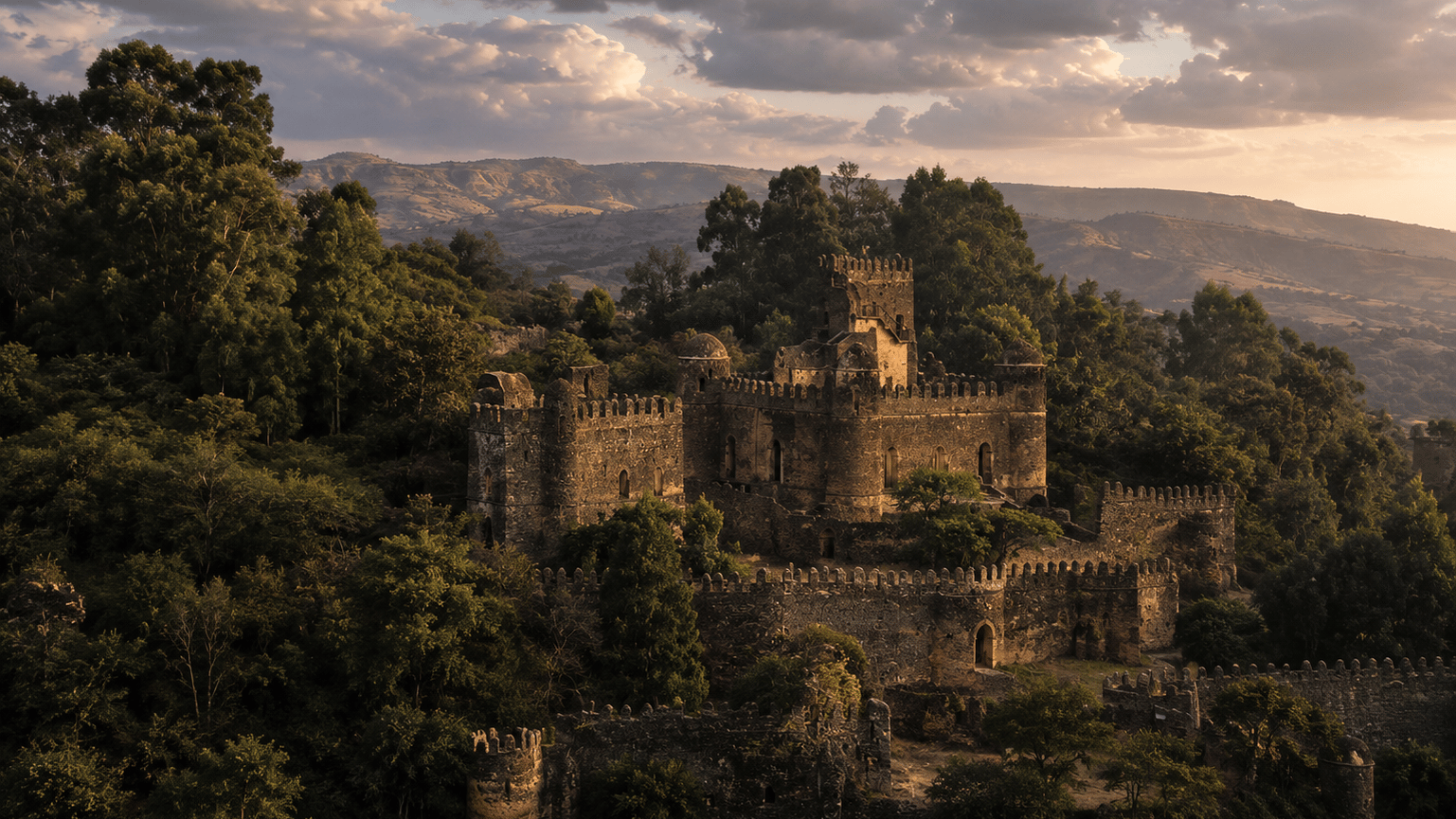
Africa · Fortified Structure
Fasil Ghebbi
Ethiopia
Fasil Ghebbi encloses substantial castles and courtyards behind a long fortified wall in Gondar. Restored visitor amenities help initial occupation, but numerous entrances and unresolved independent water provision limit its value as a lasting home.
Overall
3.7 out of 10Defensibility
7 out of 10Isolation
2 out of 10Sustainability
2 out of 10Ranking context
How this base ranks
Global
#72 of 88 · Top 82%
Region · Africa
#6 of 11 · Top 55%
Base Type · Fortified Structure
#17 of 18 · Top 94%
Field assessment
At a glance
Bottom Line
A strong structural refuge whose immediate challenge is making daily life viable behind the wall, rather than finding more enclosed space.
Biggest Trade-off
The large enclosure provides internal depth, but its twelve historic entrances divide the attention of a small defending group.
Most Likely Failure
Unreliable water or residential sanitation forces regular trips outside the enclosure before its castles lose their protective value.
Score rationale
Why it scores this way
Defensibility · 7/10
Fortified walls, towers and substantial internal buildings give Fasil Ghebbi meaningful defensive depth. Its long perimeter and twelve entrances still require a deliberate watch plan rather than reliance on the principal castle alone.
Advantages
- Several buildings inside an outer enclosure provide fallback possibilities if an occupied area becomes unsafe.
Limitations
- Historic gate geometry does not certify present closures or remove the staffing burden of inspecting the whole perimeter.
Isolation · 2/10
The royal enclosure sits within modern Gondar. Entering behind its wall creates a local barrier without adding distance from the surrounding city or its transport routes.
Advantages
- Defined entry points separate the occupied compound from direct street movement once access is controlled.
Limitations
- Any essential journey into Gondar returns the group to nearby urban pressure; the compound has no remote geographical buffer.
Sustainability · 2/10
Large enclosed buildings offer emergency shelter, and restored restrooms and lighting improve everyday usability. Continued habitation still needs sleeping, food preparation and hygiene arrangements beyond those established for visitors.
Advantages
- Several building complexes provide room to separate rest and storage without constructing a new enclosure.
Limitations
- Neither the restored amenities nor the historic palace function establishes independent drinking water, food or sustained residential services.
Survival horizons
How survival changes over time
Verify a usable occupied area
First 7 Days
Inspect entrances and building condition, select sheltered rooms and check whether water and toilets are usable. Allocate watches around the enclosure while keeping essential daily functions close together.
Positive factors
- Existing enclosure walls and restored internal pathways give organisation and movement a clear starting framework.
Risks
- Focusing everyone on the main castle can leave other entrances insufficiently checked or watched.
Make visitor facilities serve daily life
First 100 Days
Consumption, waste handling and room condition become recurring duties. Assess the facilities as a working household rather than a visitor route, and track which essentials still rely on journeys beyond the wall.
Positive factors
- Internal space permits separate routines for supplies and rest while the verified amenities remain usable.
Risks
- Toilets and lighting may cease to help when their supporting services fail; their presence does not establish an independent replacement.
Secure essentials beyond finite provision
Long Term
The masonry may remain protective after normal services decline, but food and safe water need repeatable pathways. Continued use also requires safe building care; restoration is a starting condition, not permanent freedom from maintenance.
Positive factors
- Passive walls and towers retain barrier value without depending on electric security systems.
Risks
- Increasing supply trips and accumulated building faults can consume the same limited workforce needed to watch the enclosure.
Visual survey
Gallery
Location context
The Lay of the Land
Tactical assessment
Practical Reality
Best Use
Organise a compact occupied area within the royal enclosure, inspect the entrances and verify water and waste arrangements. Keep the rest of the compound under review without assuming every palace is ready for habitation.
Strengths
- The surrounding wall and defined entrances give watches a clearer local boundary than the open city outside.
- Major stone buildings and internal spaces offer separation between occupied rooms and a threatened entry.
- Restored pathways, public restrooms and lighting provide a more usable starting site than historic fabric alone.
Key Risk
Modern public restrooms demonstrate visitor provision, but do not establish protected drinking water or sanitation that continues when outside services fail.
Weaknesses
- Gondar remains immediately outside the enclosure; the walls reduce local access rather than regional population pressure.
- Sleeping, food preparation and sustained residential hygiene are not established for the surviving visitor complex.
- Historic repair damage and specialist conservation needs limit how much safe building upkeep ordinary practical skills can provide.
Reality Check & Constraints
Restoration has added genuine visitor amenities; the site is not simply an abandoned shell. Those improvements do not supply a residential kitchen, medical team or independent reserves, and the separate Fasilides Bath is outside this Base.
Assumptions / constraints
- The royal enclosure is the Base; the separate Bath, other World Heritage components and city resources are not controlled internal assets.
- Twenty capable adults can organise watches and basic upkeep, without an inherited garrison, utility staff or conservation workforce.
- Current entrance condition, usable rooms, potable-water arrangements and provisions require checking; restored amenities do not guarantee outage continuity.
Decision context
Rivals / Alternatives
Similar rival
Elmina Castle
Ghana · Fortified Structure
Elmina Castle keeps the same fortified structure strategy, with only 0.7 points between the overall scores and closely matched sustainability pressure.
Overall 4.3/10
Strongest alternative
Fort George
United Kingdom · Fortified Structure
Fort George scores 6.7 overall versus 3.7, adding a stronger sustainability profile while staying relevant as another fortified structure.
Overall 6.7/10
Wildcard rival
Amundsen-Scott South Pole Station
Antarctica · Institutional Compound
Amundsen-Scott South Pole Station changes the strategy: it is built around the institutional compound strategy with a isolation edge, while Fasil Ghebbi holds more of the defensibility advantage.
Overall 7.7/10