East Asia · Elevated Stronghold
Mount Huashan
China
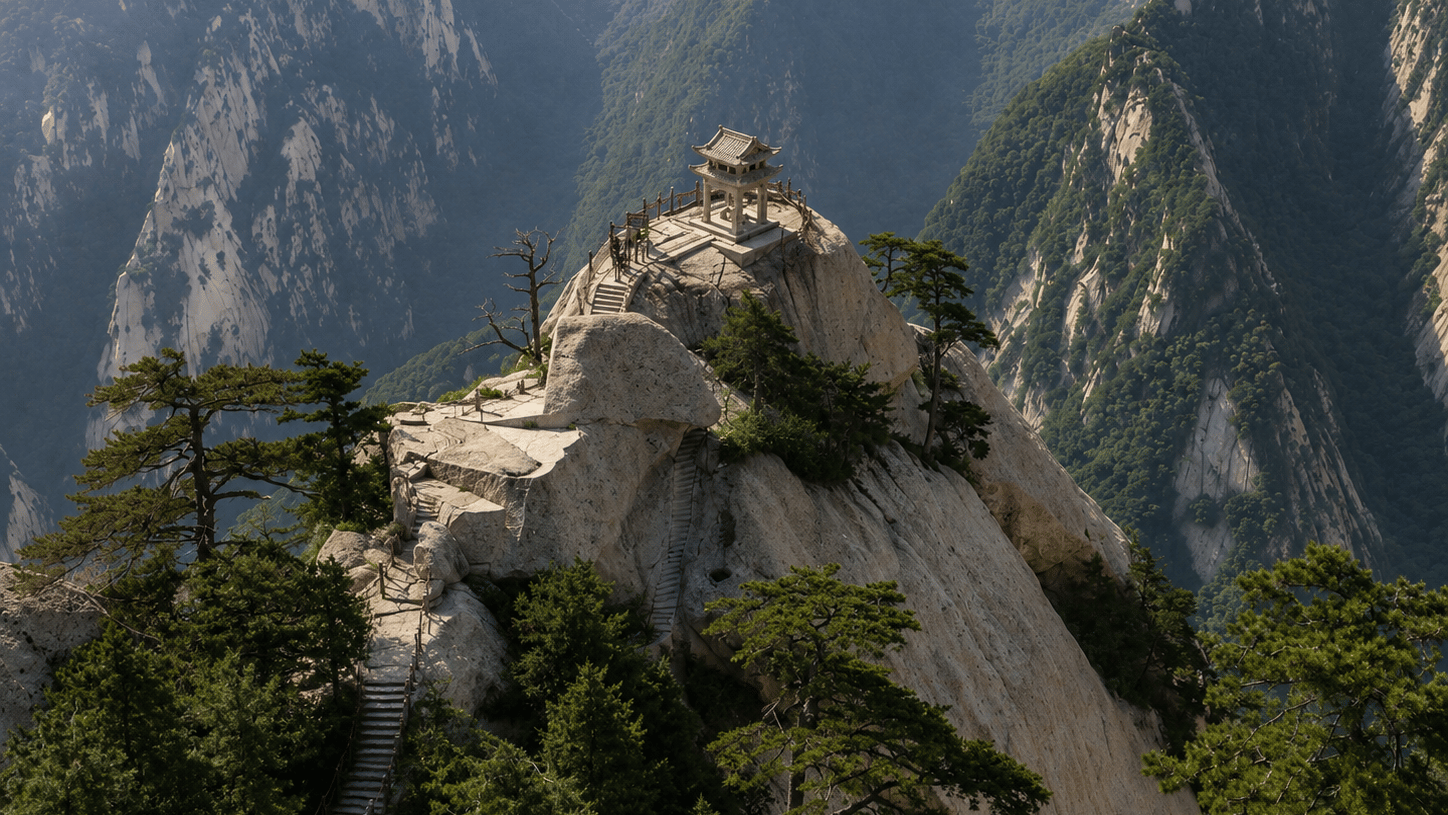
Mount Huashan offers steep paths, gates and on-mountain lodging across several connected peaks. Its routes channel movement, but a small community cannot hold the entire complex. Keeping water, sanitation and supplies near an occupied foothold is harder than the mountain's defensive reputation suggests.
Overall
4.7 out of 10Defensibility
3 out of 10Isolation
5 out of 10Sustainability
6 out of 10Ranking context
How this base ranks
Global
#51 of 88 · Top 58%
Region · East Asia
#1 of 5 · Top 20%
Base Type · Elevated Stronghold
#7 of 13 · Top 54%
Field assessment
At a glance
Bottom Line
A demanding mountain refuge with genuine sleeping and food-service facilities. Viability rests on a manageable occupation and verified daily water, without treating scattered peaks as one secured fortress.
Biggest Trade-off
Narrow, steep routes impede incoming pressure and the group's own carrying work. Losing powered transport makes that advantage more costly each time food, water or an injured person must move.
Most Likely Failure
A water or supply interruption turns steep paths into repeated carrying obligations. Fatigue and reduced hygiene can make continued occupation fail while the cliffs still limit easy approach.
Score rationale
Why it scores this way
Defensibility · 3/10
Steep terrain and narrow paths offer useful local resistance, but several peaks and routes lack a continuous enclosure. Securing an occupied building cannot establish control over the full mountain network.
Advantages
- Gates and constrained trail sections offer specific places to inspect for local control.
Limitations
- Separate positions require movement between them, exposing the people who maintain that connection.
Isolation · 5/10
The climb separates peak facilities from lowland movement. Huashan remains a major connected visitor landscape with cableways and established routes, so arduous final access should not be mistaken for wilderness isolation.
Advantages
- Terrain makes unassisted incoming movement more demanding than an ordinary road approach.
Limitations
- Existing visitor routes preserve ways into the complex as well as escape options.
Sustainability · 6/10
Hotels, dining and toilets offer a credible inhabited foothold. Basic beds without bathing at peak accommodation make water handling and hygiene a daily practical constraint, even where there is ample sleeping space.
Advantages
- Existing lodging provides shelter without first converting a temple or building new rooms.
Limitations
- Dispersed services and shared sanitation must remain usable without the normal visitor workforce.
Survival horizons
How survival changes over time
Choose a connected foothold
First 7 Days
Inspect rooms, actual water access and shared toilets before committing to a living area. Inventory accessible supplies and identify essential walking links without attempting to station people across every peak.
Positive factors
- Lodging and dining facilities give the group an established place to organise.
Risks
- A position chosen only for its steep approach may leave basic needs a difficult journey away.
Carrying replaces convenience
First 100 Days
Track consumption, sanitation condition and the labour required for each supply journey. Treat cableway loss as a change in workload, and judge continued occupation by what the group can move and maintain on foot.
Positive factors
- Paths and simple bed accommodation retain passive usefulness after some machinery stops.
Risks
- Repeated carrying can consume the people and energy needed for watches and hygiene.
Height cannot renew supplies
Long Term
Continued residence needs repeatable safe water, food replacement and serviceable access routes. No documented independent supply system replaces the mountain's normal logistics; stretching hotel stores alone cannot settle that question.
Positive factors
- The difficult terrain continues to limit easy outside contact.
Risks
- Shrinking supplies and route or utility failures can reinforce each other without specialist support.
Visual survey
Gallery
Location context
The Lay of the Land
Tactical assessment
Practical Reality
Best Use
Keep sleeping, inspected sanitation and supplies close together, with watches on the routes actually linking them. This is selective occupation within the mountain complex, not a redefinition of the Base as one hotel or summit.
Strengths
- Cliffs, paths, bridges and gates concentrate practical movement into recognisable routes.
- On-mountain accommodation avoids relying entirely on exposed overnight shelter.
- Walking routes retain a manual connection if powered transport stops.
Key Risk
Mountain food service and basic rooms do not establish independent potable-water provision or food renewal. The condition and supply of shared sanitation remain essential checks.
Weaknesses
- Several peaks and connecting routes exceed a small group's continuous defensive coverage.
- Basic peak accommodation offers less bathing and private sanitation than ordinary residential rooms.
- Steep carrying journeys compete with watches and routine household work.
Reality Check & Constraints
West Peak lodging provides real bed capacity, but its documented basic rooms lack private bathrooms and bathing. Hotel scale is not evidence that twenty people can run the wider transport and utility system.
Assumptions / constraints
- The main peak complex remains the Base; Huayin and foothill resources are external.
- Lodging and shops establish facilities, not guaranteed stock levels, safe-water reserves or working cableways.
- Twenty capable adults have ordinary maintenance skills, not an inherited cableway or mountain-rescue crew.
Decision context
Rivals / Alternatives
Similar rival
Batad Rice Terraces
Philippines · Elevated Stronghold
Batad Rice Terraces keeps the same elevated stronghold strategy, with only 0.3 points between the overall scores and closely matched sustainability pressure.
Overall 5/10
Strongest alternative
Amundsen-Scott South Pole Station
Antarctica · Institutional Compound
Amundsen-Scott South Pole Station scores 7.7 overall versus 4.7, adding a stronger isolation profile while staying relevant as a comparable survival plan.
Overall 7.7/10
Wildcard rival
Fort Jefferson
United States · Fortified Structure
Fort Jefferson changes the strategy: it is built around the fortified structure strategy with a defensibility edge, while Mount Huashan holds more of the sustainability advantage.
Overall 6.7/10