Africa · Elevated Stronghold
Table Mountain Plateau
South Africa
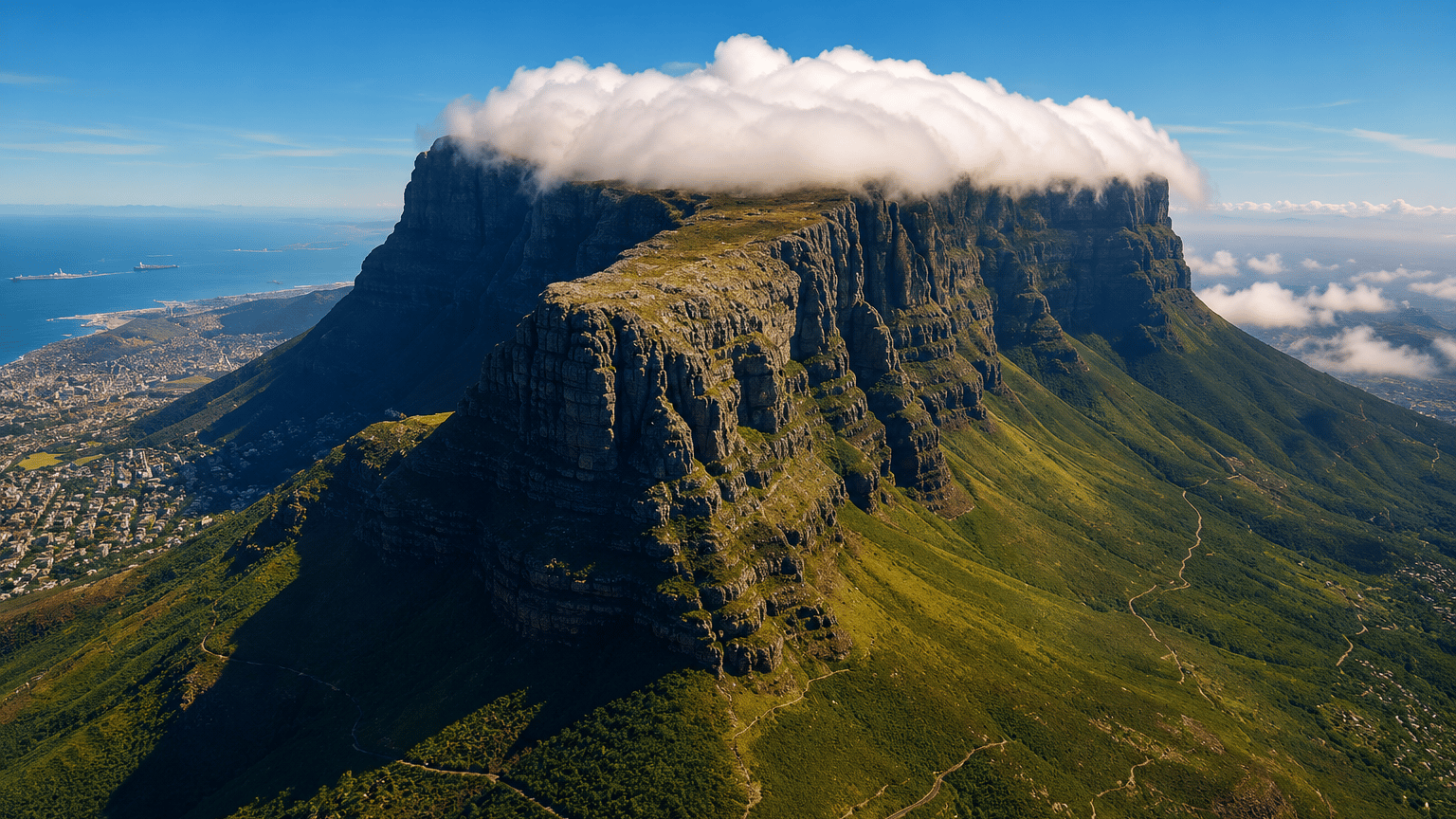
Table Mountain's upper plateau combines steep approaches with permanent visitor buildings above Cape Town. It offers useful shelter and a terrain advantage, but several trails reach the summit and ordinary food, water and sanitation depend on supplied visitor services. Height does not make this an isolated settlement.
Overall
3 out of 10Defensibility
4 out of 10Isolation
1 out of 10Sustainability
4 out of 10Ranking context
How this base ranks
Global
#85 of 88 · Top 97%
Region · Africa
#9 of 11 · Top 82%
Base Type · Elevated Stronghold
#12 of 13 · Top 92%
Field assessment
At a glance
Bottom Line
A possible temporary refuge if potable water and usable indoor space are confirmed. Treat the visitor complex as a serviced starting point whose domestic usefulness may fall quickly when support stops.
Biggest Trade-off
Steep ascent slows direct approach while making the group's own supply carrying more demanding when the cableway is unavailable.
Most Likely Failure
Water or sanitation support becomes unreliable and forces repeated carrying trips down toward the city, eroding both workforce capacity and the benefit of occupying high ground.
Score rationale
Why it scores this way
Defensibility · 4/10
Plateau edges and steep routes create useful terrain barriers. Several established hiking approaches and no continuous fortified boundary prevent the group from treating the summit as a position secured by one choke point.
Advantages
- Known upper trail approaches provide specific routes to inspect and monitor.
Limitations
- Closing the cableway does not close the walking routes or enclose the plateau.
Isolation · 1/10
Cape Town lies immediately below, linked by popular trails and the cableway. The final climb separates the summit locally; it does not remove the surrounding metropolitan population or ordinary access network.
Advantages
- The ascent requires more effort and commitment than reaching a building on a city street.
Limitations
- Pressure can originate close to the mountain rather than needing a long regional journey.
Sustainability · 4/10
Permanent summit buildings, food-service space and toilets offer real domestic infrastructure. They serve daytime visitors, so physical space for twenty does not establish sleeping arrangements or independent water and waste services for residents.
Advantages
- The Upper Station complex provides enclosed service and venue space to inspect before choosing accommodation.
Limitations
- Supply and specialist maintenance dependencies can disable services while the building shell remains usable.
Survival horizons
How survival changes over time
Inspect services and routes
First 7 Days
Confirm potable water, usable shelter and sanitation, then inspect the upper approaches and a safe descent option. Assess current stores directly rather than converting restaurant capacity into a promised food reserve.
Positive factors
- Existing structures reduce the immediate need to establish shelter on exposed ground.
Risks
- Rapid weather changes can close the cableway and make summit navigation and descent difficult.
Count the carrying workload
First 100 Days
Track consumption and inspect which water, waste and food-service functions remain operable without normal support. Compare essential carrying trips with the people still needed for watches and daily maintenance.
Positive factors
- The plateau and permanent shell retain some passive value when cableway operation stops.
Risks
- Large visitor throughput does not demonstrate a residential reserve or the ability to sustain overnight sanitation.
Demand an independent supply case
Long Term
Remaining requires dependable potable water, sanitation and repeatable food access within the actual operating constraints. No protected upper-plateau production system is established, and the city below cannot quietly become the Base's secure supply estate.
Positive factors
- Established walking routes remain a manual access option where weather and condition permit.
Risks
- Mountain area and off-boundary catchments are not evidence of a usable water source at the occupied summit structures.
Visual survey
Gallery
Location context
The Lay of the Land
Tactical assessment
Practical Reality
Best Use
Organise around inspected summit structures and identifiable upper trail approaches, keeping a safe manual descent route in the plan. Avoid spreading twenty people across the entire plateau.
Strengths
- Steep terrain supplies a local approach advantage without powered barriers.
- Documented restaurants, toilets and permanent service structures offer a concrete starting inventory.
- Identifiable ascent routes support deliberate watch planning.
Key Risk
The evidence establishes supplied toilets and food outlets, not an independent potable-water and food-production chain on the upper plateau.
Weaknesses
- Several trails and changing visibility increase the monitoring burden.
- Routine visitor services rely on external inputs and specialist upkeep.
- No independent protected potable-water or durable food pathway is established on the upper plateau.
Reality Check & Constraints
The Base is the upper plateau and integrated summit structures. Cape Town, lower park facilities and off-plateau reservoirs are outside it; twenty people do not inherit the workforce or supplies supporting a busy visitor attraction.
Assumptions / constraints
- No working cableway, stocked outlet, usable water reserve or specialist crew is assumed; current building and utility condition must be checked.
Decision context
Rivals / Alternatives
Similar rival
Kimberley Big Hole & Mining Complex
South Africa · Industrial Site
Kimberley Big Hole & Mining Complex keeps the same Africa risk context, with only 0.3 points between the overall scores and closely matched isolation pressure.
Overall 2.7/10
Strongest alternative
Kumbhalgarh Fort
India · Elevated Stronghold
Kumbhalgarh Fort scores 5.0 overall versus 3.0, adding a stronger isolation profile while staying relevant as another elevated stronghold.
Overall 5/10
Wildcard rival
Amundsen-Scott South Pole Station
Antarctica · Institutional Compound
Amundsen-Scott South Pole Station changes the strategy: it is built around the institutional compound strategy with a isolation edge, while Table Mountain Plateau has no headline-pillar edge in return.
Overall 7.7/10