South Asia · Elevated Stronghold
Tiger’s Nest Monastery
Bhutan
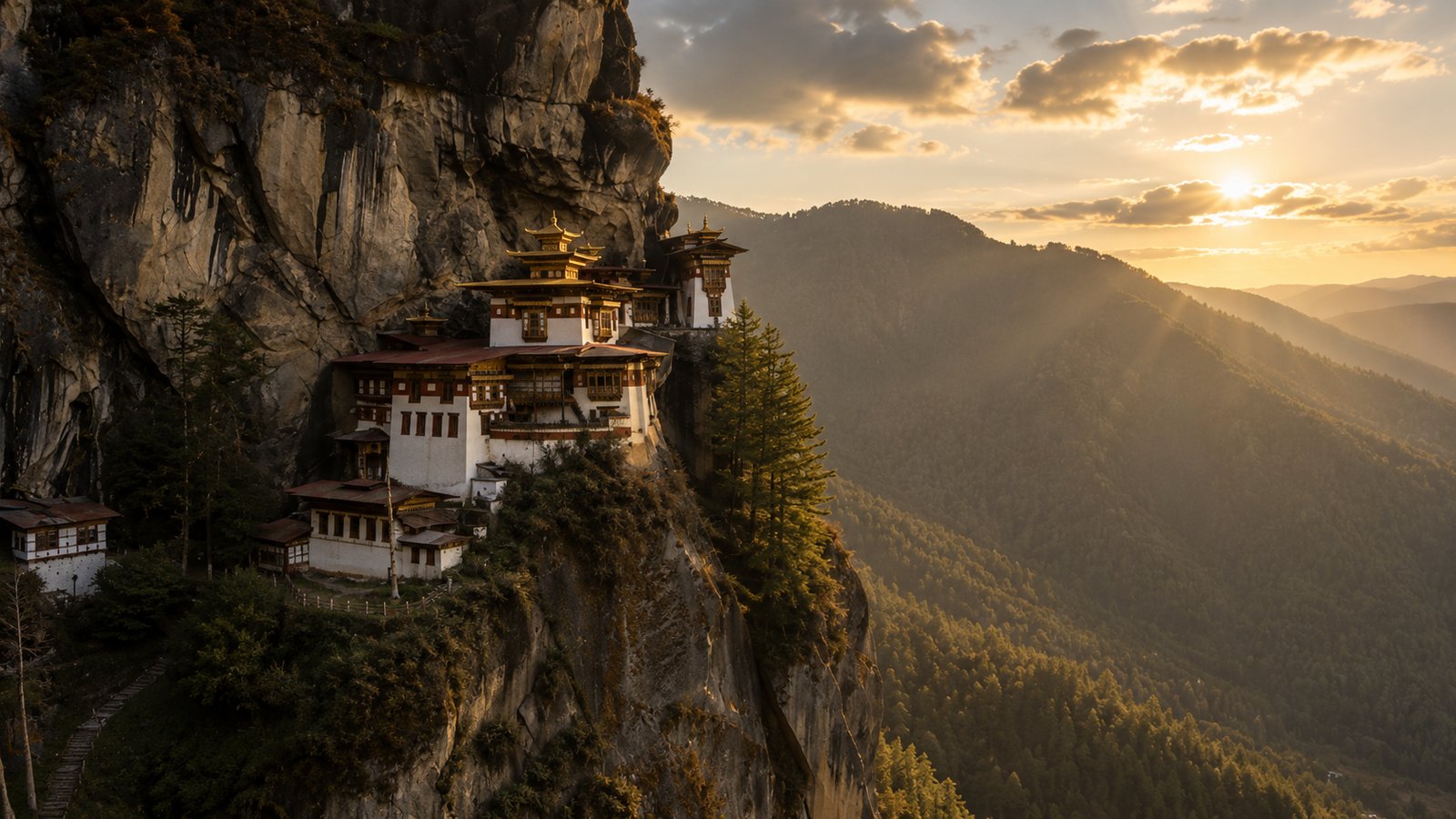
Tiger’s Nest puts steep cliff approaches between its buildings and the Paro valley. Reaching shelter is only the first hurdle: the approved evidence does not establish drinking water, sanitation or residential capacity sufficient to support twenty people independently.
Overall
4.7 out of 10Defensibility
5 out of 10Isolation
5 out of 10Sustainability
4 out of 10Ranking context
How this base ranks
Global
#56 of 88 · Top 64%
Region · South Asia
#7 of 7 · Top 100%
Base Type · Elevated Stronghold
#10 of 13 · Top 77%
Field assessment
At a glance
Bottom Line
The monastery offers a protected-looking position whose endurance depends on supplies reaching it. Confirm safe water and usable living space before committing the group; difficult access can obstruct withdrawal as readily as arrival.
Biggest Trade-off
The climb filters and channels movement, but every necessary journey for supplies or repairs must overcome that same separation. A smaller access burden for watchers becomes a larger transport burden for residents.
Most Likely Failure
An interrupted potable-water pathway makes the occupied rooms untenable while the demanding access route complicates replacement supply or departure.
Score rationale
Why it scores this way
Defensibility · 5/10
The cliff and demanding approach restrict direct access. They do not establish hardened gates, containment between buildings or a response to an infected person already inside the occupied rooms.
Advantages
- Steep terrain limits the directions from which ordinary walker movement can reach the buildings.
Limitations
- The condition and closure of every practical route remain unverified, so complete sealing cannot be assumed.
Isolation · 5/10
The climb separates the monastery from the valley, but this is a major pilgrimage destination connected to Paro. Physical effort slows access without making the site independent of a populated regional network.
Advantages
- The substantial ascent creates real separation from ordinary valley-floor movement.
Limitations
- The same established pilgrimage route also provides a known way towards the monastery.
Sustainability · 4/10
Associated monastic rooms support a limited residential role, but usable space is only one part of habitation. Water, sanitation and food must work repeatedly for the whole group, not merely for a normal supported retreat.
Advantages
- The approved record includes separate meditation accommodation rather than relying on temple floor area as a capacity estimate.
Limitations
- Cliff access makes replacement materials and ordinary repairs demanding once regular support declines.
Survival horizons
How survival changes over time
Verify support before the final commitment
First 7 Days
Inspect accessible rooms, safe water and waste handling, and assess the return route. Do not assume that arriving at the monastery establishes a viable place for all twenty to remain.
Positive factors
- Channelled approaches make a focused access watch more plausible than a watch across an open settlement.
Risks
- The cited room provision is below the reference group size and does not establish present sleeping or hygiene capacity.
Test the carrying and maintenance burden
First 100 Days
Track consumption against what can actually be replenished. Repeated supply journeys and building upkeep compete with watches and rest; no reliable valley resupply or stock duration is established.
Positive factors
- Simple residential rooms retain some shelter value without a complex industrial operating system.
Risks
- Routine wear becomes harder to address when every replacement must reach the cliff position.
Renewal remains the limiting question
Long Term
A lasting refuge needs recurring potable water, food and sanitation within a workload twenty people can sustain. The evidence does not establish that cycle; continued residence cannot be projected from the survival of the buildings alone.
Positive factors
- The cliff’s passive separation persists without fuel deliveries or powered perimeter equipment.
Risks
- Without a verified independent resource pathway, greater remoteness prolongs the supply problem instead of resolving it.
Visual survey
Gallery
Location context
The Lay of the Land
Tactical assessment
Practical Reality
Best Use
A conditional refuge where the group can verify water, accommodation and a practical supply routine before relying on the cliff position.
Strengths
- The cliff interrupts direct approaches from much of the surrounding ground.
- Practical mountain access routes concentrate movement enough to make watching them useful.
- Documented associated meditation rooms provide a residential basis beyond a purely ceremonial visitor site.
Key Risk
Assuming documented monastic residence proves independent utilities and enough usable accommodation for all twenty survivors.
Weaknesses
- Ordinary paths and stairs remain usable approaches; height is not a locked perimeter.
- The cited account describes rooms for around fifteen or sixteen meditators, not verified current accommodation for twenty.
- No independent potable-water, food-production or survival-energy pathway is established for prolonged residence.
Reality Check & Constraints
Only the defined cliff complex and integrated rooms count. Paro’s services, valley agriculture and trail cafés remain outside it; room condition, stocks, safe water and continued sanitation are unverified.
Assumptions / constraints
- The twenty-person group brings ordinary practical skills, not a guaranteed carrying crew, prepositioned caches or specialist building-repair capacity.
Decision context
Rivals / Alternatives
Similar rival
Kumbhalgarh Fort
India · Elevated Stronghold
Kumbhalgarh Fort keeps the same elevated stronghold strategy, with only 0.3 points between the overall scores and closely matched defensibility pressure.
Overall 5/10
Strongest alternative
Amundsen-Scott South Pole Station
Antarctica · Institutional Compound
Amundsen-Scott South Pole Station scores 7.7 overall versus 4.7, adding a stronger sustainability profile while staying relevant as a comparable survival plan.
Overall 7.7/10
Wildcard rival
Okinawa
Japan · Isolated Landmass
Okinawa changes the strategy: it is built around the isolated landmass strategy with a sustainability edge, while Tiger’s Nest Monastery holds more of the defensibility advantage.
Overall 3.7/10