Western Europe · Isolated Landmass
Heligoland
Germany
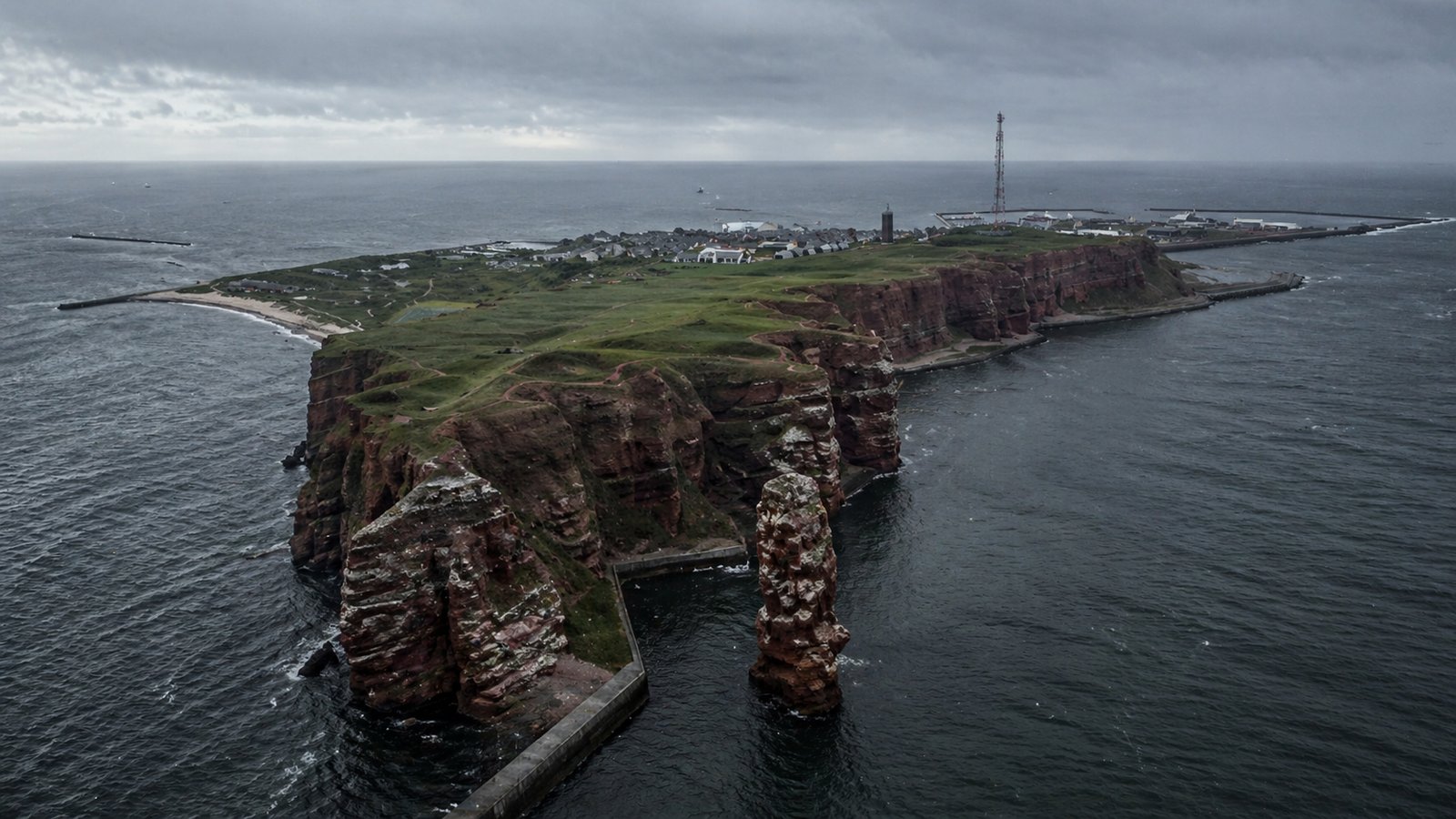
Heligoland combines North Sea separation with an established island community and seawater-derived drinking water. Its refuge value depends on keeping technical utilities running; plentiful buildings and surrounding sea do not provide independent food, fuel or fresh water.
Overall
6.3 out of 10Defensibility
2 out of 10Isolation
9 out of 10Sustainability
8 out of 10Ranking context
How this base ranks
Global
#6 of 88 · Top 7%
Region · Western Europe
#1 of 9 · Top 11%
Base Type · Isolated Landmass
#1 of 19 · Top 5%
Field assessment
At a glance
Bottom Line
A capable inhabited refuge while water and essential power remain serviceable, with far more residential space than twenty people can usefully occupy or defend.
Biggest Trade-off
Open sea blocks ordinary land arrivals but also separates the group from the mainland fuel, food and spare parts that sustain island services.
Most Likely Failure
A power, fuel or repair failure interrupts desalination; the island remains isolated and sheltered while drinking-water availability becomes the immediate constraint.
Score rationale
Why it scores this way
Defensibility · 2/10
Cliffs and sea restrict approach, but the canonical Base is the whole inhabited main island. Individual buildings can be secured; the harbour, coastline and connecting streets remain a much larger defensive task.
Advantages
- Cliff sectors reduce easy shoreline approaches and help concentrate observation on practical landing areas.
Limitations
- Sea separation does not contain an internal infection or secure each journey between homes, stores and utilities.
Isolation · 9/10
Roughly seventy kilometres of North Sea separate Heligoland from mainland population sources. Normal ferry and harbour connections show that isolation is substantial without making the inhabited island inaccessible.
Advantages
- Incoming ground pressure cannot simply follow a road onto the island.
Limitations
- Existing residents and arrivals still require local assessment; offshore geography does not establish a clean start.
Sustainability · 8/10
A functioning residential community, water production, central heat and health facilities provide a developed habitat. Continuing that habitat requires technical operation and consumables, rather than merely finding spare rooms.
Advantages
- Domestic and community facilities offer substantial space for separating living, storage and care activities.
Limitations
- Desalination and central services retain maintenance demands even when personal consumption falls to twenty occupants.
Survival horizons
How survival changes over time
Secure water and a small living area
First 7 Days
Confirm drinking-water delivery, inspect essential power arrangements and count accessible supplies. Establish an occupied area and landing watches before extending attention across the whole main island.
Positive factors
- Existing residential infrastructure lets the group begin with service checks rather than construction.
Risks
- An apparently normal tap supply does not establish how it continues through a power interruption.
Keep treatment and reserves working
First 100 Days
Routine shifts must cover water production, fuel accounting and ordinary maintenance alongside watches. Inspect food use and actual fishing capability instead of assuming shops or a maritime setting replenish the diet.
Positive factors
- A demonstrated emergency-generation fallback offers an option to assess when mainland electricity is lost.
Risks
- Finite fuel and unfamiliar machinery can make a brief successful fallback misleading as evidence of sustained operation.
Renew resources beyond the stockpile
Long Term
Continued occupation turns on replacing food, fuel and worn treatment components. Local fishing is a partial food pathway, but the evidence establishes neither a complete diet nor independent renewal of the utilities that make this island habitable.
Positive factors
- The main island retains housing and offshore separation even as services deteriorate.
Risks
- Fuel shortages and deferred repairs can combine to stop fresh-water production long before the buildings cease to shelter the group.
Visual survey
Gallery
Location context
The Lay of the Land
Tactical assessment
Practical Reality
Best Use
Choose a compact main-island living area with verified water access and manageable routes to essential plant. Watch nearby landings without attempting continuous control of the entire coastline.
Strengths
- No ordinary land route connects the main island to mainland population sources.
- Established housing and community buildings give a small group extensive options for domestic and storage space.
- Documented desalination and emergency generation provide real starting systems to inspect and prioritise.
Key Risk
A small workforce inherits a community-scale utility system: keeping desalination, power and essential distribution usable can compete directly with watches and food provision.
Weaknesses
- Harbours, waterfront sectors and internal routes prevent twenty people from treating the whole island as a continuously defended compound.
- Drinking water depends on powered treatment and distribution; surrounding seawater cannot replace failed machinery.
- Mainland supply dependence persists for much food, fuel and repair material despite local fishing and emergency power.
Reality Check & Constraints
The documented diesel fallback is a real advantage, not proof of unlimited fuel or survivor operating skills. Existing clinics, shops and fishing activity do not guarantee staff, stocks, boats or a complete renewable diet.
Assumptions / constraints
- The fixed twenty-person group has ordinary skills, not a guaranteed desalination crew, diesel engineers, fishers or staffed clinic.
- The inhabited main island remains the Base. Düne, offshore wind installations and mainland resources are not survivor-controlled assets.
- Equipment condition, fuel and potable reserves, usable fishing gear and sustainable catches remain unverified. No ferry continuity or survival duration is promised.
Decision context
Rivals / Alternatives
Similar rival
Île d’Yeu
France · Isolated Landmass
Île d’Yeu keeps the same isolated landmass strategy, with only 1.7 points between the overall scores and closely matched defensibility pressure.
Overall 4.7/10
Strongest alternative
Amundsen-Scott South Pole Station
Antarctica · Institutional Compound
Amundsen-Scott South Pole Station scores 7.7 overall versus 6.3, adding a stronger defensibility profile while staying relevant as a comparable survival plan.
Overall 7.7/10
Wildcard rival
San Felipe Fortress
Colombia · Fortified Structure
San Felipe Fortress changes the strategy: it is built around the fortified structure strategy with a defensibility edge, while Heligoland holds more of the isolation advantage.
Overall 3.7/10