Western Europe · Subterranean
Hackenberg Maginot Fortress
France
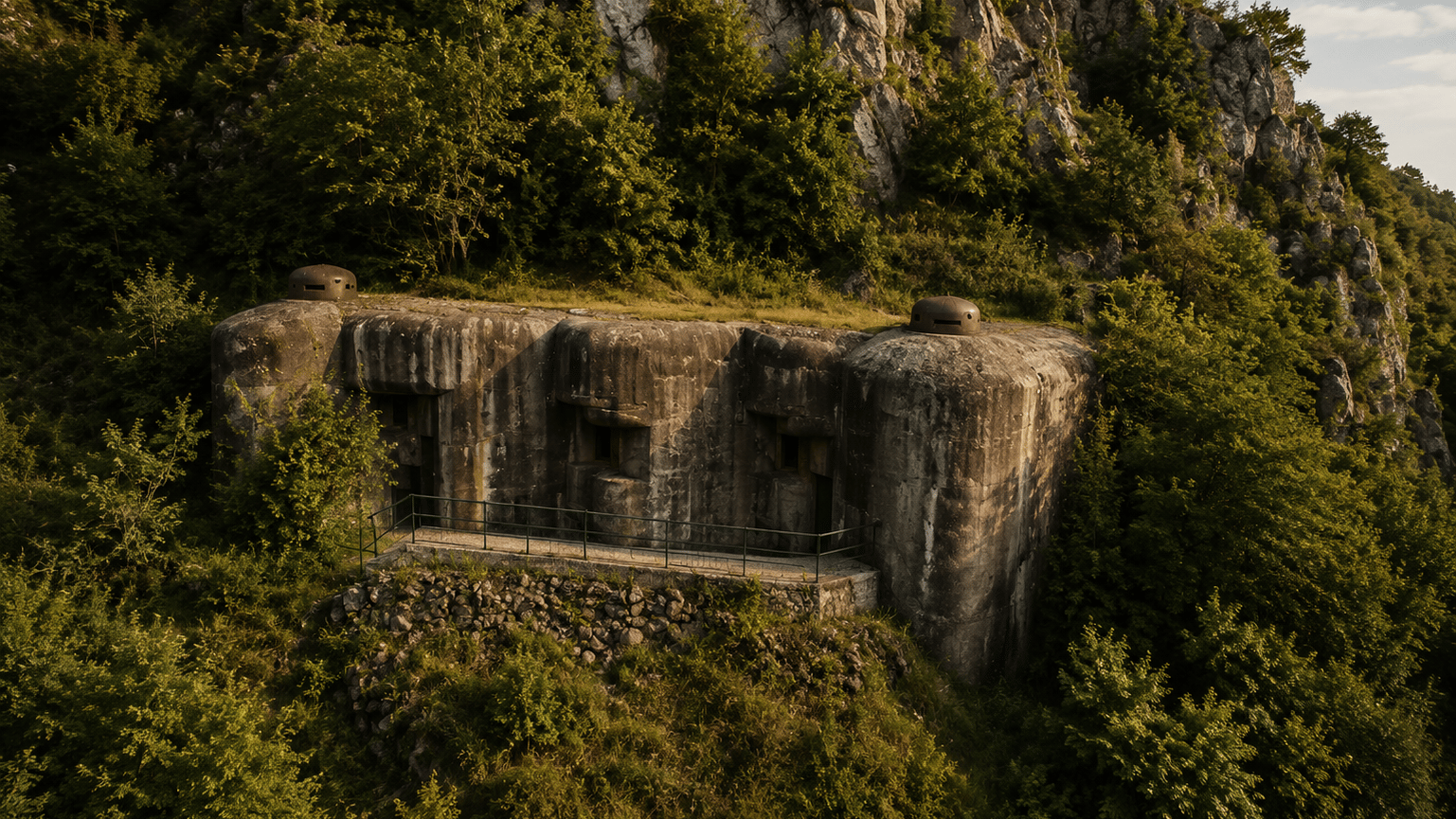
Hackenberg’s reinforced galleries and combat blocks offer exceptional passive protection. Usable underground rooms and preserved machinery add shelter value, but dependable drinking water, food renewal and a small group’s ability to maintain the plant remain unresolved.
Overall
6 out of 10Defensibility
9 out of 10Isolation
3 out of 10Sustainability
6 out of 10Ranking context
How this base ranks
Global
#14 of 88 · Top 16%
Region · Western Europe
#3 of 9 · Top 33%
Base Type · Subterranean
#2 of 10 · Top 20%
Field assessment
At a glance
Bottom Line
A formidable place to take cover, with long-term occupation limited by water and daily living systems rather than the strength of the reinforced shell.
Biggest Trade-off
The depth and extent that create protected fallback space also make inspection, circulation and machinery upkeep demanding for a small group.
Most Likely Failure
Drinking water cannot be secured reliably inside the occupied refuge, forcing repeated outside trips while fuel and plant-maintenance problems narrow the usable underground space.
Score rationale
Why it scores this way
Defensibility · 9/10
Deep reinforced galleries and separated combat blocks provide protection and fallback depth. The practical task is controlling a workable occupied section; the reference group cannot actively man the entire surface distribution.
Advantages
- Much of the protective shell retains value without powered machinery or a specialist crew.
Limitations
- The ouvrage’s multiple blocks create a larger monitoring task than its underground appearance suggests.
Isolation · 3/10
Underground concealment reduces casual exposure, but Hackenberg remains near Veckring and an inhabited road network. Its advantage is physical hardening after pressure arrives, rather than distance from potential pressure.
Advantages
- Any separation from wider population pressure is limited; the fort remains part of the inhabited Moselle region.
Limitations
- Road access and nearby settlement keep the fort connected to its surrounding region.
Sustainability · 6/10
Usable underground barracks and event rooms establish substantial shelter. Long-duration living requires more than seating capacity: potable water, sanitation and maintainable services must work for the occupants every day.
Advantages
- Connected enclosed rooms provide room to organise shelter without constructing a new refuge.
Limitations
- Independent potable-water continuity and modern residential support remain unestablished.
Survival horizons
How survival changes over time
Prove the occupied refuge
First 7 Days
Choose a manageable connected area and verify access, water and usable services before relying on depth alone. Check what the group can operate safely; the existence of preserved equipment is not a handover from its maintainers.
Positive factors
- Reinforced enclosed space provides strong immediate shelter and room to organise.
Risks
- Physical capacity is much better evidenced than a dependable drinking-water arrangement.
Keep shelter habitable
First 100 Days
Consumption and upkeep become the main tests. Measure actual water and food availability, track fuel use and inspect the services supporting the occupied area. Expanding into more galleries adds duties without necessarily adding useful resources.
Positive factors
- The passive shell continues to protect even if some powered conveniences are lost.
Risks
- Ageing electrical and mechanical plant can require specialist attention that ordinary maintenance cannot replace.
Protection without renewal
Long Term
The fort can remain a protected structure while becoming difficult to inhabit. Staying requires a credible ongoing water and food pathway plus manageable sanitation and maintenance; neither historical stores nor partner catering establishes that continuity.
Positive factors
- Durable reinforcement and galleries preserve refuge value beyond the useful life of individual machines.
Risks
- Supplies obtained outside the ouvrage require leaving protection, and no secure renewable supply is established within it.
Visual survey
Gallery
Location context
The Lay of the Land
Tactical assessment
Practical Reality
Best Use
A protected refuge using a manageable portion of the connected ouvrage, with services retained only where the group can maintain them.
Strengths
- Reinforced underground construction gives substantial passive protection.
- Connected galleries and separated blocks offer protected circulation and fallback depth.
- Present event use confirms usable enclosed space beyond the group’s physical room requirement.
Key Risk
Historic military autonomy and working demonstration machinery can be mistaken for a presently provisioned, independently supplied refuge.
Weaknesses
- The fort is road-accessible in an inhabited region, despite being underground.
- No protected independent drinking-water and durable food-renewal pathway is established.
- Preserved plant needs fuel, parts and knowledge that the group cannot assume it inherits.
Reality Check & Constraints
Event rooms and generator demonstrations establish usable space and maintained equipment. They do not prove continuous life-support operation, residential sanitation or current food and water reserves.
Assumptions / constraints
- The assessed Base is Hackenberg at Veckring, not the wider disconnected Maginot Line or surrounding village resources.
- Ordinary organisation and basic repairs are plausible; original military crews, specialist plant operators and historic stores are not assumed present.
- Generator demonstrations and seating capacity do not establish continuous utility operation, overnight residential provision or a guaranteed occupation duration.
Decision context
Rivals / Alternatives
Similar rival
Carcassonne
France · Fortified Structure
Carcassonne keeps the same Western Europe risk context, with only 0.3 points between the overall scores and closely matched sustainability pressure.
Overall 5.7/10
Strongest alternative
Olavsvern Naval Base
Norway · Subterranean
Olavsvern Naval Base scores 6.3 overall versus 6.0, adding a stronger sustainability profile while staying relevant as another subterranean.
Overall 6.3/10
Wildcard rival
Waw an Namus Caldera
Libya · Natural Landform
Waw an Namus Caldera changes the strategy: it is built around the natural landform strategy with a isolation edge, while Hackenberg Maginot Fortress holds more of the defensibility advantage.
Overall 4.3/10