North America · Isolated Landmass
Kodiak Island
United States
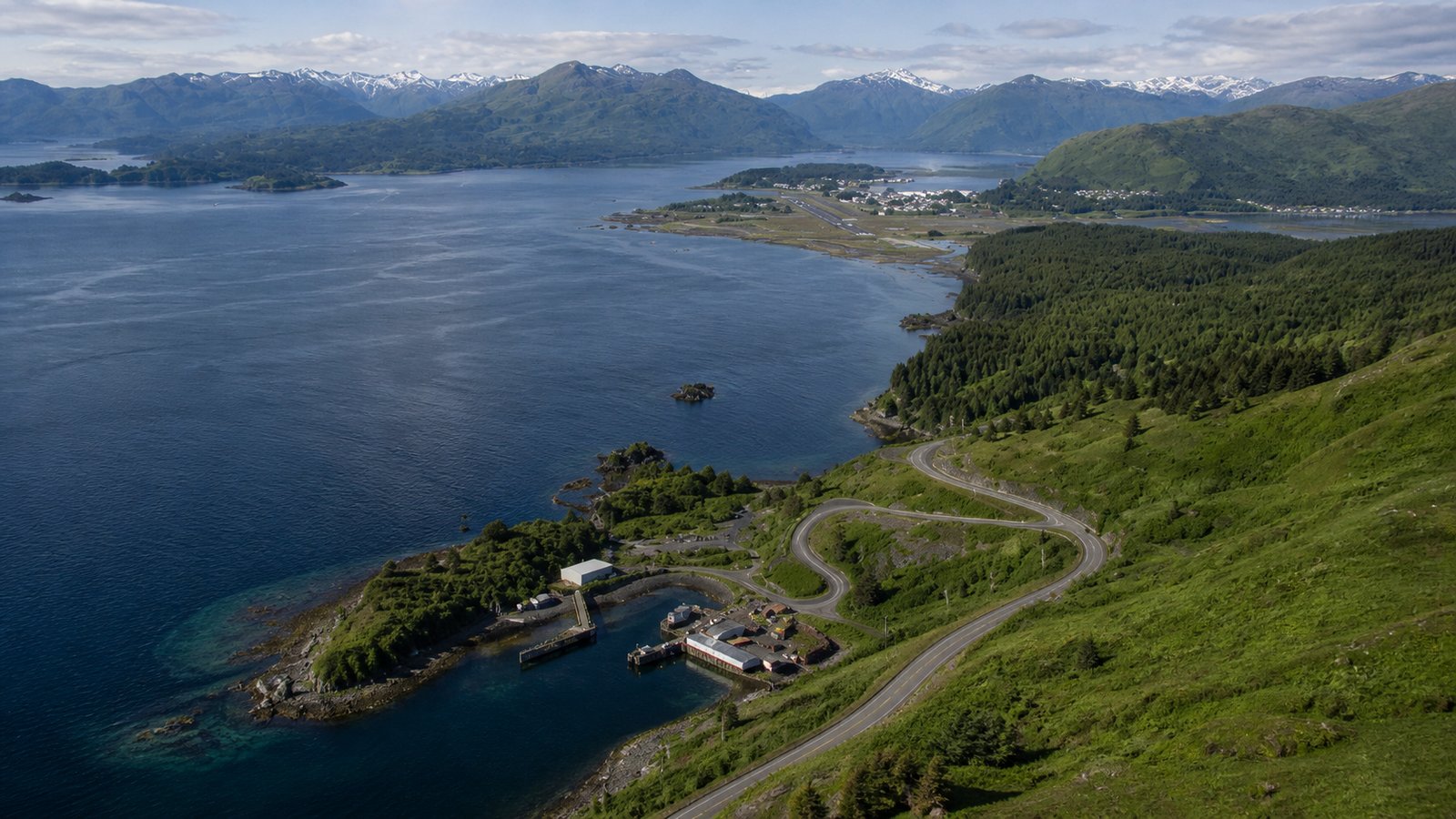
Kodiak Island combines established communities, protected water sources, local renewable electricity and productive fisheries. Its promise lies in sustaining a manageable foothold; twenty people cannot secure the island or operate all its infrastructure.
Overall
5 out of 10Defensibility
1 out of 10Isolation
6 out of 10Sustainability
8 out of 10Ranking context
How this base ranks
Global
#34 of 88 · Top 39%
Region · North America
#6 of 9 · Top 67%
Base Type · Isolated Landmass
#6 of 19 · Top 32%
Field assessment
At a glance
Bottom Line
A strong resource setting for a small community able to keep essential daily systems working, with little island-wide defensive control.
Biggest Trade-off
The resources that make habitation attractive are spread across settlements, utility corridors and fishing grounds, increasing the journeys and operating commitments behind a secure home.
Most Likely Failure
A water-distribution or electrical fault exceeds the group’s repair capacity, interrupting daily services despite abundant natural resources.
Score rationale
Why it scores this way
Defensibility · 1/10
Kodiak’s scale and long coastline overwhelm a twenty-person defensive perimeter. Individual occupied buildings may offer cover, but the whole island provides no continuous barrier against local pressure.
Advantages
- Established settlements offer a choice of buildings rather than requiring immediate wilderness shelter.
Limitations
- A watched doorway leaves roads, shorelines and journeys to remote essentials exposed.
Isolation · 6/10
Gulf-of-Alaska separation slows pressure from mainland population centres. Existing residents, ports and air connections still create local and incoming risks within that separation.
Advantages
- There is no ordinary mainland road approach onto the island.
Limitations
- An outbreak already among island communities must be managed locally; sparse wilderness elsewhere does not remove it.
Sustainability · 8/10
Housing, water services and established community infrastructure give Kodiak a strong basis for everyday habitation. Harsh weather and the distance between services make choosing a practical operating area important.
Advantages
- Existing residential space supports separation of sleeping, storage and work without constructing a settlement.
Limitations
- Keeping a small household supplied is a different task from keeping municipal utilities and island transport working.
Survival horizons
How survival changes over time
Choose a workable foothold
First 7 Days
Verify local water, safe housing and accessible supplies before ranging across the island. Establish a short daily route between essentials rather than assuming every mapped facility is reachable.
Positive factors
- An established residential setting reduces the work needed to get under cover and organise daily life.
Risks
- Road-system communities concentrate both useful services and local contact pressure.
Match demand to upkeep
First 100 Days
Measure consumption and test which services the group can maintain. Fishing and renewable power become useful routines only with serviceable equipment, practical skills and time left for shelter and watches.
Positive factors
- Local water and generation reduce dependence on repeatedly importing basic water and electricity.
Risks
- A broad maintenance commitment can exhaust a small workforce before natural resources become scarce.
Turn resources into renewal
Long Term
The long-term test is repeated safe water provision, food harvesting and preservation, and repair of essential equipment. Kodiak offers strong underlying pathways, while outside parts and dietary variety remain constraints.
Positive factors
- Hydro, wind and productive fishing waters provide recurring inputs rather than only a finite store.
Risks
- Worn controls, distribution equipment or fishing gear can separate abundant resources from the group’s ability to use them.
Visual survey
Gallery
Location context
The Lay of the Land
Tactical assessment
Practical Reality
Best Use
Prioritise an accessible inhabited area with verified water and shelter, then assess the practical reach of its power and food pathways. A workable occupation does not redefine the whole-island assessment.
Strengths
- Existing housing and community services offer substantially more living capacity than the reference group needs.
- Hydro and wind reduce the need to replace every unit of electricity with imported fuel.
- Protected source waters and an established treatment network provide a credible starting point for potable supply.
Key Risk
A small workforce could become dependent on utility and processing systems it cannot maintain once external parts and specialist support disappear.
Weaknesses
- Numerous coastal and settlement approaches defeat any assumption of a single defended island perimeter.
- Renewable generation still depends on machinery, controls and distribution that require competent maintenance.
- Fish abundance does not remove the labour, equipment and preservation needed to turn a catch into dependable meals.
Reality Check & Constraints
Hydro, wind, protected watersheds and fisheries are genuine advantages. They do not supply an inherited operating crew, guaranteed catches, accessible stores or every dietary and manufactured necessity.
Assumptions / constraints
- The main island remains the Base; no military installation or secluded village is substituted as a fortified unit.
- Twenty capable adults must establish their own operating skills; existing utility and fishing staff are not assumed.
- Ferry and air links do not guarantee continuing food diversity, fuel or replacement parts.
Decision context
Rivals / Alternatives
Similar rival
Faroe Islands
Faroe Islands · Isolated Landmass
Faroe Islands keeps the same isolated landmass strategy, with only 0.0 points between the overall scores and closely matched defensibility pressure.
Overall 5/10
Strongest alternative
Heligoland
Germany · Isolated Landmass
Heligoland scores 6.3 overall versus 5.0, adding a stronger isolation profile while staying relevant as another isolated landmass.
Overall 6.3/10
Wildcard rival
San Felipe Fortress
Colombia · Fortified Structure
San Felipe Fortress changes the strategy: it is built around the fortified structure strategy with a defensibility edge, while Kodiak Island holds more of the isolation advantage.
Overall 3.7/10