Africa · Fortified Structure
Elmina Castle
Ghana
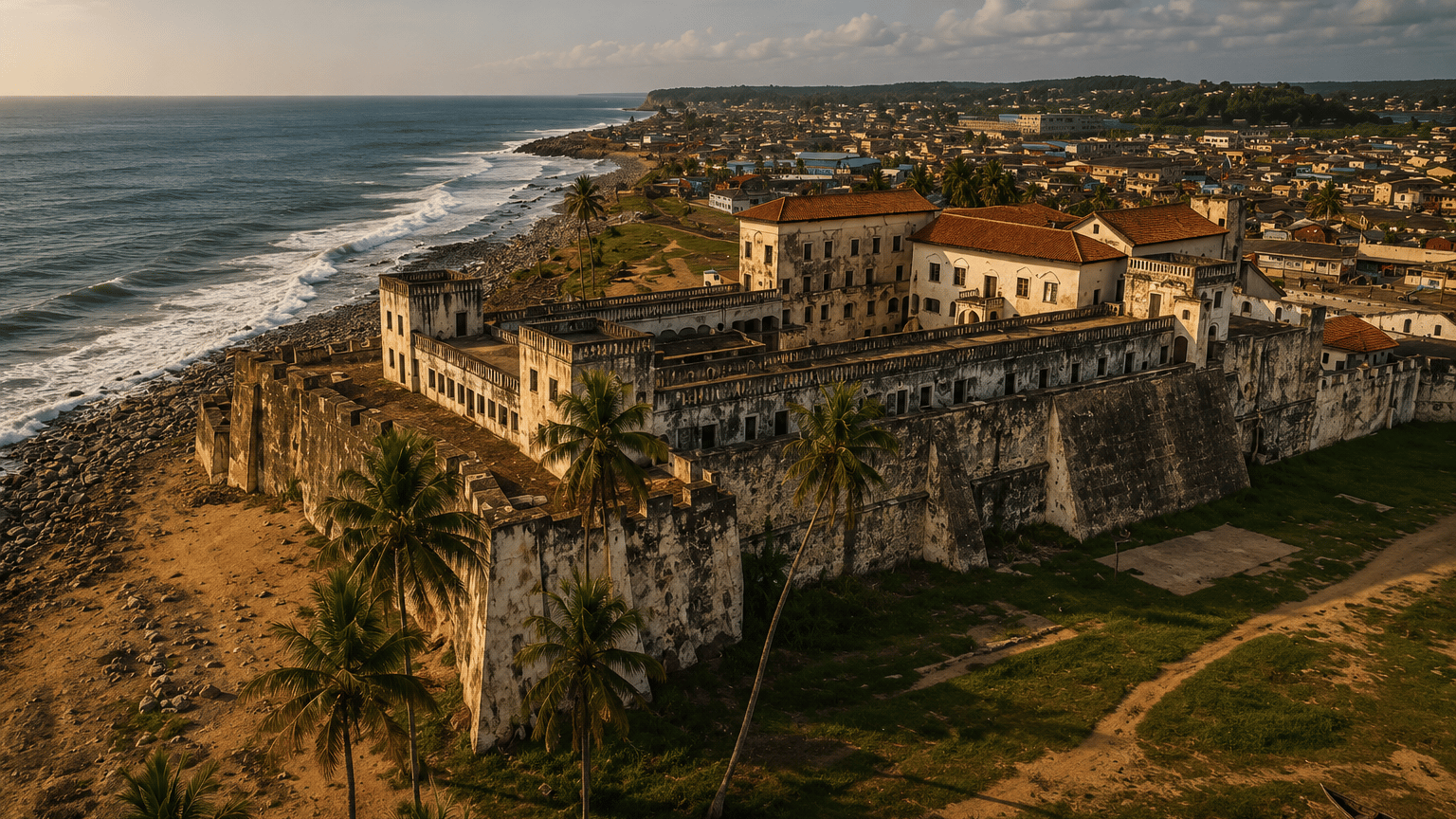
Elmina Castle offers substantial walls, sheltered rooms and a narrow coastal approach beside a busy town. Its restaurant and museum facilities provide a starting point, but independent drinking water and food renewal remain unproven.
Overall
4.3 out of 10Defensibility
7 out of 10Isolation
1 out of 10Sustainability
5 out of 10Ranking context
How this base ranks
Global
#59 of 88 · Top 67%
Region · Africa
#3 of 11 · Top 27%
Base Type · Fortified Structure
#13 of 18 · Top 72%
Field assessment
At a glance
Bottom Line
A defensible refuge with room to organise daily life, provided the group can meet basic needs without depending on repeated journeys into Elmina.
Biggest Trade-off
The same town and harbour that make supplies accessible also keep potential outbreak pressure close to the castle entrance.
Most Likely Failure
Disrupted drinking-water and food supplies force repeated departures through the town-facing approach while the masonry still offers useful protection.
Score rationale
Why it scores this way
Defensibility · 7/10
Thick masonry, internal rooms and the narrow promontory give defenders structural depth. The group must still inspect and monitor the land approach and harbour-facing edges rather than treat the whole perimeter as inaccessible.
Advantages
- Internal spaces offer opportunities to separate occupied rooms from an entry route and retain fallback positions.
Limitations
- The castle is not uniformly protected by open water; approach control still requires people at the vulnerable edges.
Isolation · 1/10
Elmina Castle stands inside a coastal town beside a working harbour. Nearby water shapes the final approach but does little to distance the refuge from surrounding population sources.
Advantages
- The headland narrows direct land access, creating useful local separation once people reach the castle.
Limitations
- Leaving for supplies returns the group to the same nearby settlement from which pressure can approach.
Sustainability · 5/10
Museum rooms, a courtyard and food-service spaces offer a plausible habitat with adaptation. Turning visitor accommodation into a daily home still requires workable sleeping, sanitation and safe drinking water.
Advantages
- Several floors and distinct chambers provide room to organise a small community without first constructing shelter.
Limitations
- Restaurant service depends on replenishment; no protected independent water supply or food-production system is established.
Survival horizons
How survival changes over time
Check essentials behind the walls
First 7 Days
Inspect access points, choose safe occupied rooms and inventory what is actually usable. Establish drinking water and waste arrangements alongside the first watches, rather than assume the museum is ready for residential use.
Positive factors
- Existing enclosed spaces and food-service premises give occupation a practical starting layout.
Risks
- Initial inspection and supply collection compete with monitoring the entrance and harbour-facing sides.
Manage consumption and upkeep
First 100 Days
The work shifts to measured water and food use, cleaning and keeping occupied rooms serviceable. Restrict unnecessary journeys outside and distinguish ordinary repairs from conservation work the group cannot safely undertake.
Positive factors
- Storage and chambers allow routines to remain inside the defended structure while usable provisions last.
Risks
- Loss of commercial and municipal support can interrupt daily needs before the main defensive fabric fails.
Renew supplies without enlarging the Base
Long Term
Durable walls cannot replace consumed food or establish potable water. Continued occupation requires repeatable supply pathways while coastal deterioration accumulates; neither nearby fishing activity nor historic storage proves independence.
Positive factors
- The fortress continues to provide passive enclosure even as modern services become less dependable.
Risks
- Frequent trips into town can turn a secure home position into a base for increasingly exposed supply work.
Visual survey
Gallery
Location context
The Lay of the Land
Tactical assessment
Practical Reality
Best Use
Keep living space, supplies and watches within a manageable part of the fortress. Confirm a safe water pathway before relying on its walls for continued occupation.
Strengths
- Battlements overlook the immediate approaches and harbour edges, helping a small group organise observation.
- Enclosed rooms and former storehouses allow rest, work and supplies to be separated within the fortress.
- Massive masonry retains basic shelter and barrier value without continuous powered operation.
Key Risk
Mistaking a supplied restaurant for independent provision can conceal how little is known about water reserves and replacement food.
Weaknesses
- The town-facing approach remains connected to a populated settlement; the promontory is not an island.
- Present residential sanitation and sleeping arrangements are less established than visitor use and enclosed space.
- Coastal exposure and conservation needs require more than routine cleaning to keep all historic fabric safely usable.
Reality Check & Constraints
The museum documents a restaurant, bar and former storehouses, not a measured survival inventory. Historic dungeons are not ready-made bedrooms, and the fishing harbour and Fort St Jago remain outside the controlled Base.
Assumptions / constraints
- Only the castle and its immediate operating approaches are credited; harbour boats, town shops and nearby forts are not inherited assets.
- The group has twenty capable adults, without a museum workforce, specialist conservation team or guaranteed utility support.
- Accessible provisions, water quality and storage must be checked at occupation; no resupply interval or survival duration is assumed.
Decision context
Rivals / Alternatives
Similar rival
Fasil Ghebbi
Ethiopia · Fortified Structure
Fasil Ghebbi keeps the same fortified structure strategy, with only 0.7 points between the overall scores and closely matched isolation pressure.
Overall 3.7/10
Strongest alternative
Fort George
United Kingdom · Fortified Structure
Fort George scores 6.7 overall versus 4.3, adding a stronger isolation profile while staying relevant as another fortified structure.
Overall 6.7/10
Wildcard rival
Amundsen-Scott South Pole Station
Antarctica · Institutional Compound
Amundsen-Scott South Pole Station changes the strategy: it is built around the institutional compound strategy with a isolation edge, while Elmina Castle holds more of the defensibility advantage.
Overall 7.7/10