Africa · Isolated Landmass
Zanzibar Island
Tanzania
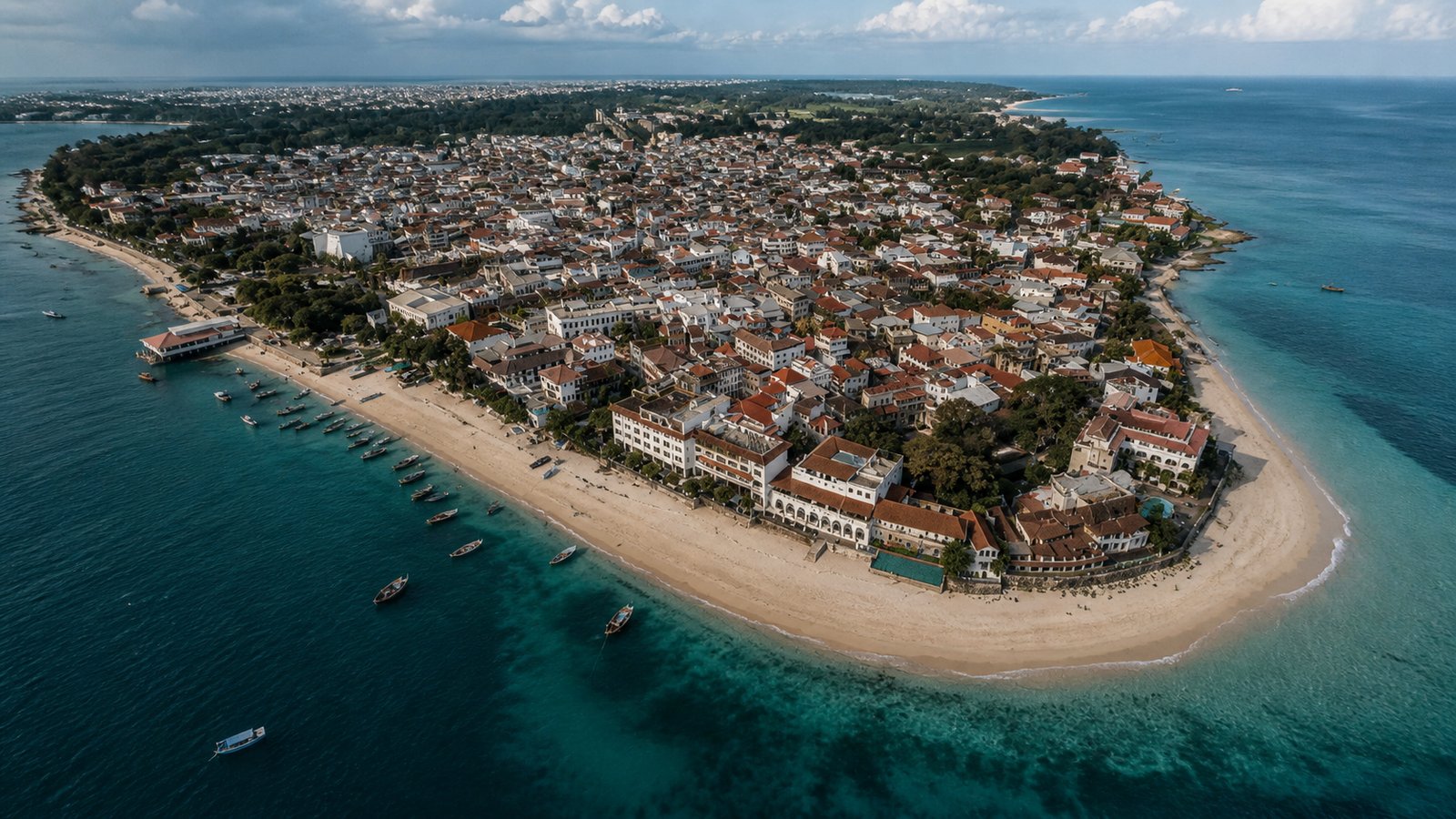
Zanzibar Island has housing, groundwater networks and local food production across densely inhabited Unguja. Sea separation offers little refuge from threats already on the island, while continued access to water and supplies depends on systems far larger than a small group can operate.
Overall
3.3 out of 10Defensibility
1 out of 10Isolation
1 out of 10Sustainability
8 out of 10Ranking context
How this base ranks
Global
#83 of 88 · Top 94%
Region · Africa
#8 of 11 · Top 73%
Base Type · Isolated Landmass
#19 of 19 · Top 100%
Field assessment
At a glance
Bottom Line
Unguja offers a broad resource setting, but no island-wide defended refuge for twenty people. Existing capacity is useful only where the group can reach, check and keep using it amid substantial internal pressure.
Biggest Trade-off
The settlements and production that make island life possible also place people, movement and competing demands inside the sea boundary. More infrastructure does not make the whole island controllable.
Most Likely Failure
Loss of electricity disrupts access to infrastructure-dependent groundwater supply. The group can be surrounded by houses and wells yet lack a reliable way to deliver safe water to its occupied space.
Score rationale
Why it scores this way
Defensibility · 1/10
Unguja has too many settlements, roads and coastal approaches to function as one defended position for a small group. Securing a particular doorway does not establish control of routes to the next essential service.
Advantages
- Existing buildings allow immediate protection to be concentrated around occupied rooms.
Limitations
- Movement between useful locations remains exposed; an island boundary does not funnel every internal approach towards one checkpoint.
Isolation · 1/10
The channel interrupts direct ground arrival from mainland Tanzania, but a large resident population is already inside Unguja. Under a regional outbreak, the main pressure does not need to cross the sea.
Advantages
- Water separation removes the ordinary mainland road approach from the local threat picture.
Limitations
- The 2022 census records over 1.3 million people on Unguja; sea separation cannot be treated as an empty-island advantage.
Sustainability · 8/10
An established island society supplies housing, water infrastructure and food activity on a scale well beyond twenty people. Continued use depends on safe access and routine system operation as electricity, inputs and outside support decline.
Advantages
- Local crops and fisheries offer renewal possibilities beyond consuming shop inventories.
Limitations
- Groundwater access can depend on powered abstraction and distribution; the presence of an aquifer does not guarantee water at the point of use.
Survival horizons
How survival changes over time
Find usable services amid internal pressure
First 7 Days
Check water delivery, accessible shelter and the routes between them before treating island infrastructure as available. Survey what can be reached safely; neither the coastline nor the island’s size clears threats from occupied neighbourhoods.
Positive factors
- Established accommodation and services provide a starting point for daily living where access is feasible.
Risks
- Internal movement and dispersed population sources make initial journeys a substantial exposure problem.
Keep essential pathways working
First 100 Days
Track consumption, water quality and pump or distribution faults. Distinguish ordinary repairs from utility work the group cannot perform, while checking which nearby food activities can continue as deliveries and power become unreliable.
Positive factors
- Existing cultivation and fisheries give concrete production activities to assess before stored food is exhausted.
Risks
- Power loss can interrupt water delivery at the same time that replacement parts and treatment supplies become harder to obtain.
Renew food without exhausting water
Long Term
Continued habitation requires repeatable food production and protected, replenishing water sources. Judge the labour, access and inputs actually available on Unguja; Zanzibar-wide production figures do not establish a self-sufficient supply for this group.
Positive factors
- Rainfall recharge and established food sectors provide a real basis for investigating renewal within the island.
Risks
- Over-abstraction, salinity or contamination can erode groundwater value, while food-import dependence leaves gaps local production may not fill.
Visual survey
Gallery
Location context
The Lay of the Land
Tactical assessment
Practical Reality
Best Use
Assess accessible shelter, a specific safe-water pathway and nearby food activity together before committing to a daily routine. Keep that local operating plan distinct from any claim to control Unguja or to substitute a resort for the island-wide Base.
Strengths
- Extensive existing buildings offer choices for separating living, storage and care functions without new construction.
- Groundwater sources and distribution infrastructure provide established water pathways to inspect rather than requiring an entirely new supply system.
- Agriculture and fisheries provide an existing basis for recurring food production, although the group’s access and operating capability remain unverified.
Key Risk
Daily trips across populated roads can consume the people needed for watches and repairs. The island’s breadth encourages a supply plan that depends on more movement than the group can protect.
Weaknesses
- A long coastline and dispersed settlements prevent twenty people from holding Unguja as a single enclosure.
- Groundwater depends on recharge and source protection; salinity and pollution can compromise a source even when water remains present.
- Mainland electricity dependence couples essential island services to an external system the group cannot maintain or control.
Reality Check & Constraints
The Base is Unguja, not Pemba or a selected compound. Island services and production are evidenced, but usable stocks, working equipment, safe source access and continuing harvests are not guaranteed by their presence.
Assumptions / constraints
- Twenty capable adults are not an island utility workforce or an assumed fishing crew. Pemba, mainland generation, guaranteed imports and hypothetical backup systems remain outside the credited resources.
Decision context
Rivals / Alternatives
Similar rival
Fiji Islands
Fiji · Isolated Landmass
Fiji Islands keeps the same isolated landmass strategy, with only 0.3 points between the overall scores and closely matched isolation pressure.
Overall 3.7/10
Strongest alternative
Heligoland
Germany · Isolated Landmass
Heligoland scores 6.3 overall versus 3.3, adding a stronger isolation profile while staying relevant as another isolated landmass.
Overall 6.3/10
Wildcard rival
Fort Jefferson
United States · Fortified Structure
Fort Jefferson changes the strategy: it is built around the fortified structure strategy with a isolation edge, while Zanzibar Island holds more of the sustainability advantage.
Overall 6.7/10