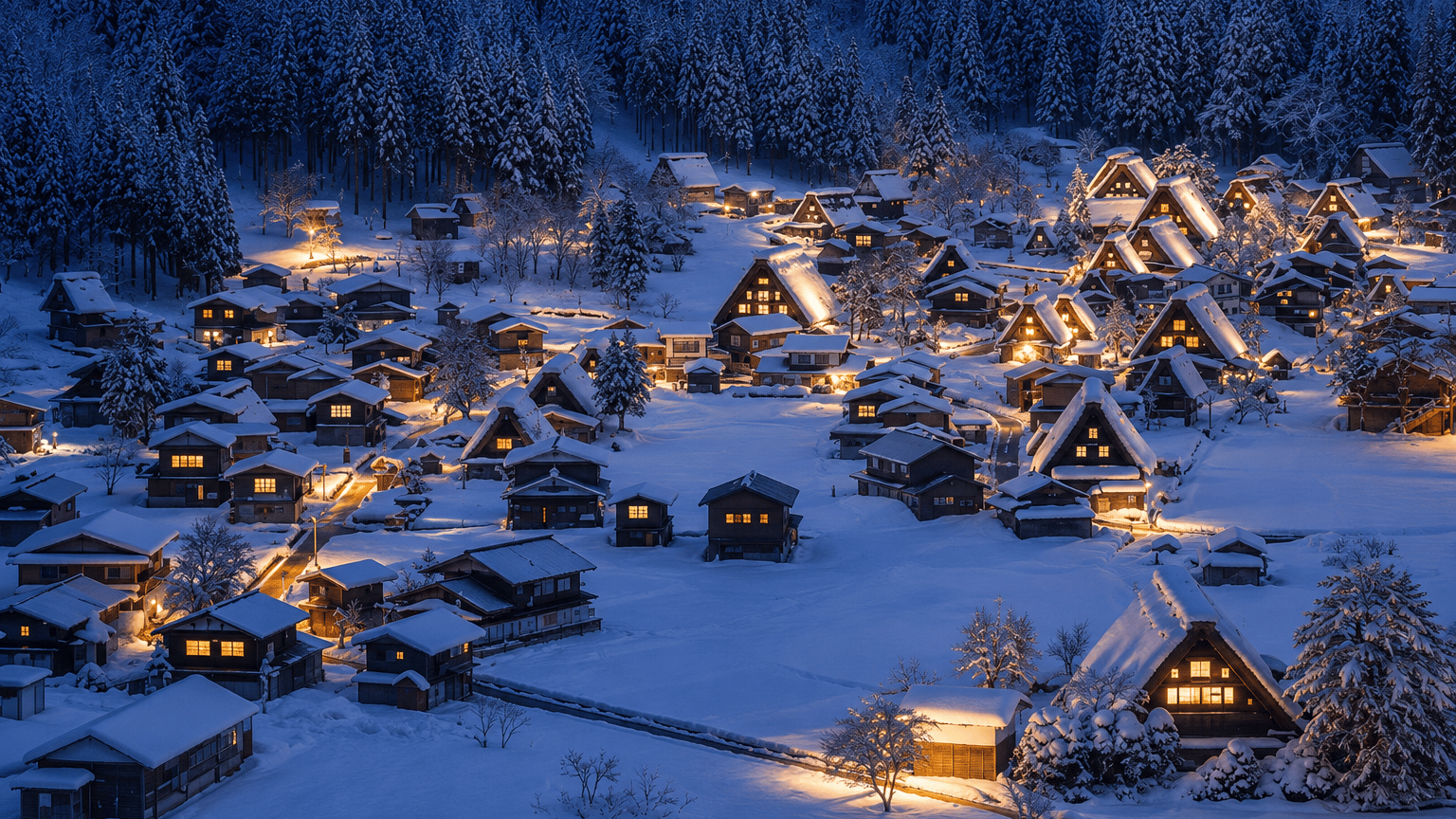
East Asia · Remote Settlement
Shirakawa-go
Japan
Shirakawa-go's inhabited Ogimachi village offers large houses adapted to mountain winters, local produce and an active tradition of repair. Its weakness is an open civilian layout: keeping shelter, water and fire protection working matters more than the impression of remoteness created by the mountains.
Overall
4.7 out of 10Defensibility
2 out of 10Isolation
4 out of 10Sustainability
8 out of 10Ranking context
How this base ranks
Global
#55 of 88 · Top 63%
Region · East Asia
#2 of 5 · Top 40%
Base Type · Remote Settlement
#11 of 16 · Top 69%
Field assessment
At a glance
Bottom Line
A strong existing habitat with a demanding upkeep rhythm. Organise a manageable occupied area and protect domestic routines without assuming twenty newcomers inherit the village's experienced repair and fire-response community.
Biggest Trade-off
Traditional houses provide useful passive shelter, but combustible fabric and seasonal upkeep demand collective labour that cannot all be assigned to watches or food production.
Most Likely Failure
Food and heating supplies tighten while repairs, fire precautions and watches compete for the same small workforce, leaving less capacity to maintain a viable winter routine.
Score rationale
Why it scores this way
Defensibility · 2/10
Restricted vehicle entry and narrow lanes help organise local movement, but houses and fields form an open village rather than a hardened enclosure. Twenty people must balance watches with the work that keeps those houses habitable.
Advantages
- Existing restrictions, external visitor parking and bridge arrival shape important final access routes.
Limitations
- Open agricultural edges and other routes remain beyond a single gate or bridge watch.
Isolation · 4/10
Mountain terrain and weather-sensitive access provide noticeable separation, yet the village has direct regional bus links and nearby expressway access. Seasonal disruption complicates travel without providing deep regional remoteness.
Advantages
- Snow and occasional bridge or parking closures can interrupt ordinary access to the village.
Limitations
- Established routes from several cities bring normal traffic close; historical isolation cannot describe the present transport setting.
Sustainability · 8/10
Large inhabited Gassho houses, public water and sewerage, and local food pathways make an established domestic habitat. That advantage depends on continued care, safe water and seasonal provisioning rather than the houses' picturesque form.
Advantages
- Traditional repair methods remain in use, providing a documented maintenance approach rather than dependence on wholly specialist industrial plant.
Limitations
- A living repair tradition does not guarantee the reference group has its practitioners, materials or functioning fire systems.
Survival horizons
How survival changes over time
Organise houses and fire checks
First 7 Days
Inspect a manageable set of houses, verify drinking water and sanitation, and check fire precautions and exits. Map access from the bridge, roads and open edges before dispersing people across the settlement.
Positive factors
- Large established houses offer indoor space for sleeping, storage and shared work.
Risks
- Combustible buildings make careless heating or cooking a serious occupation risk, even before outside pressure builds.
Balance stores with upkeep
First 100 Days
Track food and heating supplies against the season while sharing routine repair and fire-watch duties. Assess the fields and local produce actually accessible to the group rather than treating village retail or regional crops as endless reserves.
Positive factors
- Rice and vegetable pathways give provisioning a local foundation to investigate alongside existing stocks.
Risks
- Harvest timing, usable land, seed, stored fuel and practical skill have not been established for this group.
Sustain the seasonal cycle
Long Term
Long occupation requires repeatable food and water provision plus the labour and materials to maintain houses through successive seasons. The settlement demonstrates that such upkeep exists today, not that twenty people can reproduce every resident service unaided.
Positive factors
- Continued traditional repairs show that the houses can be maintained through established techniques rather than major redevelopment.
Risks
- Outside fuel, dietary supplements and utility support remain dependencies; mountain scenery does not replace them.
Visual survey
Gallery
Location context
The Lay of the Land
Tactical assessment
Practical Reality
Best Use
Concentrate occupation around existing houses with verified water and sanitation, keeping routes to usable fields short. Allocate fire checks and ordinary repairs alongside watches before spreading people across the village.
Strengths
- Climate-adapted houses provide usable domestic shelter rather than an empty scenic landmark.
- Public water and sewerage give sanitation a documented starting point.
- Local rice and vegetable production offers more food potential than reliance on visitor shops alone.
Key Risk
The buildings depend on repeated care and organised fire precautions. Losing resident knowledge or working fire infrastructure can turn a manageable repair into a threat to several occupied spaces.
Weaknesses
- The village lacks a continuous hard perimeter, so productive land and accommodation create separate watch demands.
- Fire precautions and repeated fabric repairs require organised labour and working systems.
- Regional road access and external energy supplies remain relevant despite weather and the mountain setting.
Reality Check & Constraints
The Base is Ogimachi's coherent historic village, not the whole municipality. Local produce and drinking-water evidence do not establish an adequate harvest, reserve fuel, islanded hydropower or an experienced crew among twenty survivors.
Assumptions / constraints
- Wider municipal hydroelectric stations, forests and neighbouring districts are not secured Base resources; actual stocks, equipment condition and food yields remain unknown.
Decision context
Rivals / Alternatives
Similar rival
Huilloc Village
Peru · Remote Settlement
Huilloc Village keeps the same remote settlement strategy, with only 0.0 points between the overall scores and closely matched defensibility pressure.
Overall 4.7/10
Strongest alternative
Isle of Eigg Village
United Kingdom · Remote Settlement
Isle of Eigg Village scores 6.3 overall versus 4.7, adding a stronger isolation profile while staying relevant as another remote settlement.
Overall 6.3/10
Wildcard rival
Fort Jefferson
United States · Fortified Structure
Fort Jefferson changes the strategy: it is built around the fortified structure strategy with a defensibility edge, while Shirakawa-go holds more of the sustainability advantage.
Overall 6.7/10