Western Europe · Elevated Stronghold
Rocamadour
France
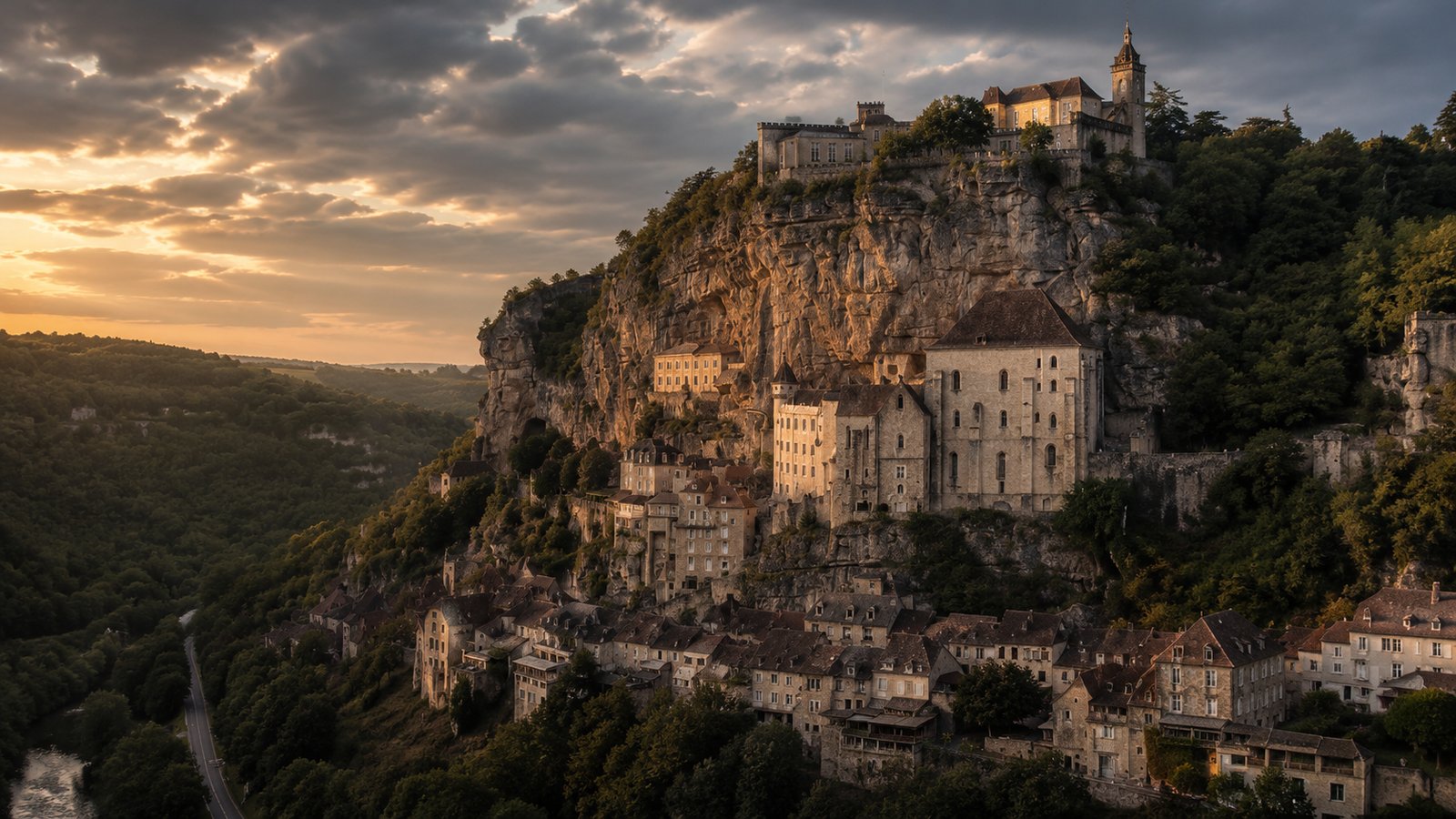
Rocamadour combines inhabited stone buildings with cliff-shaped approaches, fortified gates and steep stairs. It offers a credible place to organise shelter, but its visitor access and modern water and food supply prevent the medieval setting from becoming a self-contained refuge.
Overall
4.7 out of 10Defensibility
5 out of 10Isolation
3 out of 10Sustainability
6 out of 10Ranking context
How this base ranks
Global
#53 of 88 · Top 60%
Region · Western Europe
#6 of 9 · Top 67%
Base Type · Elevated Stronghold
#9 of 13 · Top 69%
Field assessment
At a glance
Bottom Line
A workable settlement refuge if the group can manage several entries and verify essential services. The cliff helps control movement; it does not solve drinking water, food renewal or the effort of moving supplies between levels.
Biggest Trade-off
Steep circulation concentrates approaching threats, but also concentrates the group's own supply journeys and becomes harder work when lifts or roads are unavailable.
Most Likely Failure
Food replenishment or dependable potable-water access fails, turning repeated supply journeys across the village's levels into an exposure and workload problem.
Score rationale
Why it scores this way
Defensibility · 5/10
Stone fabric, fortified gates and the cliff give useful barriers within the village. Multiple public entries mean the settlement still needs a coordinated watch rather than confidence in one historic gateway.
Advantages
- Narrow streets and gates provide existing places to organise local control without assuming new fortifications.
Limitations
- Road, lift, stair and pedestrian routes must be considered together; closing one route does not enclose the whole settlement.
Isolation · 3/10
The rural valley creates some separation, but Rocamadour is a connected destination reached by ordinary roads. A dramatic cliff position changes the final approach more than the regional likelihood of arrival.
Advantages
- The rural setting offers more separation from major population concentrations than an embedded city fortress.
Limitations
- Plateau and valley access bring visitors close to the village; steep final steps do not erase those connections.
Sustainability · 6/10
Residential and visitor buildings, sanitation, food businesses and public water give the group an established domestic setting. Continued occupation depends on services and replenishment that the stone buildings cannot provide alone.
Advantages
- Hotels and other enclosed buildings offer room to separate sleeping, storage and daily work.
Limitations
- No independent village food-production or energy system is established; shop premises do not promise stocked shelves.
Survival horizons
How survival changes over time
Connect shelter to essentials
First 7 Days
Inspect accommodation, drinking-water access and the routes linking them. Set watches for the actual plateau and valley entries while checking stairs and lift alternatives needed to move people and supplies.
Positive factors
- The inhabited settlement already has buildings and service access suited to organising daily life.
Risks
- Choosing a visually secure upper position may leave essential trips spread across several levels and entrances.
Reduce the carrying burden
First 100 Days
As initial stores diminish, count food and water use and review how much carrying the group can sustain without lifts or dependable road access. Maintain a manageable daily circuit before minor service failures multiply journeys.
Positive factors
- Stone rooms and stairs retain practical value without powered operation.
Risks
- Externally managed water and tourism deliveries may cease while the settlement still looks intact and habitable.
Prove a supply pathway
Long Term
Lasting occupation needs dependable potable water and food replenishment beyond what businesses happen to hold. No productive estate is included: access to the surrounding countryside remains a separate exposure problem, not inherited farmland.
Positive factors
- Passive shelter and shaped approaches remain useful while the group judges whether continued occupation is supportable.
Risks
- A village that can house twenty people cannot be assumed to feed them indefinitely or keep regional utility systems operating.
Visual survey
Gallery
Location context
The Lay of the Land
Tactical assessment
Practical Reality
Best Use
Organise accommodation and watches around a short route through the existing village, keeping water access and the means of moving supplies in view. Account for plateau and valley approaches before relying on a fortified gate.
Strengths
- Substantial enclosed settlement buildings provide domestic space without first creating a camp.
- Cliff geometry and a series of gates give observable stages along important local routes.
- Documented potable-water services and food businesses provide concrete starting points for an inventory.
Key Risk
The settlement remains physically useful while its public water and tourism supply chains decline. That gap can force essential trips beyond the routes the group can watch.
Weaknesses
- Visitor infrastructure adds several ways into the settlement beyond its historic gates.
- Losing powered circulation or road access makes moving essential supplies more demanding.
- Surrounding agriculture is outside the defended village and cannot be counted as secure food production.
Reality Check & Constraints
The Base is the inhabited medieval settlement and its integrated approaches, not the castle alone or the surrounding farms. Commune population and visitor facilities do not establish usable stocks inside the occupied area.
Assumptions / constraints
- Water-point operation, stored food and building condition remain unverified; wider commune households and parking facilities are not all inside the medieval core.
Decision context
Rivals / Alternatives
Similar rival
Neuschwanstein Castle
Germany · Elevated Stronghold
Neuschwanstein Castle keeps the same elevated stronghold strategy, with only 0.0 points between the overall scores and closely matched defensibility pressure.
Overall 4.7/10
Strongest alternative
Mont Saint-Michel
France · Fortified Structure
Mont Saint-Michel scores 6.3 overall versus 4.7, adding a stronger defensibility profile while staying relevant as a Western Europe option.
Overall 6.3/10
Wildcard rival
Amundsen-Scott South Pole Station
Antarctica · Institutional Compound
Amundsen-Scott South Pole Station changes the strategy: it is built around the institutional compound strategy with a isolation edge, while Rocamadour holds more of the defensibility advantage.
Overall 7.7/10