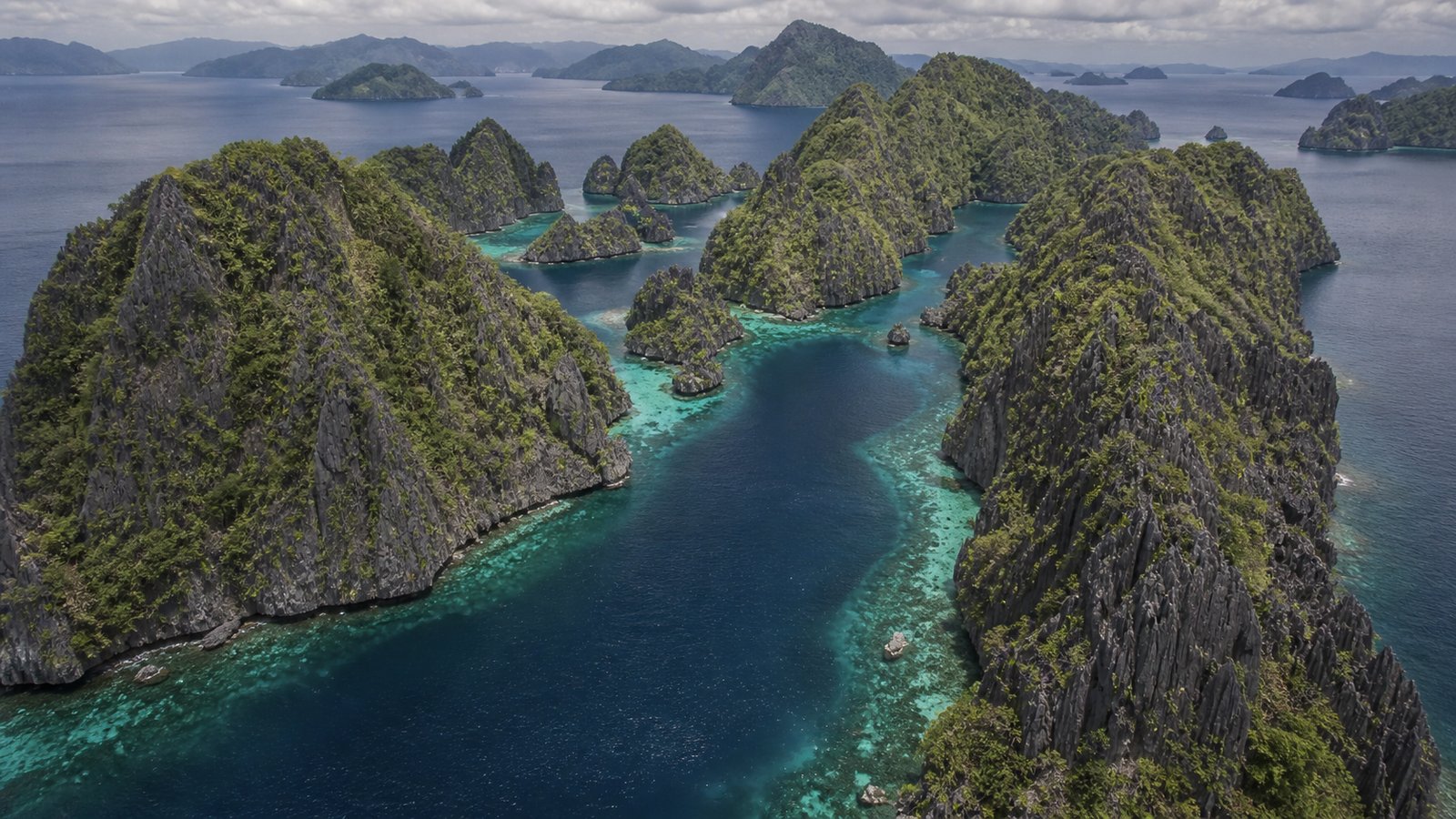
Southeast Asia · Isolated Landmass
Palawan
Philippines
Palawan's province-wide island system contains substantial farming, fisheries, housing and water infrastructure. Those resources come with large settled populations and long journeys between communities. Twenty survivors could use a small part of that capacity, but cannot defend the province or keep its transport and utility networks operating as one system.
Overall
4 out of 10Defensibility
1 out of 10Isolation
2 out of 10Sustainability
9 out of 10Ranking context
How this base ranks
Global
#70 of 88 · Top 80%
Region · Southeast Asia
#7 of 7 · Top 100%
Base Type · Isolated Landmass
#15 of 19 · Top 79%
Field assessment
At a glance
Bottom Line
A resource-rich inhabited region with little collective defensive control. The decisive question is whether safe water and recurring food can be reached and maintained together, rather than how much the province produces in total.
Biggest Trade-off
Dispersed islands and communities offer varied productive settings, but divide supplies and services across road and sea journeys. More regional options can mean more exposure and transport work for a small household.
Most Likely Failure
Fuel and maintenance shortfalls interrupt the journeys and services linking shelter to provision. The group spends increasing time moving supplies through populated areas instead of maintaining a dependable household.
Score rationale
Why it scores this way
Defensibility · 1/10
Many islands, roads, ports and settled areas create too many entry and movement routes for continuous control. Local shelter may be secured, but the province does not function as a single defended enclosure.
Advantages
- Water gaps can constrain movement along particular approaches.
Limitations
- A protected local building cannot secure supply journeys across the wider island system.
Isolation · 2/10
The sea slows arrivals from other Philippine regions, while substantial population pressure already exists within Palawan's own communities. Geographic separation from the mainland is therefore only part of the exposure picture.
Advantages
- Between islands, significant water crossings impede ordinary walker movement.
Limitations
- An island label does not separate residents from an outbreak in their own settlement.
Sustainability · 9/10
Existing housing, food production, potable-water facilities and power make this a highly capable inhabited landscape. The usable household depends on which services remain accessible together when normal networks falter.
Advantages
- Established settlements offer domestic space without first building an entire habitat.
Limitations
- A modern treatment plant in Puerto Princesa does not remove water-service gaps elsewhere in the province.
Survival horizons
How survival changes over time
Locate provision within daily reach
First 7 Days
Inspect shelter and its actual water service, identify accessible food and assess the routes between them. Record which necessities require road or boat travel before committing to an occupied area.
Positive factors
- Developed communities and existing productive activity offer practical starting resources to investigate.
Risks
- Choosing for apparent remoteness can separate the household from working domestic services.
Maintain the supply circuit
First 100 Days
Track consumption alongside transport, water and equipment upkeep. Distinguish accessible continuing production from stored goods, and reassess daily journeys as fuel-dependent systems become less reliable.
Positive factors
- Several food sectors and water-system types offer alternatives when one source becomes inaccessible.
Risks
- Travel and maintenance can absorb the workforce even where regional supplies remain substantial.
Turn output into repeatable meals
Long Term
Lasting residence requires a manageable cycle of safe water, food production or access, and processing through changing conditions. Existing farms and fisheries make renewal credible to investigate, but their historic output is not a guaranteed future yield for the group.
Positive factors
- Food-producing assets offer a stronger basis for renewal than storage capacity alone.
Risks
- Loss of machinery, transport fuel and specialist repairs can disconnect production from the household using it.
Visual survey
Gallery
Location context
The Lay of the Land
Tactical assessment
Practical Reality
Best Use
Keep essential domestic routines within a manageable daily circuit of verified shelter, water and food access. Retain the province-wide evaluation; no resort, municipality or remote island becomes a substitute defended Base.
Strengths
- Current rice, coconut and other crop production provides real food-renewal assets.
- Established fisheries add another substantial productive sector.
- River treatment, wells and desalination diversify existing potable-water provision across communities.
Key Risk
Local production depends on people, equipment and access. Losing diesel, parts or water-system maintenance can leave substantial food and water assets beyond the group's practical reach.
Weaknesses
- Long coastlines and numerous settlements cannot be monitored as one perimeter by twenty people.
- Water and food assets are distributed rather than concentrated around one secure dwelling.
- Diesel-dependent power and technical supply chains can undermine local processing and distribution.
Reality Check & Constraints
Provincial harvest and fisheries statistics establish active production, not food already available to these survivors. Puerto Princesa's treatment capacity also does not supply every island or prove safe water at the chosen dwelling.
Assumptions / constraints
- The inherited province/island system, including Puerto Princesa, remains the boundary; no favourable sub-site is substituted.
- Accessible stocks, usable transport and current machinery condition are unmeasured, not guaranteed by regional output.
- Twenty capable adults may organise household production and ordinary repairs without inheriting provincial utility crews or a commercial fishing fleet.
Decision context
Rivals / Alternatives
Similar rival
Jeju Island
Japan · Isolated Landmass
Jeju Island keeps the same isolated landmass strategy, with only 0.0 points between the overall scores and closely matched defensibility pressure.
Overall 4/10
Strongest alternative
Heligoland
Germany · Isolated Landmass
Heligoland scores 6.3 overall versus 4.0, adding a stronger isolation profile while staying relevant as another isolated landmass.
Overall 6.3/10
Wildcard rival
Fort Jefferson
United States · Fortified Structure
Fort Jefferson changes the strategy: it is built around the fortified structure strategy with a defensibility edge, while Palawan holds more of the sustainability advantage.
Overall 6.7/10