East Asia · Isolated Landmass
Jeju Island
Japan
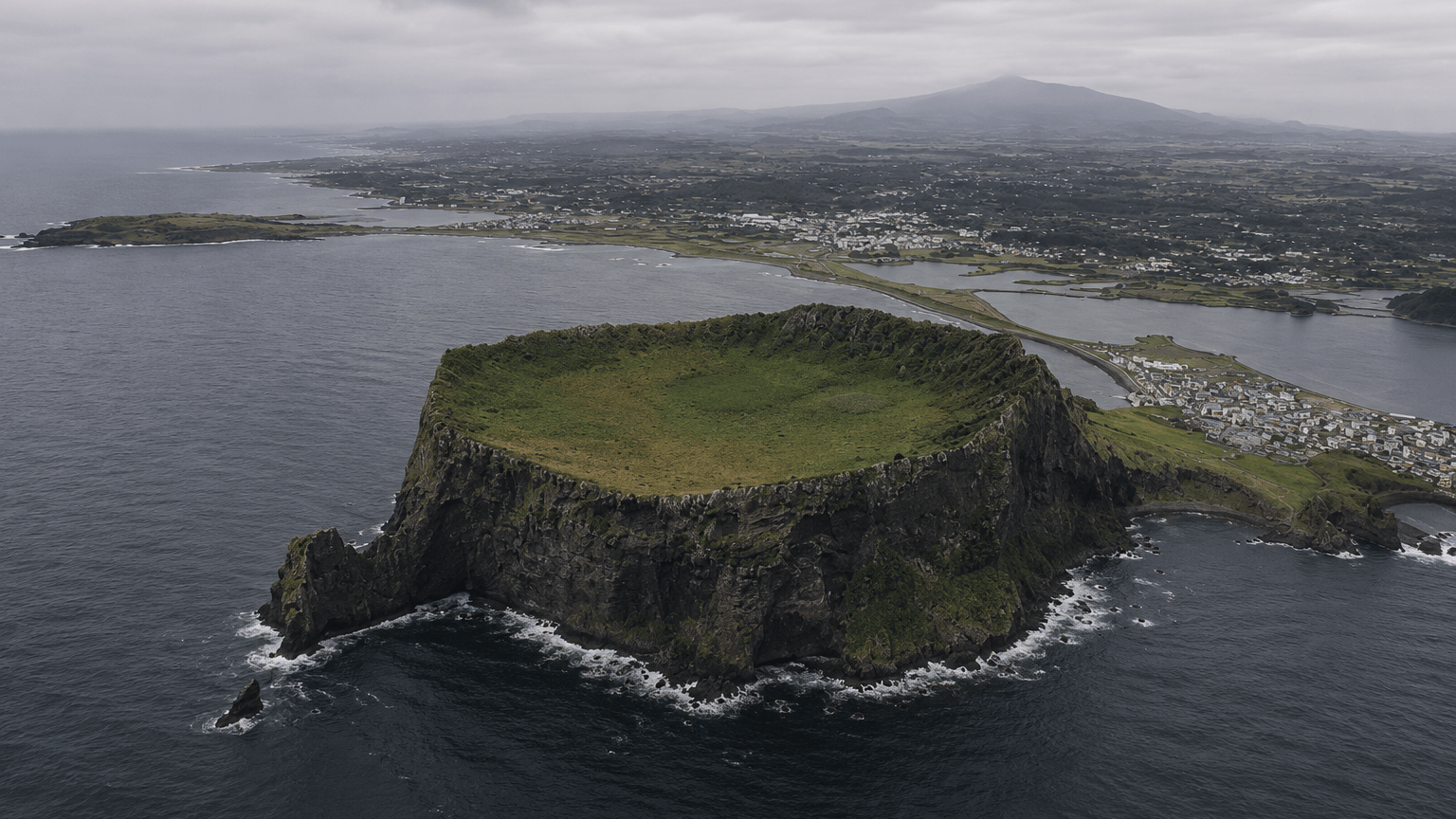
Jeju has extensive housing, groundwater systems, farms and local electricity generation. But substantial population pressure starts inside the sea barrier: twenty survivors need safe local connections to essentials rather than an attempt to control the whole inhabited island.
Overall
4 out of 10Defensibility
1 out of 10Isolation
2 out of 10Sustainability
9 out of 10Ranking context
How this base ranks
Global
#68 of 88 · Top 77%
Region · East Asia
#4 of 5 · Top 80%
Base Type · Isolated Landmass
#13 of 19 · Top 68%
Field assessment
At a glance
Bottom Line
A rich resource landscape with many living spaces, whose practical value depends on safe access and maintainable systems rather than island-wide control.
Biggest Trade-off
The developed society providing extensive facilities also places a large potential threat population inside the sea barrier.
Most Likely Failure
A water or power fault forces longer supply journeys through populated areas, increasing exposure while leaving fewer people for repair and local watches.
Score rationale
Why it scores this way
Defensibility · 1/10
Jeju’s settlement and transport network provides many approaches to occupied buildings. A small group can secure particular rooms, but cannot make the coastline or road system a continuous defended perimeter.
Advantages
- Existing buildings allow selection of a manageable occupied footprint within the wider island.
Limitations
- A secure building still needs journeys to essentials through territory the group does not control.
Isolation · 2/10
The sea interrupts ordinary movement from mainland Korea, but much relevant pressure is already on Jeju. Its large population and internal transport links sharply limit the protection implied by the word island.
Advantages
- There is no continuous land route carrying mainland walkers directly onto Jeju.
Limitations
- Watching ports does little to resolve threats moving from settlements within the island.
Sustainability · 9/10
Housing, sanitation, food production and water systems provide exceptional domestic scope for a small group. The operational limit is keeping a usable subset functioning as fuel, grid coordination and specialist support decline.
Advantages
- Broad food and water infrastructure creates alternatives to dependence on a single shop or store.
Limitations
- Renewable generators do not establish a ready-to-run independent supply to chosen homes or a water plant.
Survival horizons
How survival changes over time
Choose by access to essentials
First 7 Days
Verify drinking water and accessible food near a manageable living area. Assess nearby population and road movement before undertaking island-wide trips or relying on unfamiliar pumping or power installations.
Positive factors
- Existing homes and service spaces provide numerous choices without new construction.
Risks
- Apparent abundance can encourage journeys across more exposure territory than the group can watch.
Make local supply dependable
First 100 Days
Track consumption and whether nearby production can actually contribute. Prioritise water distribution, sanitation and ordinary repairs; assess technical dependencies before counting on services that work at first occupation.
Positive factors
- Cultivated land offers a route beyond consuming retail stocks.
Risks
- Fuel loss or a failed distribution component can interrupt supply without exhausting underlying resources.
Match renewal to available labour
Long Term
Continued habitation needs repeatable food and water provision with maintainable systems. Jeju offers substantial options, but operating its modern economy is beyond twenty people; usable local renewal must be demonstrated.
Positive factors
- Groundwater and working farmland remain on-island assets when mainland logistics become unreliable.
Risks
- Declining equipment, inputs and route safety can make nominal abundance increasingly hard to use.
Visual survey
Gallery
Location context
The Lay of the Land
Tactical assessment
Practical Reality
Best Use
Concentrate daily life around shelter, checked drinking water and reachable food production. Judge the connecting routes before travelling through urban centres or taking on distant utility assets.
Strengths
- Extensive housing and domestic infrastructure offer choices for separating living, storage and work.
- Developed groundwater and spring-water systems establish substantial on-island resources to assess.
- Agriculture, livestock and fisheries provide diverse existing food-production pathways.
Key Risk
Resources across Jeju are not a single usable inventory. Unsafe roads or failed pumping can separate the group from water and food that still exist elsewhere.
Weaknesses
- Cities, roads and a long coastline make Jeju far larger than a defensible twenty-person position.
- Water distribution and electricity require maintained technical systems and competent operation.
- Mainland electricity exchange, thermal fuel and specialist parts remain dependencies despite local renewable generation.
Reality Check & Constraints
Production totals describe an operating economy, not food secured for the group. Water facilities, power plants and farms still require access, working equipment and people able to use them.
Assumptions / constraints
- The group is twenty capable adults, without an assumed utility workforce, farming crews or medical staff drawn from residents.
- Jeju remains the whole inhabited island. Choosing where to live does not replace it with a cave, summit, town or offshore islet.
- Usable stocks, crop access, water quality, equipment condition and independent local operation are unverified. No mainland delivery or survival duration is guaranteed.
Decision context
Rivals / Alternatives
Similar rival
Okinawa
Japan · Isolated Landmass
Okinawa keeps the same isolated landmass strategy, with only 0.3 points between the overall scores and closely matched defensibility pressure.
Overall 3.7/10
Strongest alternative
Heligoland
Germany · Isolated Landmass
Heligoland scores 6.3 overall versus 4.0, adding a stronger isolation profile while staying relevant as another isolated landmass.
Overall 6.3/10
Wildcard rival
Fort Jefferson
United States · Fortified Structure
Fort Jefferson changes the strategy: it is built around the fortified structure strategy with a defensibility edge, while Jeju Island holds more of the sustainability advantage.
Overall 6.7/10