Africa · Industrial Site
Kimberley Big Hole & Mining Complex
South Africa
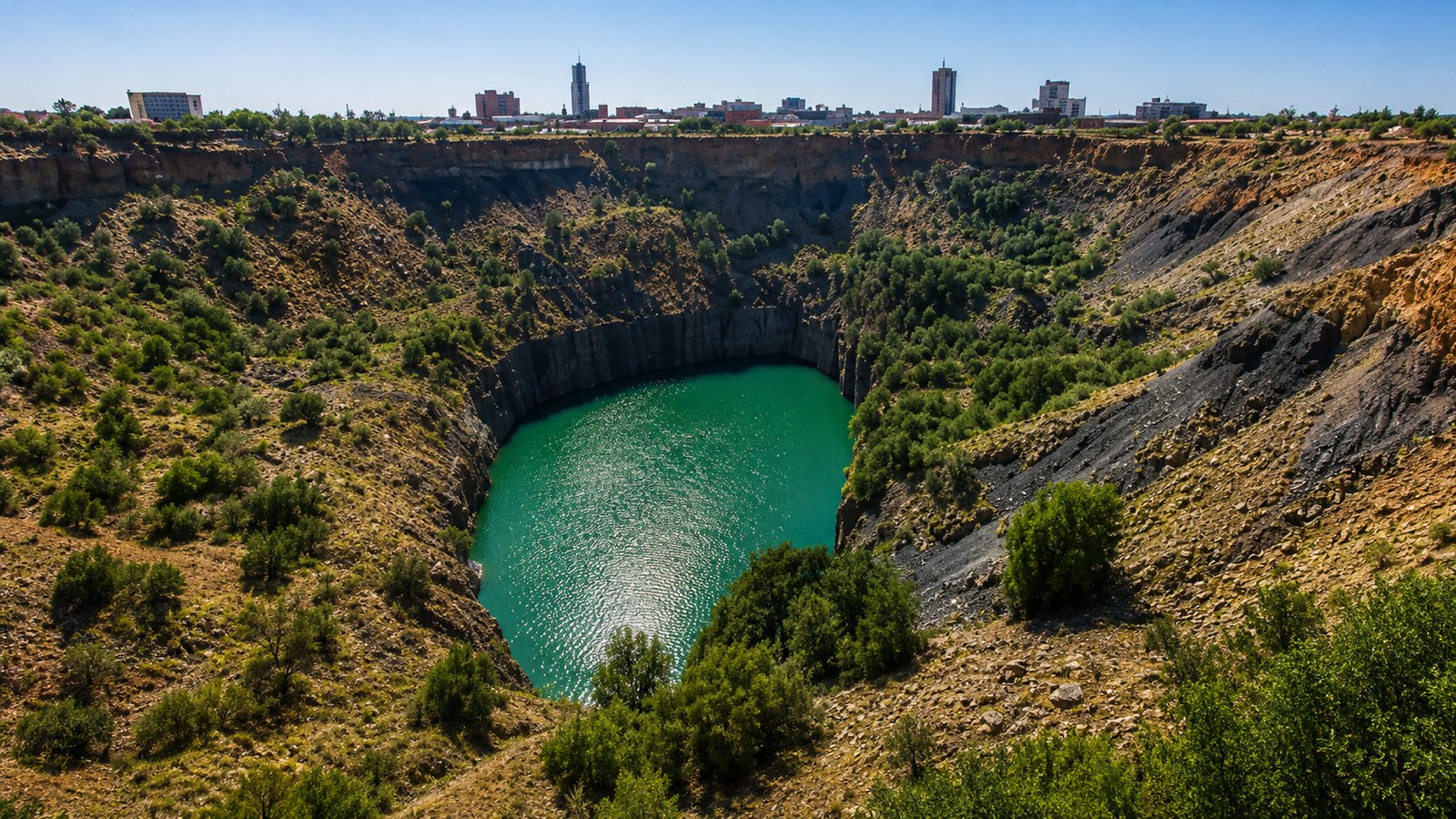
Kimberley’s Big Hole complex offers accommodation, visitor buildings and food-service space around a former mine. But it sits inside the city, and the excavation is a hazard beside the refuge rather than an underground habitat or a surrounding moat.
Overall
2.7 out of 10Defensibility
2 out of 10Isolation
2 out of 10Sustainability
4 out of 10Ranking context
How this base ranks
Global
#86 of 88 · Top 98%
Region · Africa
#10 of 11 · Top 91%
Base Type · Industrial Site
#2 of 2 · Top 100%
Field assessment
At a glance
Bottom Line
A supplied urban shelter with useful buildings, but a weak basis for independence once municipal services and commercial replenishment fail.
Biggest Trade-off
Visitor facilities offer domestic space while retaining dependence on the city and supply networks the group needs separation from.
Most Likely Failure
Water or provisions cease to meet daily needs, forcing repeated journeys into Kimberley while fewer people remain to watch occupied buildings.
Score rationale
Why it scores this way
Defensibility · 2/10
Buildings and visitor routes sit around an excavation rather than inside a defensive enclosure. The pit blocks some movement, but urban approaches still reach useful parts of the complex.
Advantages
- Separate buildings allow selection of a smaller occupied area within the attraction.
Limitations
- The excavation constrains safe movement and fallback; it is not a protective ring.
Isolation · 2/10
The attraction is embedded in Kimberley, beside the population and roads supporting its businesses. Mine depth does not create regional separation for people occupying surface buildings.
Advantages
- The excavation interrupts certain immediate approaches across the site.
Limitations
- City movement can reach the grounds without crossing a remote or naturally separated landscape.
Sustainability · 4/10
Accommodation, food-service space and restored buildings offer a domestic starting point. Continued habitation needs working water, sanitation and replacement provisions beyond what a commercially supplied attraction establishes.
Advantages
- Hospitality space reduces the need to adapt every room from a museum function.
Limitations
- Handling a group visit does not prove enduring residential capacity or adequate stores.
Survival horizons
How survival changes over time
Occupy buildings, assess the edge
First 7 Days
Check water and provisions, select usable accommodation and identify safe routes between essential rooms. Assess city-facing approaches before dispersing through the Old Town or towards the pit’s viewing areas.
Positive factors
- Guest and service buildings provide a framework for sleeping and organising meals.
Risks
- The excavation can distract from street access and unsafe circulation near its edge.
Track the supplied habitat’s decline
First 100 Days
Monitor water, sanitation and provision use as commercial service becomes unreliable. Keep occupation manageable for watches and repairs, judging outside trips by need rather than treating city proximity as dependable resupply.
Positive factors
- Passive shelter remains useful if some visitor systems stop working.
Risks
- Repeated consumable trips expose people while leaving fewer hands for upkeep and security.
Resolve renewal or reassess occupation
Long Term
Lasting habitation requires dependable water and food replacement within a workable routine. Neither is established independently inside the attraction; occupation cannot turn commercial facilities or the crater into renewable supplies.
Positive factors
- Ordinary buildings can continue sheltering people without a specialist industrial crew.
Risks
- Declining supplies and municipal services can make the site untenable while historic buildings remain standing.
Visual survey
Gallery
Location context
The Lay of the Land
Tactical assessment
Practical Reality
Best Use
Use a manageable part of the accommodation and service buildings, with checked water and safe internal routes. Keep daily movement away from the pit edge and assess city-facing approaches.
Strengths
- On-site accommodation provides sleeping space beyond exhibition rooms.
- Food-service and visitor buildings offer space for organising meals, supplies and daily work.
- Restored buildings retain passive shelter value without restarting mining equipment.
Key Risk
Catering and guest facilities need replenishment. Without verified independent water and food replacement, the group faces increasingly exposed trips beyond a lightly protected attraction.
Weaknesses
- Urban roads bring potential pressure close without a substantial geographic buffer.
- The pit interrupts movement locally but does not enclose occupied buildings.
- Hospitality services establish neither food renewal nor independent protected drinking water.
Reality Check & Constraints
Tour groups and staffed first aid demonstrate visitor use, not residential autonomy or a guaranteed medic. The excavation does not establish drinkable water, and the former mine is not a usable underground refuge.
Assumptions / constraints
- The twenty capable adults do not automatically include museum staff, first-aid personnel, suppliers or mine specialists.
- Only the current visitor and Old Town complex is credited. Closed workings, other mines and city resources remain excluded.
- Provisions, potable reserves, service condition and residential capacity are unmeasured. Pit water and future deliveries are not credited as survival supplies.
Decision context
Rivals / Alternatives
Similar rival
Table Mountain Plateau
South Africa · Elevated Stronghold
Table Mountain Plateau keeps the same Africa risk context, with only 0.3 points between the overall scores and closely matched defensibility pressure.
Overall 3/10
Strongest alternative
Amundsen-Scott South Pole Station
Antarctica · Institutional Compound
Amundsen-Scott South Pole Station scores 7.7 overall versus 2.7, adding a stronger isolation profile while staying relevant as a comparable survival plan.
Overall 7.7/10
Wildcard rival
Fort Jefferson
United States · Fortified Structure
Fort Jefferson changes the strategy: it is built around the fortified structure strategy with a isolation edge, while Kimberley Big Hole & Mining Complex holds more of the sustainability advantage.
Overall 6.7/10